Introduction to Photoelectric Sensing Technology
At the heart of modern industrial automation lies a critical component: the photoelectric sensor. These devices, which use light to detect the presence, absence, or distance of objects, have evolved far beyond simple on/off switches. Today's precision photoelectric sensors represent a pinnacle of engineering, offering unparalleled accuracy, reliability, and versatility in the most demanding environments. From intricate assembly lines to vast logistics centers, they form the invisible nervous system that allows machines to "see" and interact with their surroundings. The fundamental principle involves an emitter, which projects a light beam—often infrared, visible red, or laser—and a receiver that detects changes in this beam caused by an object interrupting or reflecting it. This simple yet powerful concept has been refined to achieve micron-level precision, enabling tasks that were once deemed impossible for automated systems.
Core Technologies and Operating Principles
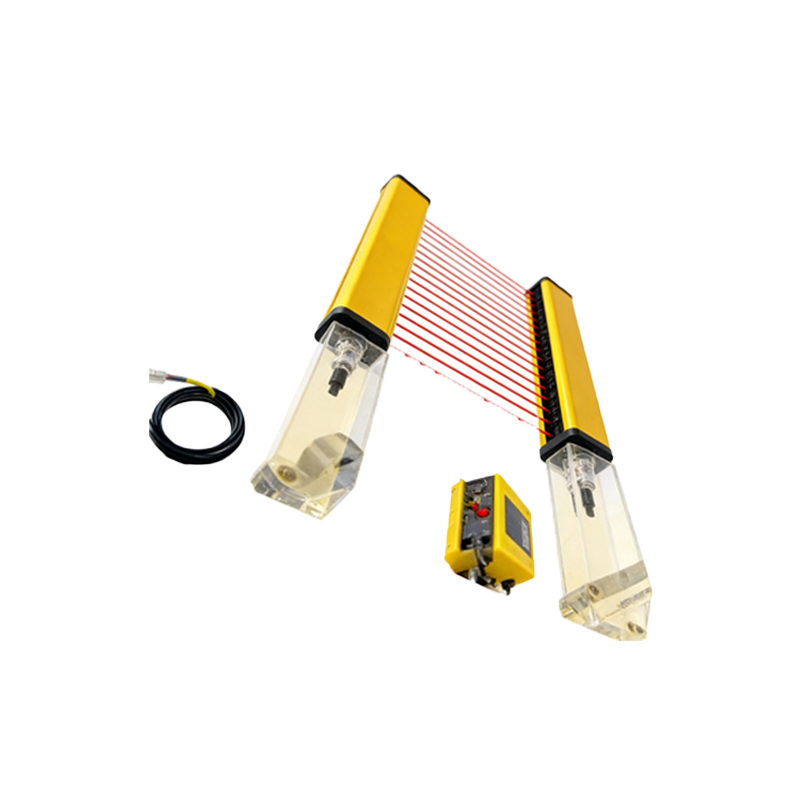
The precision of a modern photoelectric sensor is dictated by its underlying technology and operating mode. The three primary modes are through-beam, retro-reflective, and diffuse reflective. Through-beam sensors, with separate emitter and receiver units, offer the longest sensing ranges and highest immunity to environmental interference, making them ideal for precise detection over distances. Retro-reflective types use a single unit and a reflector, providing a good balance of range and ease of installation. For applications requiring detection without a reflector, diffuse reflective sensors detect light bounced directly off the target object. Advancements in background suppression technology, particularly using triangulation principles in diffuse sensors, allow for precise detection of an object at a specific distance while ignoring surfaces beyond the set range. Furthermore, the adoption of modulated LED light and sophisticated digital signal processing filters out ambient light noise, ensuring stable operation under variable lighting conditions, which is paramount for precision sensing.
Key Features Enabling High Precision
Several advanced features distinguish precision-grade photoelectric sensors. First is the spot size; a smaller, more focused light spot allows for the detection of minute objects or precise edges. Laser-based sensors excel in this area, producing extremely fine beams. Second, high resolution and repeatability are achieved through stable optics and high-speed electronic circuits capable of detecting minute changes in received light intensity. Third, advanced models incorporate teach-in functionality or digital interfaces for precise, tool-free adjustment of sensing parameters like sensitivity and response time. Time-of-Flight (ToF) technology, which calculates distance by measuring the time delay of a reflected light pulse, enables precise distance measurement sensors. Additionally, features like polarization filters help in reliably detecting shiny objects, and synchronized operation (to prevent mutual interference) is crucial when multiple sensors are deployed in close proximity.

Critical Applications in Modern Industry
The applications for precision photoelectric sensors are vast and critical. In electronics manufacturing, they are used for wafer handling, component placement verification, and detecting microscopic defects on circuit boards. In the automotive sector, they ensure precise robot guidance for welding and painting, and verify the correct assembly of tiny parts. Packaging machinery relies on them for label registration, fill-level control, and exact product counting. In logistics, they enable high-speed barcode reading, parcel dimensioning, and precise sorting. Furthermore, they play a vital role in safety systems, such as creating precise light curtains for perimeter guarding on robotic cells. Their ability to function in harsh conditions—withstanding vibrations, temperature extremes, and contamination—makes them indispensable for food processing, pharmaceutical production, and outdoor applications.
Selection Criteria and Integration Best Practices
Selecting the right precision photoelectric sensor requires a detailed analysis of the application. Key parameters include required sensing distance, the size and material of the target object, environmental conditions (dust, moisture, ambient light), required response speed, and output type (e.g., digital NPN/PNP, analog, IO-Link). The mounting configuration and housing material (often stainless steel or ruggedized plastic) must suit the physical and chemical environment. For integration, proper alignment is essential for through-beam and retro-reflective types. Electrical considerations involve ensuring a stable power supply and correct wiring to avoid noise induction. Utilizing sensors with IO-Link communication not only simplifies parameter setting and diagnostics but also enables predictive maintenance by monitoring device health. Regular maintenance, primarily lens cleaning, is necessary to sustain long-term precision.
The Future: Smart Sensors and Industry 4.0
The future of precision photoelectric sensing is inextricably linked to the rise of Industry 4.0 and the Industrial Internet of Things (IIoT). Next-generation sensors are becoming intelligent data points on the network. They are equipped with enhanced diagnostics, reporting not just the presence of an object but also data on signal strength, internal temperature, and contamination levels. This facilitates condition-based monitoring and predictive maintenance, minimizing unplanned downtime. Integration with artificial intelligence and machine vision systems will allow sensors to not only detect but also classify objects based on subtle reflectivity patterns. Furthermore, advancements in miniaturization will enable their use in increasingly compact machinery and collaborative robot applications. As communication protocols like OPC UA and advanced Ethernet-based fieldbuses become standard, the precision photoelectric sensor will evolve from a simple detection device into a cornerstone of smart, adaptive, and self-optimizing manufacturing ecosystems.