Introduction to Divergent Photoelectric Sensors
Divergent photoelectric sensors, often referred to as diffuse sensors, are a fundamental component in modern industrial automation. Unlike through-beam or retro-reflective sensors, these devices operate on a single-unit principle where the emitter and receiver are housed together. The sensor emits a light beam, typically from an LED source, and detects the light that is scattered or reflected back from a target object. This design eliminates the need for a separate reflector or receiver unit, simplifying installation and reducing system complexity. The operational principle hinges on the triangulation method; the emitted light hits the target, and a portion of the scattered light returns to the receiver within the sensor housing. The key advantage lies in their ability to detect objects regardless of color, material, or surface texture, although highly reflective or dark surfaces can pose challenges that require specific sensor tuning or model selection.
Core Operating Principles and Technology
The technology behind divergent photoelectric sensors is centered on modulated light emission and precise reception. Most advanced models utilize a pulsed infrared, red, or laser light source that is modulated at a specific frequency. This modulation allows the sensor's receiver circuit to distinguish between the emitted signal and ambient light, significantly enhancing noise immunity and operational reliability in electrically noisy industrial environments. The detection occurs when the reflected light intensity exceeds a pre-set threshold. Modern sensors incorporate microprocessors that enable features like background suppression or foreground suppression. Background suppression models use triangulation to measure the angle of the returned light, allowing them to ignore objects beyond a set distance. This is crucial for applications where the sensor must only detect objects within a specific range, ignoring the background like conveyor belts or machine parts.
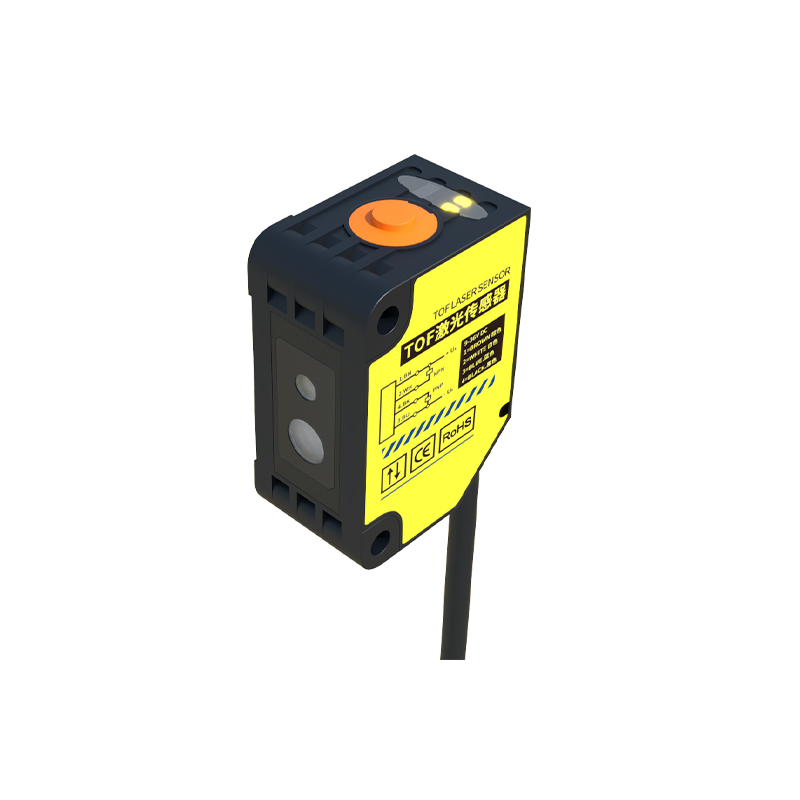
Key Advantages for Industrial Applications
The adoption of divergent photoelectric sensors across industries is driven by several compelling advantages. Their self-contained design offers remarkable installation flexibility, allowing them to be mounted in tight spaces where aligning separate emitter and receiver units would be impractical. This makes them ideal for robotic end-effectors, packaging machinery, and material handling systems. They are generally cost-effective for applications requiring detection at short to medium ranges, typically up to several meters depending on the model and target reflectivity. Furthermore, their ability to detect a wide variety of objects—from transparent glass bottles to opaque cartons—without physical contact ensures zero wear and tear, leading to minimal maintenance and high long-term reliability. Many models now feature IO-Link communication, enabling digital parameter setting, real-time diagnostics, and seamless integration into Industry 4.0 and IIoT frameworks for predictive maintenance.
Common Challenges and Practical Solutions
Despite their versatility, divergent sensors face inherent challenges primarily related to target optical properties. Highly reflective or shiny targets can cause specular reflection, where the light beam reflects away like a mirror, preventing sufficient light from returning to the receiver. Conversely, very dark or matte black surfaces absorb most of the light, resulting in a weak return signal. Environmental factors like dust, steam, or heavy vibration can also interfere with performance. Engineers mitigate these issues through careful sensor selection and configuration. For challenging surfaces, sensors with a focused laser beam or specialized "color mark" detection modes offer better performance. Adjusting the sensitivity threshold or using sensors with teach-in functionality allows for on-site calibration to the specific target. For harsh environments, selecting models with high IP ratings (e.g., IP67, IP69K) for dust and water resistance, and robust housing materials like stainless steel, is essential. Regular lens cleaning is also a simple yet critical maintenance task.
Selection Criteria and Integration Best Practices
Selecting the optimal divergent photoelectric sensor requires a systematic analysis of the application parameters. The primary considerations are sensing range, target size, target material/color, required response time, and environmental conditions. For small or low-reflectivity targets, a sensor with a precise laser spot is necessary. The required output type—PNP/NPN transistor, analog, or IO-Link—must match the control system's input card. Electrical specifications such as operating voltage and current load must be compatible. During integration, mechanical mounting is critical; the sensor must be securely fixed to avoid misalignment from vibration. It should be positioned at an optimal angle to the target to maximize signal return, often avoiding a direct 90-degree angle for glossy surfaces. Electrical wiring should follow EMC guidelines, using shielded cables in high-noise areas and ensuring proper grounding. Finally, thorough testing with the actual target under all expected operational conditions is imperative before final commissioning.
Future Trends and Innovations
The future of divergent photoelectric sensors is closely tied to the evolution of smart factories. We are witnessing a trend towards miniaturization, allowing sensors to be embedded into increasingly compact machinery. Enhanced connectivity, beyond standard IO-Link, is becoming standard, enabling sensors to transmit rich data packets on health, temperature, and detection counts to higher-level control systems. Integration of advanced optics and multi-pixel receiver arrays is improving performance against difficult targets, effectively blending the benefits of divergent and background suppression technologies. Furthermore, the incorporation of AI-based algorithms at the edge could allow sensors to learn and adapt to changing environmental conditions or target variations autonomously. These innovations will solidify the role of divergent photoelectric sensors as not just detection devices, but as intelligent data points within the interconnected industrial ecosystem.