Introduction to Microwave Photoelectric Sensors
Microwave photoelectric sensors represent a sophisticated fusion of microwave and optical technologies, designed to detect, measure, and monitor objects with high precision. These sensors operate by emitting microwave signals and utilizing photoelectric components to interpret reflections or interruptions, enabling non-contact sensing in various industrial environments. The integration of microwave frequencies, typically ranging from 1 GHz to 300 GHz, with photoelectric elements like photodiodes or phototransistors, allows for enhanced sensitivity and accuracy. This combination is particularly effective in scenarios where traditional sensors may fail, such as in dusty, humid, or high-temperature conditions. Industries leverage these sensors for applications including material handling, security systems, and automated manufacturing, where reliability is paramount. The underlying principle hinges on the interaction between electromagnetic waves and light-based detection, creating a robust solution for modern engineering challenges.
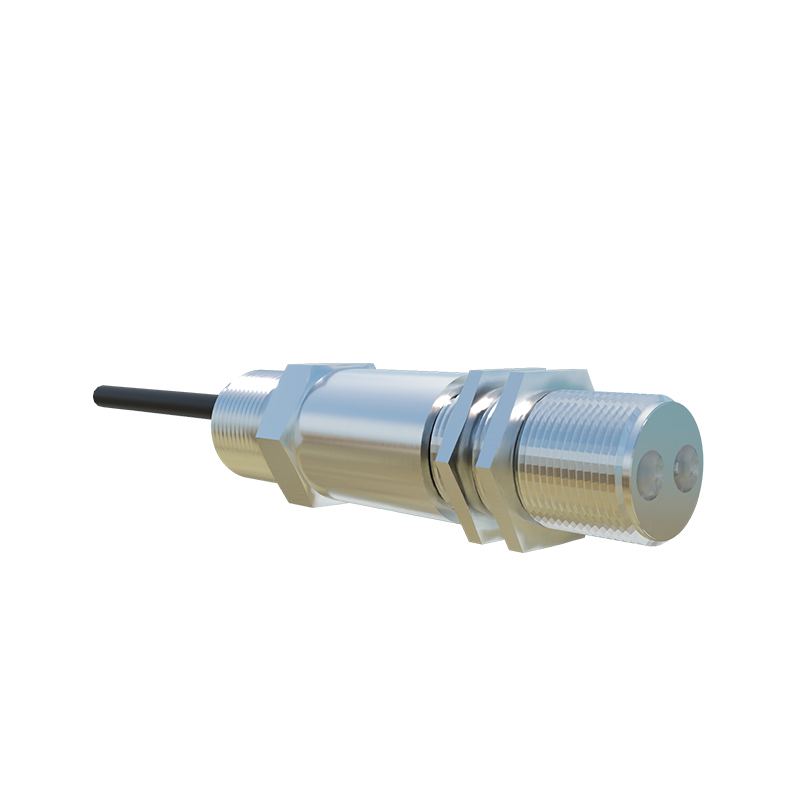
Core Working Principles
The fundamental operation of microwave photoelectric sensors involves the generation, transmission, and reception of microwave signals, coupled with photoelectric conversion. Initially, a microwave oscillator produces high-frequency electromagnetic waves, which are directed toward a target area via an antenna. When these waves encounter an object, they are reflected, absorbed, or scattered, depending on the material's properties. The reflected waves are captured by a receiver, which then converts the microwave energy into an electrical signal. Simultaneously, a photoelectric component, such as a laser diode, emits a light beam that interacts with the target. Changes in light intensity or phase, caused by the object's presence or movement, are detected by a photosensitive element. This dual-detection approach allows the sensor to correlate microwave and optical data, reducing false triggers and improving resolution. Advanced models incorporate signal processing algorithms to filter noise and enhance detection capabilities, making them suitable for complex industrial tasks.
Key Components and Design
Microwave photoelectric sensors consist of several critical components that ensure optimal performance. The microwave module includes an oscillator, amplifier, and antenna, responsible for generating and emitting waves. Common oscillator types are based on Gunn diodes or field-effect transistors, chosen for their stability and efficiency. The photoelectric section typically features a light source, such as an infrared LED or laser, and a detector like a phototransistor or avalanche photodiode. These elements are housed in a rugged enclosure to withstand harsh industrial conditions, with materials offering resistance to corrosion, vibration, and temperature extremes. Design considerations also focus on power supply requirements, often utilizing low-voltage DC sources to minimize energy consumption. Additionally, interfaces for output signals, such as analog voltage or digital protocols like IO-Link, facilitate integration with control systems. By balancing microwave and optical parameters, engineers can tailor sensors for specific applications, from proximity sensing to level detection.
Advantages Over Conventional Sensors
Compared to traditional inductive or capacitive sensors, microwave photoelectric sensors offer distinct benefits that enhance industrial operations. Their non-contact nature eliminates wear and tear, extending lifespan and reducing maintenance costs. The ability to penetrate non-metallic materials, such as plastics or glass, allows for detection through barriers, expanding usability in packaging or containment systems. Microwave frequencies provide immunity to environmental factors like dust, fog, or light interference, ensuring consistent performance where other sensors might falter. Furthermore, the integration of photoelectric elements adds a layer of precision, enabling detection of small or fast-moving objects with high repeatability. These sensors also support longer sensing distances, up to several meters in some models, without compromising accuracy. By combining these features, microwave photoelectric sensors deliver versatility and reliability, making them a preferred choice in automation and safety applications.
Common Industrial Applications
In industrial settings, microwave photoelectric sensors are deployed across diverse sectors to improve efficiency and safety. In manufacturing lines, they monitor product flow, detect jams, or verify assembly completion, often integrated with robotic systems for seamless automation. The logistics industry utilizes them for parcel sorting and warehouse management, where they track items on conveyors without physical contact. Security systems employ these sensors for intrusion detection, leveraging their ability to cover wide areas and ignore minor environmental changes. Additionally, in the automotive sector, they assist in collision avoidance and parking assistance systems, providing real-time data for vehicle control. Other applications include level sensing in silos or tanks, where they measure contents through walls, and agricultural automation for monitoring crop movement. Each use case capitalizes on the sensor's robustness and adaptability, driving innovation in smart industry solutions.
Future Trends and Innovations
The evolution of microwave photoelectric sensors is shaped by advancements in technology and growing industrial demands. Emerging trends include miniaturization, with compact designs enabling integration into IoT devices for real-time monitoring and data analytics. Enhanced signal processing, powered by AI and machine learning, is improving detection accuracy and predictive maintenance capabilities. Researchers are also exploring higher frequency bands, such as millimeter waves, to achieve finer resolution and faster response times. Energy-efficient models are gaining traction, aligning with sustainability goals by reducing power consumption in large-scale deployments. Furthermore, wireless connectivity options, like Bluetooth or Wi-Fi, are facilitating remote configuration and diagnostics. As industries embrace Industry 4.0, these sensors are poised to become integral components of interconnected systems, offering smarter, more adaptive solutions for future challenges.