Introduction to Proximity Sensing Technology
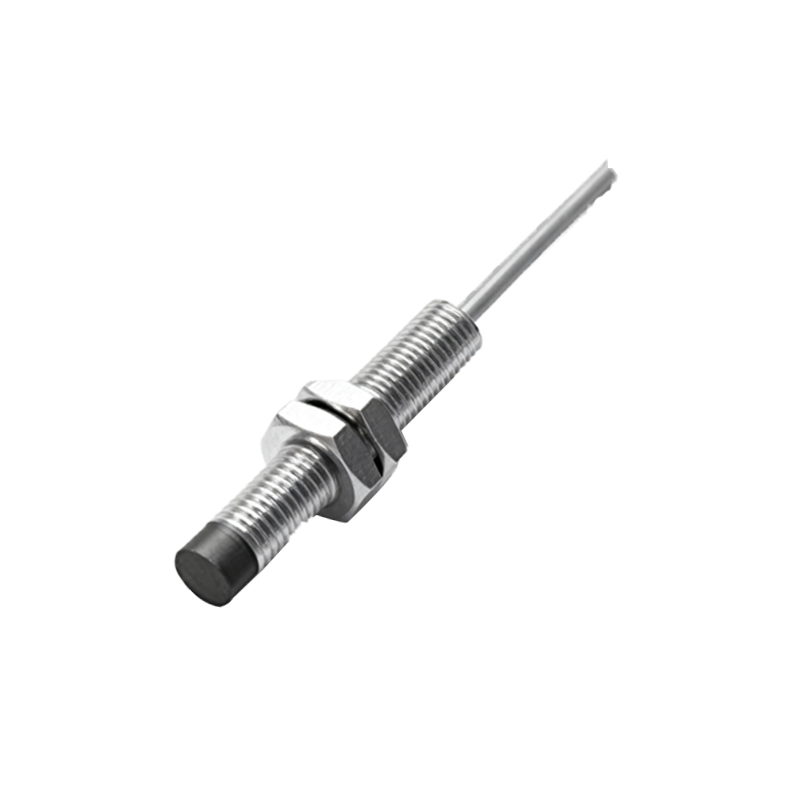
Proximity sensors, particularly inductive and capacitive types, are fundamental components in industrial automation. Inductive proximity sensors are the most common variant, operating on the principle of electromagnetic induction. They generate an oscillating electromagnetic field from a coil within the sensor head. When a metallic target enters this field, eddy currents are induced in the target, causing a change in the oscillation amplitude. This change is detected by the sensor's circuitry, triggering an output signal. Their primary function is the non-contact detection of metallic objects, making them indispensable in machinery for position sensing, counting, and safety applications. The detection is highly reliable for ferrous and non-ferrous metals but is inherently limited to conductive materials.
The Core Limitation: Inductive Sensors and Non-Metallics
The fundamental question of whether a standard inductive proximity sensor can detect a water droplet has a clear answer: no. Water, in its pure form, is a very poor conductor of electricity. The electrical conductivity of pure water is approximately 0.055 µS/cm, which is far too low to induce sufficient eddy currents to be detected by the sensor's internal circuitry. The oscillating electromagnetic field generated by the sensor's coil will pass through the water droplet with negligible interaction. The droplet does not present the conductive or ferromagnetic properties required to dampen the oscillation amplitude. Therefore, a typical cylindrical or ring-shaped inductive sensor will not register the presence of a water droplet, ice, or most other non-metallic substances.
Capacitive Sensors: A Potential Alternative
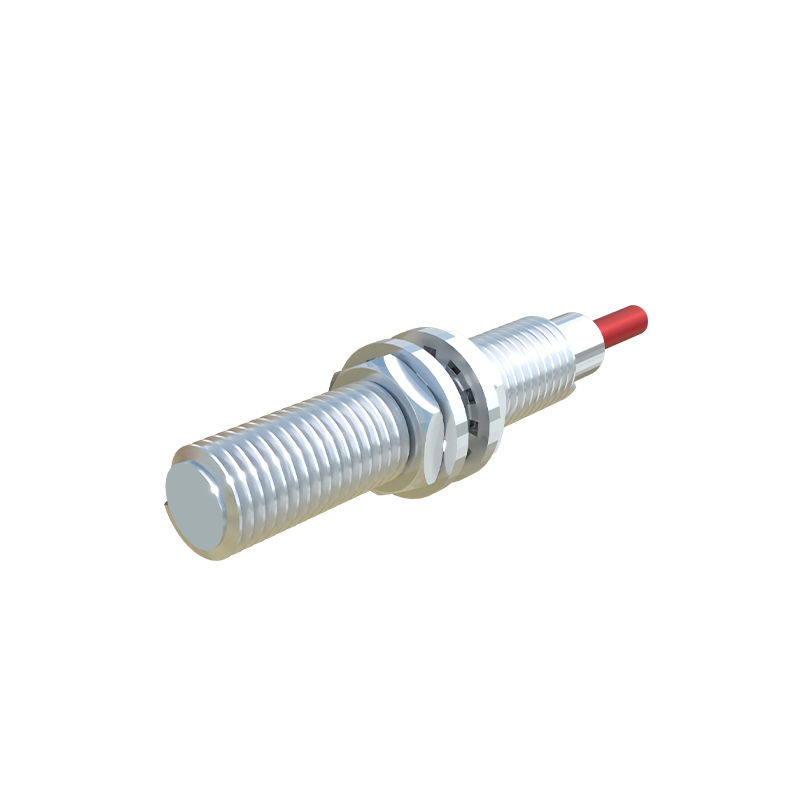
For detecting non-metallic materials like water, capacitive proximity sensors present a viable technological alternative. Unlike inductive sensors, capacitive sensors can detect both conductive and non-conductive materials by measuring changes in capacitance. The sensor forms one plate of a capacitor, with the target object acting as the other plate (or altering the dielectric constant between plates). The sensing face generates an electrostatic field. When any material with a dielectric constant different from air (εᵣ of air ≈ 1) enters this field, it changes the capacitance. Since water has a high dielectric constant (εᵣ ≈ 80 at 20°C), it causes a significant and detectable change in the sensor's capacitance, triggering the output.
Practical Challenges in Detecting Single Droplets
While capacitive sensors are theoretically capable of detecting water, detecting a single, small water droplet in an open environment presents significant practical challenges. The sensitivity of a standard capacitive sensor may be insufficient for a tiny target like a droplet. The sensor's detection range is influenced by the target's size, material, and dielectric constant. A small droplet has a minimal volume and surface area, resulting in a very small change in capacitance. Environmental factors such as ambient humidity, condensation on the sensor face, or the presence of other materials can cause false triggers or mask the signal from the droplet. For reliable detection of individual droplets, specialized high-sensitivity capacitive sensors or optical methods are typically required.
Specialized Sensing Methods for Liquids
In industrial and laboratory settings where precise detection of water droplets or liquid presence is critical, other sensing technologies are explicitly designed for this purpose. Optical sensors, including through-beam, retro-reflective, and diffuse-reflective types, are highly effective. A through-beam sensor can detect a droplet breaking its light beam. Conductivity or resistance probes can detect water when the liquid bridges two electrodes, completing a circuit. Ultrasonic sensors can measure the presence or level of liquids by reflecting sound waves. These technologies offer far greater reliability, precision, and signal strength for liquid detection compared to attempting to adapt a standard proximity sensor for this atypical application.
Conclusion and Industry Recommendations
In summary, a standard inductive ring proximity sensor cannot detect a water droplet due to the fundamental principles of electromagnetic induction and the non-conductive nature of pure water. While capacitive proximity sensors offer a pathway for detecting materials with high dielectric constants like water, their practical application for sensing minute, individual droplets is limited and prone to interference. For any application involving the detection, counting, or monitoring of water droplets or other small liquid volumes, engineers should specify purpose-built sensors such as optical, conductive, or ultrasonic devices. Selecting the correct sensing technology based on the target material's physical properties remains the cornerstone of reliable and efficient automation system design.