Introduction to Optical Sensing Technologies
In the realm of industrial automation and precision measurement, optical sensors stand as critical components for non-contact detection, positioning, and quality control. Among these, laser sensors and photoelectric sensors are two prominent technologies, each with distinct operating principles and application niches. While both utilize light to gather information about a target, their underlying mechanisms, performance characteristics, and ideal use cases differ significantly. This article provides a detailed technical comparison to guide engineers and system integrators in selecting the optimal sensor for their specific requirements, ensuring reliability, accuracy, and cost-effectiveness in automated systems.
Fundamental Operating Principles
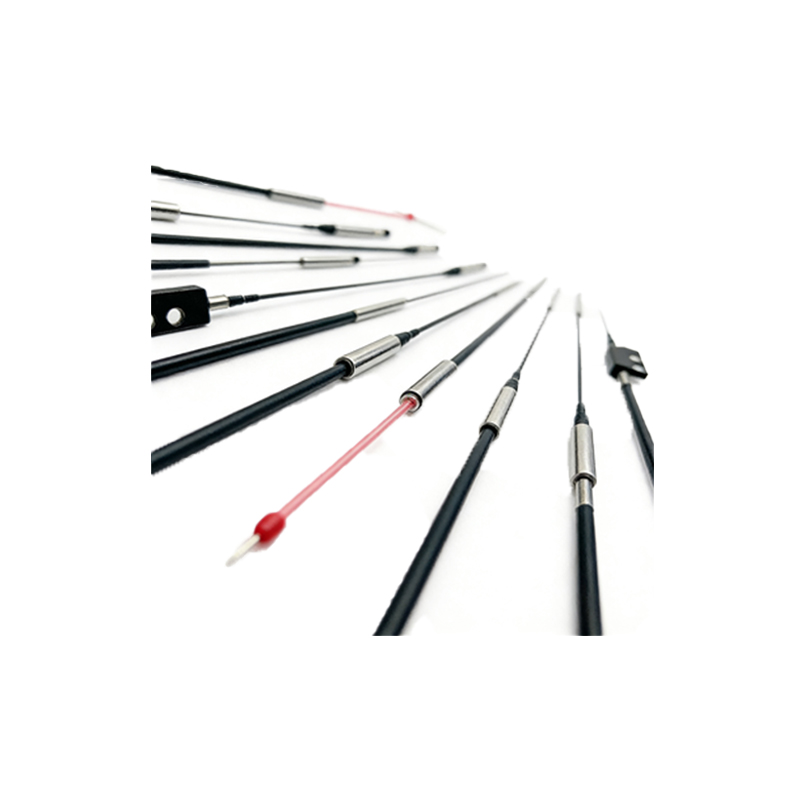
Photoelectric sensors, often called photoelectric eyes, operate primarily on the principle of light beam interruption or reflection. They typically consist of a light emitter (usually an LED) and a receiver. In a through-beam configuration, the sensor detects an object when it breaks the light beam between separate emitter and receiver units. In a retro-reflective or diffuse reflective mode, the sensor's own receiver detects light reflected back from the target. The core function is binary: detect the presence or absence of an object. Laser sensors, however, are a more specialized subset. They employ a highly focused, coherent laser beam. Their operation can be based on time-of-flight, triangulation, or confocal measurement principles to not only detect presence but also precisely measure distance, height, thickness, or profile with micron-level accuracy. The laser's coherence and minimal divergence allow for extremely precise spot targeting.
Key Performance Characteristics and Accuracy
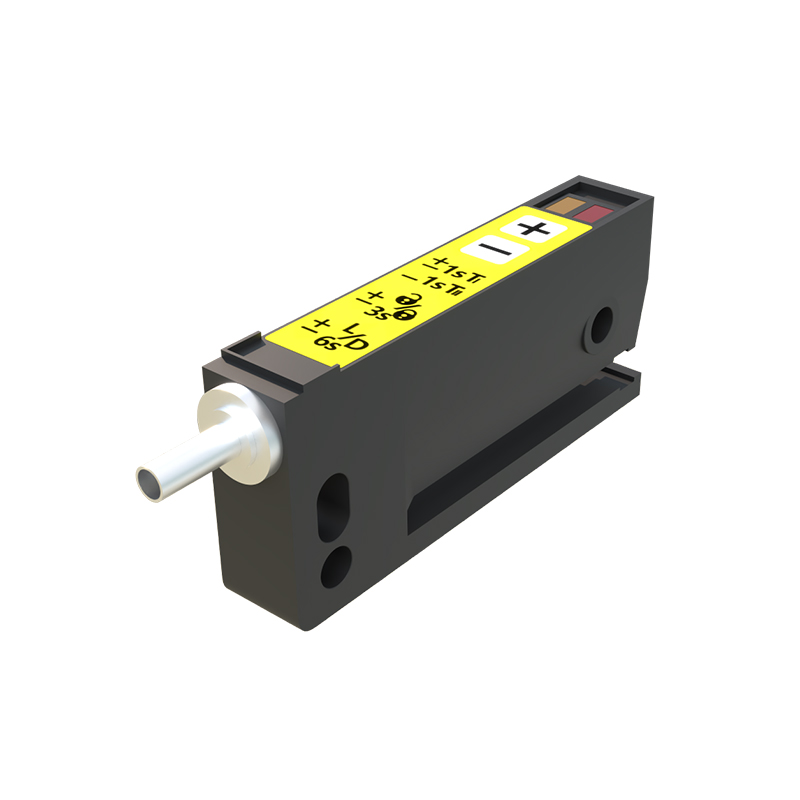
Accuracy and resolution are where the distinction becomes most apparent. Standard photoelectric sensors offer reliable detection over ranges typically up to several meters, with sensing distances influenced by target color, material, and surface finish. Their repeatability is suitable for basic presence detection but not for precise metrology. Laser sensors excel in high-precision scenarios. For instance, a laser triangulation sensor can achieve resolutions in the single-digit micron range for distance measurement. Laser time-of-flight sensors provide accurate distance data over longer ranges, from centimeters to hundreds of meters, with millimeter-level resolution. The focused beam allows them to ignore background interference and measure small or difficult-to-access targets that would challenge a standard photoelectric sensor.
Application Scenarios and Suitability
The choice between these sensors is fundamentally application-driven. Photoelectric sensors are the workhorses of factory automation. They are ideal for simple tasks: counting objects on a conveyor, detecting the open/closed position of a door, verifying part placement, or triggering an actuator. They are robust, cost-effective, and available in myriad housing styles for harsh environments. Laser sensors are deployed where quantitative data is essential. Common applications include precise dimensional gauging (e.g., wire diameter, component height), contour profiling, wafer alignment in semiconductor manufacturing, and monitoring gap or step heights in assembly processes. They are also used in level monitoring of bulk materials and in robotics for precise positioning and navigation.
Environmental Factors and Limitations
Both sensor types face environmental challenges, but in different ways. Photoelectric sensors with LEDs can be susceptible to ambient light interference, requiring modulation techniques for stability. Dust, fog, or steam can scatter the beam, causing false triggers. Opaque objects are detected reliably, but transparent or highly reflective materials may require specialized models. Laser sensors, while powerful, have their own constraints. The intense, focused beam can pose a safety hazard (requiring appropriate laser class labeling and safeguards). Highly specular surfaces can reflect the beam away from the receiver, causing measurement errors. Contamination on lenses can severely impact performance. However, many industrial laser sensors incorporate features like background suppression and advanced filtering to mitigate common environmental noise.
Integration and Cost Considerations
From an integration standpoint, photoelectric sensors are generally simpler. They often provide a discrete ON/OFF output (PNP/NPN) or a simple analog signal, easily interfaced with PLCs. Laser sensors frequently offer sophisticated digital interfaces (e.g., IO-Link, Ethernet/IP, Profinet) to stream high-resolution measurement data. The initial cost difference is significant; a basic photoelectric sensor is a fraction of the price of a precision laser sensor. Therefore, the justification for a laser sensor must come from the value of the measurement data it provides—improving quality, reducing waste, or enabling a complex automated process that would be impossible with simple detection. Total cost of ownership also includes maintenance, calibration, and potential downtime.
Future Trends and Technological Advancements
The evolution of both technologies continues. Photoelectric sensors are becoming smarter with integrated diagnostics, longer ranges using new LED technologies, and improved immunity to environmental factors. The integration of IO-Link is providing deeper parameterization and condition monitoring data. Laser sensor technology is advancing in miniaturization, speed, and intelligence. The emergence of CMOS and CCD array receivers enables full profile scanning at high speeds. Class 1 laser products (inherently safe) are becoming more prevalent, easing safety concerns. Furthermore, the fusion of laser measurement data with AI and machine vision algorithms is opening new frontiers for in-line inspection and adaptive process control, pushing the boundaries of precision automation.
Conclusion and Selection Guidelines
Selecting between a laser sensor and a photoelectric sensor is not a matter of which is universally better, but which is optimally suited for the task. For robust, cost-effective presence detection or simple binary switching in industrial environments, the photoelectric sensor remains the default and excellent choice. When the application demands precise, quantitative measurement of distance, dimension, or profile, the laser sensor is the necessary tool, despite its higher cost and complexity. Engineers must carefully evaluate the required precision, sensing range, target properties, environmental conditions, and available budget. By understanding the core strengths and limitations of each technology, one can make an informed decision that ensures system reliability, enhances product quality, and maximizes return on investment in automation projects.