Introduction to FRN21 Photoelectric Sensors
The FRN21 series represents a cornerstone in modern industrial sensing technology. As a compact, versatile photoelectric sensor, it is engineered to deliver reliable object detection across a multitude of challenging environments. These sensors operate on the fundamental principle of emitting a light beam—typically infrared, red, or laser—and detecting changes in the received light intensity caused by the presence or absence of a target object. The FRN21 model is particularly renowned for its robust housing, which often meets IP67 or higher ingress protection ratings, making it resistant to dust, water jets, and oil splashes commonly found in manufacturing plants, packaging lines, and material handling systems. Its design prioritizes both durability and precision, ensuring minimal downtime and consistent performance in automated processes.
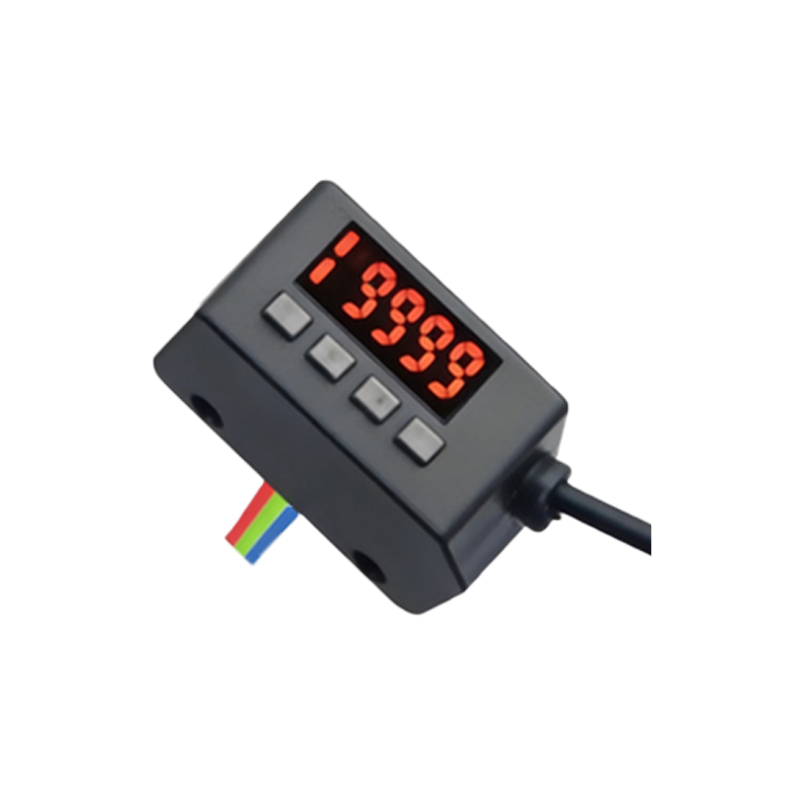
Key Technical Specifications and Operating Modes
Understanding the technical parameters of the FRN21 is crucial for optimal application. Typically, these sensors feature a sensing distance ranging from a few centimeters up to several meters, depending on the specific variant (e.g., diffuse-reflective, retro-reflective, or through-beam). The operating voltage commonly spans from 10-30V DC, ensuring compatibility with standard industrial control systems. The output configuration usually includes both NPN and PNP transistor outputs, as well as analog options in some models, providing flexibility for interfacing with PLCs (Programmable Logic Controllers) and other control units. A critical feature is the response time, which is often in the millisecond range, enabling high-speed detection on fast-moving production lines. Additionally, many FRN21 sensors incorporate advanced functions like background suppression, which allows them to ignore objects beyond a set distance, and teach-in functionality for easy setup and adjustment of sensitivity thresholds without manual potentiometers.
Application Scenarios in Industrial Automation
The versatility of the FRN21 photoelectric sensor makes it indispensable in numerous industrial scenarios. In conveyor belt systems, it is extensively used for precise object counting, jam detection, and positioning control. Its ability to detect a wide variety of materials—including transparent glass bottles, opaque metal parts, and irregularly shaped packages—makes it ideal for packaging and bottling industries. In automated assembly lines, FRN21 sensors ensure components are present and correctly oriented before robotic arms engage. They also play a vital role in warehouse automation, facilitating pallet detection, height control, and guiding Automated Guided Vehicles (AGVs). The sensor's environmental robustness allows it to perform reliably in harsh conditions, such as detecting fill levels in tanks within the chemical industry or monitoring log positions in sawmills where dust and vibration are prevalent.
Installation, Alignment, and Calibration Best Practices
Proper installation is paramount to harnessing the full potential of the FRN21 sensor. Mounting should be secure to minimize vibration-induced errors, and the sensor must be aligned accurately with the target path. For through-beam types, careful alignment of the separate emitter and receiver units is necessary to ensure an unobstructed beam path. Many FRN21 models are equipped with visible red light or stable blue LED indicators that assist in alignment and provide clear status feedback (e.g., power on, output active, fault conditions). Calibration, often simplified by a teach-in button or remote input, involves setting the detection threshold under actual operating conditions. It is recommended to perform calibration with the target object present to account for ambient light variations and surface reflectivity. Regular maintenance checks should include lens cleaning to prevent false triggers from accumulated dirt or debris.
Troubleshooting Common Issues and Ensuring Longevity
Even with high-reliability designs, users may encounter occasional issues. Common problems include inconsistent detection, which can stem from misalignment, dirty lenses, or fluctuating power supply. If the sensor fails to detect, verify the sensing range, ensure the object is within the specified size and reflectivity parameters, and check for electrical connections and output load compatibility. Environmental interference from strong ambient light or crosstalk between adjacent sensors can often be mitigated by using sensors with modulated light signals or by installing light shields. To ensure long-term operational longevity, operate the FRN21 within its specified temperature, humidity, and voltage ranges. Implementing protective measures, such as surge protectors in electrically noisy environments, can prevent damage from voltage spikes. Adhering to the manufacturer's guidelines for periodic inspection and replacement intervals will maximize service life and system reliability.
Future Trends and Integration with Industry 4.0
The evolution of photoelectric sensors like the FRN21 is closely tied to the advancement of Industry 4.0 and the Industrial Internet of Things (IIoT). Future iterations are expected to feature enhanced connectivity options, such as IO-Link, which enables digital parameter setting, real-time monitoring of sensor health, and predictive maintenance data transmission directly to central control systems. This intelligence transforms the sensor from a simple detection device into a smart node within a networked factory. Integration with machine learning algorithms could allow for more sophisticated object discrimination and adaptive sensing. Furthermore, ongoing miniaturization and power efficiency improvements will enable their deployment in even more compact and energy-conscious automation solutions. The core principles of robustness and accuracy embodied by the FRN21 will continue to be foundational as these smart capabilities become standard, ensuring its relevance in the automated factories of the future.