Introduction to Proximity Ring Sensors
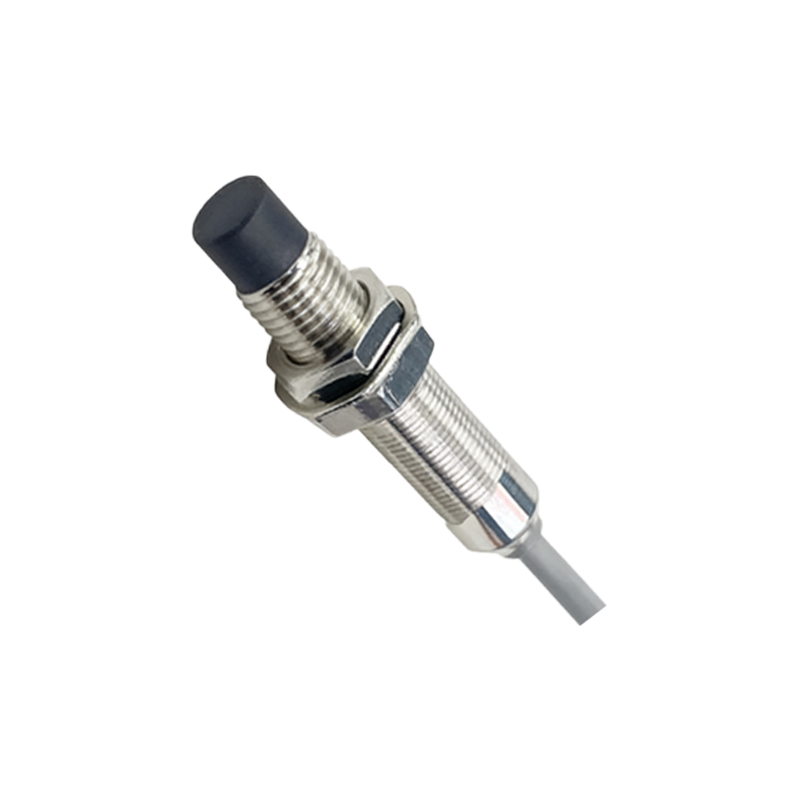
Proximity ring sensors, also known as ring-shaped inductive sensors, are specialized devices designed for non-contact detection of metallic objects passing through their central aperture. These sensors operate on the principle of electromagnetic induction, generating an oscillating magnetic field within the ring. When a metallic target enters this field, eddy currents are induced, causing a change in the oscillation amplitude or frequency. This alteration is detected by the sensor's internal circuitry, triggering an output signal. Unlike standard proximity sensors, the ring design allows for seamless integration into production lines, enabling objects to pass through without physical contact. Key features include high switching frequencies, immunity to environmental contaminants like dust or oil, and precise detection capabilities. They are commonly available in various sizes to accommodate different object dimensions, with sensing ranges tailored to specific industrial needs.
Automated Assembly and Sorting Systems
In automated assembly lines, proximity ring sensors play a critical role in ensuring smooth operations. They are frequently installed at conveyor belt junctions to detect the presence of components such as screws, bolts, or small metal parts. For instance, in automotive manufacturing, these sensors verify that engine components pass through assembly stations in the correct sequence, preventing jams or misalignments. In sorting applications, they distinguish between metallic and non-metallic items on fast-moving belts, directing them to appropriate bins based on material type. Their high-speed response—often capable of detecting objects at frequencies exceeding 1 kHz—makes them ideal for high-volume production environments. Additionally, their robust construction withstands vibrations and mechanical stress, reducing downtime in demanding settings like packaging or electronics assembly.
Quality Control and Inspection Processes
Quality assurance relies heavily on proximity ring sensors to identify defects or inconsistencies in manufactured goods. In metalworking industries, these sensors monitor the dimensions of rods, wires, or tubes as they pass through the ring, triggering alarms if deviations from tolerances are detected. For example, in wire production, sensors ensure uniform thickness by flagging sections that are too thick or thin. They also inspect for missing elements, such as absent caps on bottles with metallic seals or unlabeled cans on filling lines. By providing real-time feedback, they enable immediate corrective actions, minimizing waste and enhancing product reliability. Advanced models with analog outputs can even measure slight variations in object size, offering granular data for statistical process control.
Safety and Monitoring Applications
Safety systems in industrial plants incorporate proximity ring sensors to prevent accidents and equipment damage. In machinery guarding, they are used as part of interlock mechanisms to detect when tools or workpieces are improperly positioned, automatically shutting down operations if a hazard is sensed. For instance, in stamping presses, sensors confirm that metal sheets are fully inserted before activating the press cycle, protecting both operators and machinery. They also monitor rotational equipment like shafts or gears, detecting imbalances or breakages by sensing irregular metallic movements. In hazardous environments with explosive atmospheres, intrinsically safe versions are deployed to comply with safety standards, ensuring reliable performance without spark risks.
Integration with Industry 4.0 and IoT
The advent of Industry 4.0 has expanded the functionality of proximity ring sensors through connectivity and data analytics. Modern sensors are equipped with IO-Link or Ethernet interfaces, allowing them to transmit diagnostic information—such as temperature fluctuations or wear levels—to centralized control systems. In smart factories, this data facilitates predictive maintenance, alerting technicians to potential failures before they occur. For example, a sensor monitoring metal part flow can analyze trends in detection rates, identifying gradual declines that signal conveyor belt wear. Integration with IoT platforms enables remote monitoring and adjustments, optimizing production efficiency across global supply chains. These capabilities transform simple detection tasks into actionable insights, supporting automated decision-making in complex industrial networks.
Conclusion and Future Trends
Proximity ring sensors are indispensable in modern industrial automation, offering versatile solutions for detection, quality control, and safety. Their non-contact nature ensures longevity and minimal maintenance, while advancements in materials and electronics continue to enhance their accuracy and durability. Emerging trends include the development of miniaturized sensors for micro-component applications and enhanced resistance to extreme temperatures or corrosive substances. As industries increasingly adopt AI-driven automation, these sensors will likely evolve to incorporate embedded intelligence for adaptive sensing, further solidifying their role in efficient and safe manufacturing processes. By leveraging their unique design and capabilities, engineers can address diverse challenges, from high-speed sorting to precise inspection, in an ever-evolving industrial landscape.