Introduction to TOYO Photoelectric Sensors
In the realm of industrial automation, the ability to detect objects with precision and reliability is paramount. TOYO photoelectric sensors have established themselves as critical components in this domain, offering robust solutions for a wide array of applications. These sensors operate on the principle of emitting a light beam—typically infrared, visible red, or laser—and detecting changes in the received light signal caused by the presence, absence, or characteristics of an object. TOYO's engineering focus ensures that their sensors deliver consistent performance even in challenging industrial environments characterized by dust, vibration, and variable lighting conditions. The core value proposition lies in their high repeat accuracy, long sensing distances, and versatile mounting options, making them indispensable for tasks ranging from simple object detection to complex positioning and counting operations on high-speed production lines.
Core Technologies and Operating Principles
TOYO photoelectric sensors are built around several key technologies that define their performance. The primary operating modes include through-beam, retro-reflective, and diffuse-reflective sensing. Through-beam sensors, consisting of separate emitter and receiver units, offer the longest sensing distances and highest immunity to environmental interference. Retro-reflective models use a single housing with both emitter and receiver, relying on a reflector to bounce the light beam back; they are often equipped with polarization filters to reliably detect shiny objects. Diffuse-reflective sensors detect light reflected directly from the target object itself, making them ideal for applications where installing a reflector or separate receiver is impractical. TOYO integrates advanced optics and signal processing circuits to enhance stability, implementing features like background suppression for precise detection independent of object color or surface reflectivity, and high-speed response capabilities for rapid production cycles.
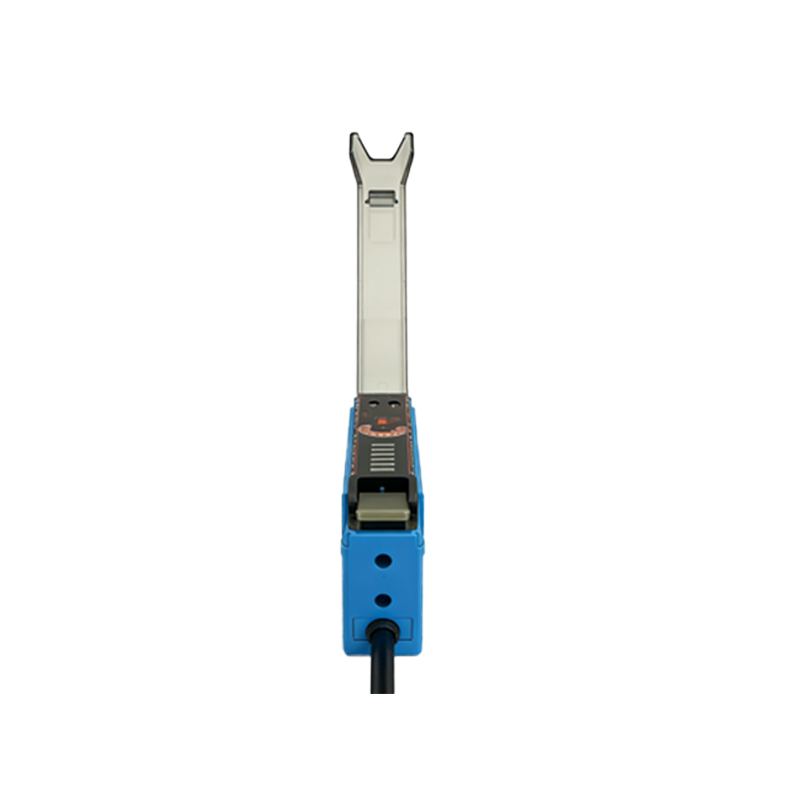
Product Range and Key Specifications
The TOYO photoelectric sensor portfolio is diverse, catering to specific industrial needs. Their product lines encompass miniature sensors for space-constrained installations, ruggedized models with high IP ratings (e.g., IP67, IP69K) for washdown or outdoor use, and specialized variants like color mark sensors, fiber optic sensors, and laser sensors for ultra-fine detection. Key specifications that engineers evaluate include sensing distance, which can range from a few centimeters to several meters; light source type (LED or laser); response time, often in the microsecond range; output configuration (NPN/PNP transistor, analog, or IO-Link); and power supply requirements. TOYO sensors are designed for easy integration, featuring intuitive setup indicators (like teach-in functions or sensitivity adjustments) and durable housings made from materials like stainless steel or reinforced plastic to withstand mechanical impact and chemical exposure.
Application Scenarios in Modern Industry
The practical applications of TOYO photoelectric sensors span virtually every manufacturing and logistics sector. In packaging machinery, they are used for detecting product presence on conveyor belts, ensuring correct fill levels, and verifying label placement. Within the automotive industry, these sensors play a crucial role in robotic assembly lines, part positioning, and weld seam tracking. In material handling and warehouse automation, they facilitate pallet detection, box dimensioning, and guiding automated guided vehicles (AGVs). Furthermore, in food and beverage processing, their hygienic designs enable detection tasks on filling lines while complying with strict sanitation standards. The reliability of TOYO sensors helps in preventing jams, reducing waste, ensuring quality control, and ultimately optimizing overall equipment effectiveness (OEE) by minimizing downtime.
Installation, Calibration, and Maintenance Best Practices
Proper installation is critical for maximizing the performance and lifespan of any photoelectric sensor. For TOYO sensors, it involves careful consideration of mounting position, alignment, and environmental factors. Ensuring a stable mounting bracket minimizes the effects of vibration. Alignment must be precise, especially for through-beam and retro-reflective types, to maintain a strong signal. Calibration, often simplified by built-in push-button or remote teach-in functions, allows users to set the optimal sensitivity threshold for the specific target object and background. Regular maintenance primarily involves keeping the lens clean from dust, oil, or debris that could attenuate the light beam. TOYO designs many models with status indicators (stable vs. unstable light reception) to aid in troubleshooting. Implementing periodic functional checks as part of preventive maintenance schedules helps in early detection of potential failures.
Advantages Over Alternative Sensing Technologies
Compared to other proximity sensing technologies like inductive or capacitive sensors, TOYO photoelectric sensors offer distinct advantages. Their primary benefit is the ability to detect a vast range of materials, including non-metallic objects like glass, plastic, wood, and liquids, which are invisible to inductive sensors. They also provide much longer sensing distances. While ultrasonic sensors can also detect various materials, photoelectric sensors generally offer faster response times and higher precision for small object detection. The non-contact nature of photoelectric sensing eliminates mechanical wear and tear, ensuring long-term reliability. TOYO's continuous innovation in LED technology has resulted in sensors with exceptionally long service lives, reducing total cost of ownership. Their compact designs and flexible output options make them easier to integrate into modern, networked Industry 4.0 systems alongside PLCs and vision systems.
Future Trends and TOYO's Roadmap
The future of photoelectric sensing is intertwined with the evolution of smart factories. TOYO is actively developing sensors with enhanced connectivity features, such as integrated IO-Link communication, which enables detailed parameter setting, remote monitoring, and predictive maintenance data exchange. There is a growing demand for sensors with higher intelligence, capable of not just detecting presence but also measuring distance (using time-of-flight principles), distinguishing colors, or checking for specific patterns. Miniaturization continues to be a trend, allowing sensors to be installed in increasingly tight spaces. Furthermore, improving resistance to extreme conditions—higher temperatures, intense ambient light, and more aggressive chemicals—remains a key engineering focus. TOYO's commitment to R&D ensures that their photoelectric sensor lineup will continue to provide the precision, durability, and connectivity required for the next generation of automated systems.