Introduction to Ring-Type Proximity Sensors
Ring-type proximity sensors, often referred to as through-beam or ring sensors, are a specialized category of non-contact sensing devices. Their defining feature is a donut-shaped sensing head with a central aperture. This design allows objects to pass directly through the ring, enabling precise detection without physical contact. These sensors are indispensable in modern industrial automation, particularly in applications involving counting, positioning, and inspection of small components, wires, fasteners, or on production lines where objects are conveyed at high speeds. Unlike standard proximity sensors that detect objects approaching from one direction, the ring-type sensor creates a continuous detection field within its bore, offering a unique and highly reliable sensing solution.
Key Operating Principles and Technologies
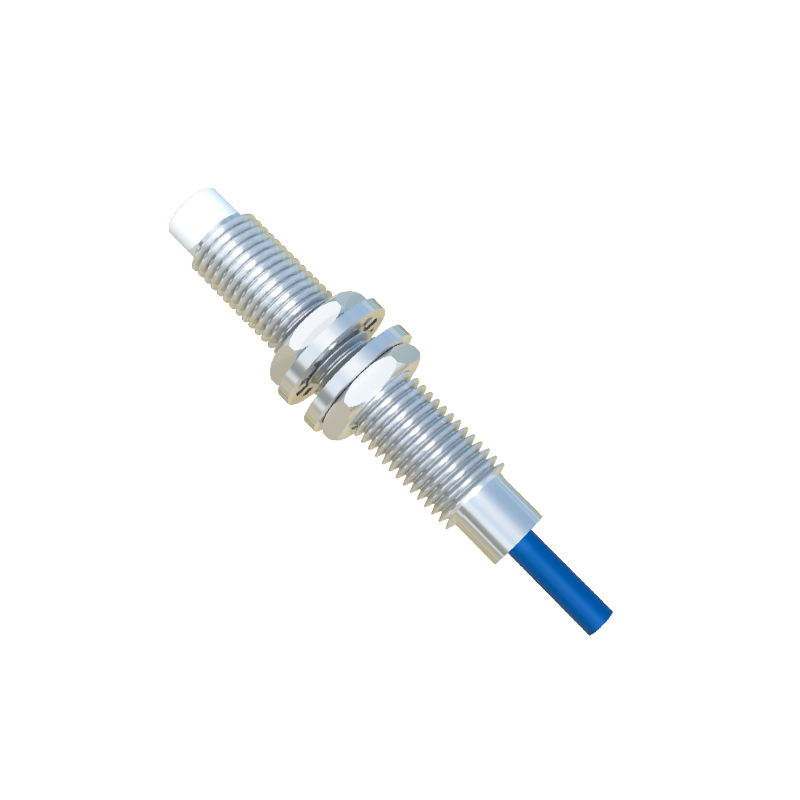
The core functionality of ring sensors is based primarily on high-frequency oscillation or optical sensing principles. Inductive ring sensors generate a high-frequency electromagnetic field within the ring's aperture. When a metallic object passes through, it disturbs this field, causing a change in oscillation amplitude that triggers the sensor's output. Capacitive variants detect both metallic and non-metallic objects by sensing changes in capacitance. For non-metallic materials like plastic, wood, or glass, optical ring sensors are the preferred choice. These utilize an integrated infrared light emitter and receiver positioned opposite each other on the inner ring; an object passing through interrupts the light beam, signaling detection. The choice of technology—inductive, capacitive, or optical—is fundamental to selecting the correct model for a specific application.
Critical Specifications and Model Selection Criteria
Selecting the appropriate ring proximity sensor model requires careful analysis of several key specifications. The inner diameter (bore size) is paramount and must be larger than the maximum dimension of the object to be detected. Sensing distance, typically minimal in ring sensors, refers to the depth of the detection field within the aperture. Response frequency, measured in Hertz (Hz), indicates how many detection events per second the sensor can handle, a critical factor for high-speed counting. Output type is another vital consideration; common options include NPN/PNN transistors, relay contacts, or analog outputs (4-20mA, 0-10V). Environmental ratings, notably the Ingress Protection (IP) code for dust and water resistance, and operating temperature range, ensure reliability in harsh industrial conditions. Models are often differentiated by these specs, such as a high-frequency model for tiny component counting versus a rugged, large-bore model for bulk material detection.
Common Industrial Applications and Use Cases
The unique design of ring sensors makes them ideal for a wide array of automated tasks. In assembly and packaging lines, they are extensively used for precise part counting—ensuring the correct number of screws, tablets, or bottles are present. They serve as vital error-proofing devices, verifying the presence of components like piston rings or bearings on a shaft before further assembly. In wire and cable production, ring sensors detect splices, defects, or monitor the diameter. They are also crucial in sorting systems, distinguishing between different object sizes or materials as they pass through the ring. Their non-contact nature prevents product damage and allows for maintenance-free operation in demanding, high-cycle environments.
Installation, Alignment, and Maintenance Best Practices
Proper installation is crucial for optimal performance. The sensor must be securely mounted, ensuring the path of the object is perfectly centered through the aperture. Even slight misalignment can cause false triggers or missed detections, especially in optical models. Adequate clearance around the sensor is necessary to prevent interference from surrounding metal structures or machinery. Electrical wiring should follow manufacturer guidelines, paying close attention to load specifications and implementing proper shielding in electrically noisy environments. Maintenance is generally minimal but should include regular cleaning of the lens for optical sensors and the aperture for inductive types to remove dust, oil, or debris that could impair sensitivity. Periodically verifying the sensor's response with a test object is a recommended practice.
Advantages Over Alternative Sensing Methods
Ring-type proximity sensors offer distinct advantages compared to other sensing solutions like standard proximity sensors, photoelectric beams, or vision systems. Their enclosed detection zone provides high immunity to environmental factors such as ambient light, dust, and vibrations, which often plague photoelectric sensors. They allow for detection from all radial directions within the bore, eliminating orientation issues. For small object detection on fast-moving lines, they are typically more cost-effective and simpler to integrate than complex vision systems. Their robust construction often leads to higher reliability and longer service life in dirty or wet conditions, reducing downtime and total cost of ownership.
Future Trends and Technological Developments
The evolution of ring-type proximity sensors is closely tied to advancements in Industry 4.0 and smart manufacturing