Introduction to 3-Wire DC Proximity Sensors
A 3-wire DC proximity sensor is a fundamental component in industrial automation, renowned for its reliability in non-contact detection of metallic objects. Unlike their 2-wire counterparts, these sensors offer superior performance with separate power supply and output signal lines, allowing for lower leakage current and more stable switching characteristics. They are predominantly used in manufacturing, packaging, material handling, and automotive assembly lines to detect the presence, absence, or position of metal parts such as steel, aluminum, or brass without physical contact, thereby reducing wear and enabling high-speed operation.
Internal Circuitry and Operating Principle
The core of a 3-wire DC inductive proximity sensor is an oscillator circuit that generates a high-frequency electromagnetic field from its sensing face. When a metallic target enters this field, eddy currents are induced in the target, causing a dampening or loading of the oscillator's amplitude. This change is detected by a threshold circuit, which subsequently triggers a solid-state output switch—either a PNP (sourcing) or NPN (sinking) transistor. The three wires are distinctly colored: typically brown for positive DC supply (+V), blue for common negative or 0V, and black for the switched output signal. This dedicated output wire provides a clean, discrete signal to a programmable logic controller (PLC) or other control device.
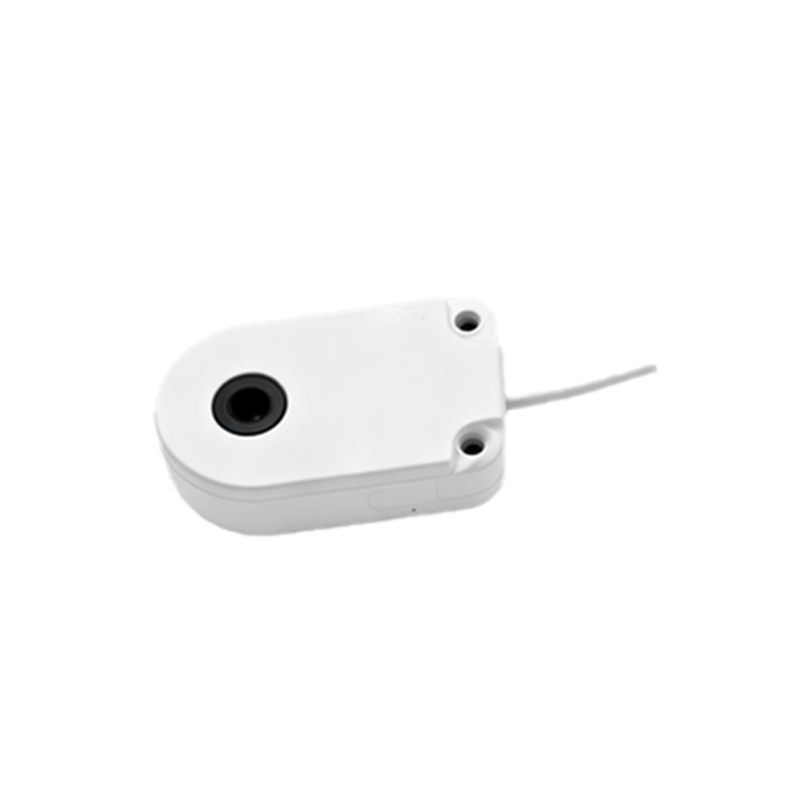
Wiring Configurations: PNP vs. NPN
Understanding the difference between PNP and NPN wiring is critical for correct integration. A PNP sensor, also described as "sourcing," switches the positive voltage to the output line. In its normal state (no target), the black wire is off (near 0V). When a target is detected, the sensor connects the black wire to the positive supply voltage (+V), sourcing current to the load. Conversely, an NPN sensor, or "sinking" type, switches the negative or 0V line. Here, the black wire is normally at a high potential (near +V), and upon detection, it switches to connect to 0V, sinking current from the load. The choice between PNP and NPN often depends on the prevailing convention in a region (PNP is common in Europe, NPN in some Asian markets) and the input configuration of the connected control system.
Key Advantages and Performance Characteristics
The three-wire design offers significant advantages. It features minimal leakage current (often less than 1 mA), preventing false triggering in sensitive control circuits. It allows for a wider operating voltage range, commonly from 10 to 30 VDC. The response time is exceptionally fast, enabling detection of objects moving at high speeds. Furthermore, these sensors provide excellent electrical noise immunity, crucial for environments with variable frequency drives or welding equipment. Their output is typically short-circuit, overload, and reverse polarity protected, enhancing durability and reducing downtime in harsh industrial settings.
Practical Installation and Wiring Guidelines
Correct installation is paramount for optimal performance. Always disconnect power before wiring. Connect the brown wire to the positive DC supply and the blue wire to the common negative. The black output wire connects to the PLC input or relay coil. For an NPN sensor, the load is connected between the black wire and +V; for a PNP sensor, the load is connected between the black wire and 0V. Ensure the sensor is mounted securely, paying attention to the specified sensing distance and accounting for any reduction factors for different metals. Maintain adequate clearance from other metal objects to prevent mutual interference and false actuation.
Selection Criteria for Specific Applications
Selecting the appropriate 3-wire sensor requires evaluating several parameters. First, determine the required sensing distance, noting that manufacturers specify this for a standard mild steel target. For non-ferrous metals like aluminum or copper, the effective sensing range is reduced, often by 30-60%. Next, choose the housing material—stainless steel for washdown or corrosive environments, and nickel-plated brass or plastic for general use. The output type (PNP or NNP) must match the control system. Also consider the switching frequency, temperature rating, and the presence of built-in diagnostics like LED status indicators. For high-speed counting or precise positioning, a sensor with a very fast response time and repeat accuracy is essential.
Troubleshooting Common Issues
Common operational issues often stem from wiring errors, incorrect sensor type, or environmental factors. If the sensor fails to detect a target, verify the power supply voltage and polarity. Check if the target material and size are within specifications. Ensure the sensing face is clean and free from