Fundamentals of Photodiode Operation
A photodiode (PD) is a semiconductor device that converts light into an electrical current. This process, known as the photovoltaic effect, occurs when photons with sufficient energy strike the semiconductor material, typically silicon, germanium, or indium gallium arsenide. This interaction generates electron-hole pairs within the depletion region of the PN junction. Under reverse bias or zero bias conditions, the internal electric field sweeps these charge carriers, producing a photocurrent that is directly proportional to the incident light intensity. The core parameters defining a photodiode's performance include responsivity (measured in A/W), which indicates the electrical output per unit of optical input; response time, determining the speed of conversion; and dark current, the small current that flows even in the absence of light, which is a key source of noise.
Key Modes of Photodiode Sensor Operation
Photodiode sensors can be operated in two primary modes: photovoltaic mode and photoconductive mode. In photovoltaic mode, the photodiode operates without an external bias voltage (zero bias). It generates a voltage across its terminals when illuminated, functioning similarly to a solar cell. This mode offers minimal dark current and is ideal for low-light, precision measurement applications where noise must be minimized. In contrast, photoconductive mode involves applying a reverse bias voltage to the photodiode. This widens the depletion region, reducing junction capacitance and significantly improving the response speed and linearity. While this mode introduces higher dark current, it is the preferred choice for high-speed communication, fast pulsed light detection, and applications requiring wide dynamic range.
Critical Design Considerations and Trade-offs
Selecting the appropriate photodiode for a specific application involves navigating several engineering trade-offs. The active area size is a primary consideration; a larger area collects more light, enhancing sensitivity for low-light scenarios, but it also increases junction capacitance, thereby limiting bandwidth and response speed. The choice of semiconductor material dictates the spectral response range. Silicon photodiodes are prevalent for visible and near-infrared light, while germanium and InGaAs extend sensitivity further into the infrared spectrum. Engineers must also balance responsivity with noise performance. Techniques such as using a transimpedance amplifier (TIA) to convert the photodiode's current output into a stable voltage are standard, but careful PCB layout, shielding, and component selection are mandatory to mitigate electromagnetic interference and thermal noise.
Primary Applications in Industrial and Commercial Systems
The utility of photodiode sensors spans countless sectors due to their reliability, speed, and solid-state nature. In industrial automation, they are the cornerstone of optical encoders for precise motor speed and position control, and are integral to object detection, counting, and alignment in assembly lines. For safety, they form the essential receiver component in safety light curtains and laser scanners. In the realm of communications, photodiodes (especially avalanche photodiodes or APDs) are the critical detectors in fiber optic receivers, converting high-speed optical data streams back into electrical signals. Consumer electronics rely on them for ambient light sensing in displays and proximity detection in smartphones. Furthermore, they are indispensable in scientific instrumentation for spectroscopy, particle detection, and analytical chemistry measurements.
Guidelines for Sensor Selection and Integration
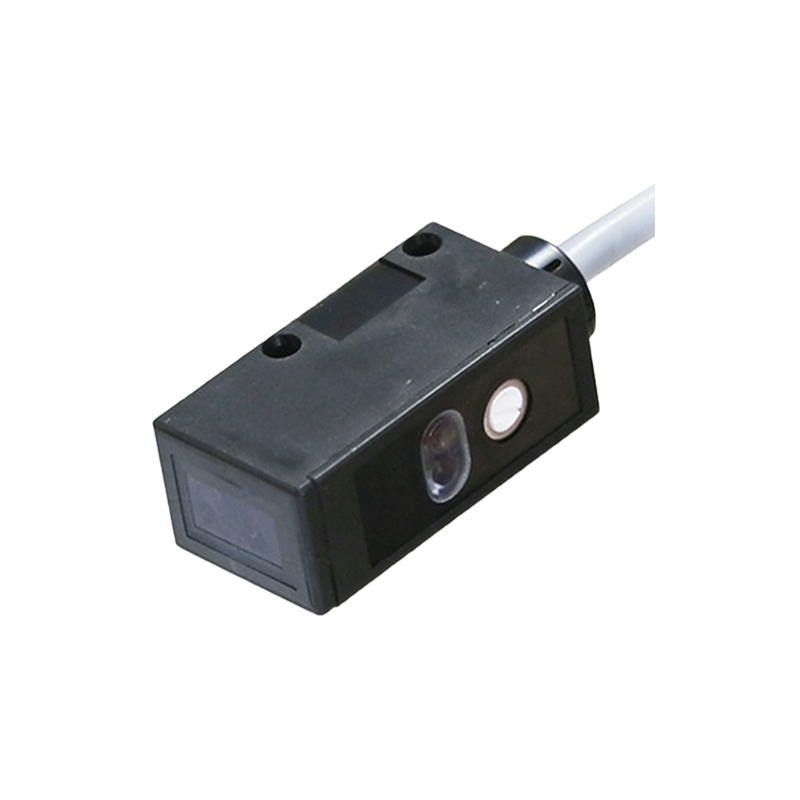
A systematic approach is required for successful photodiode sensor integration. First, clearly define the application requirements: the wavelength of light to be detected, the required bandwidth or response time, the expected light intensity range, and the acceptable noise floor. Match the photodiode's spectral response curve to your light source. For pulsed or high-frequency signals, prioritize devices with low capacitance and consider photoconductive operation with a high-speed TIA. For precision analog measurements in low light, a large-area photodiode in photovoltaic mode with a low-noise amplifier is preferable. Always consult the manufacturer's datasheet for critical parameters like noise-equivalent power (NEP), linearity, and temperature coefficients. Proper optical design, including lenses, filters, and housings to block unwanted ambient light, is often as crucial as the electronic design to ensure optimal system performance and reliability.