What is a Proximity Sensor?
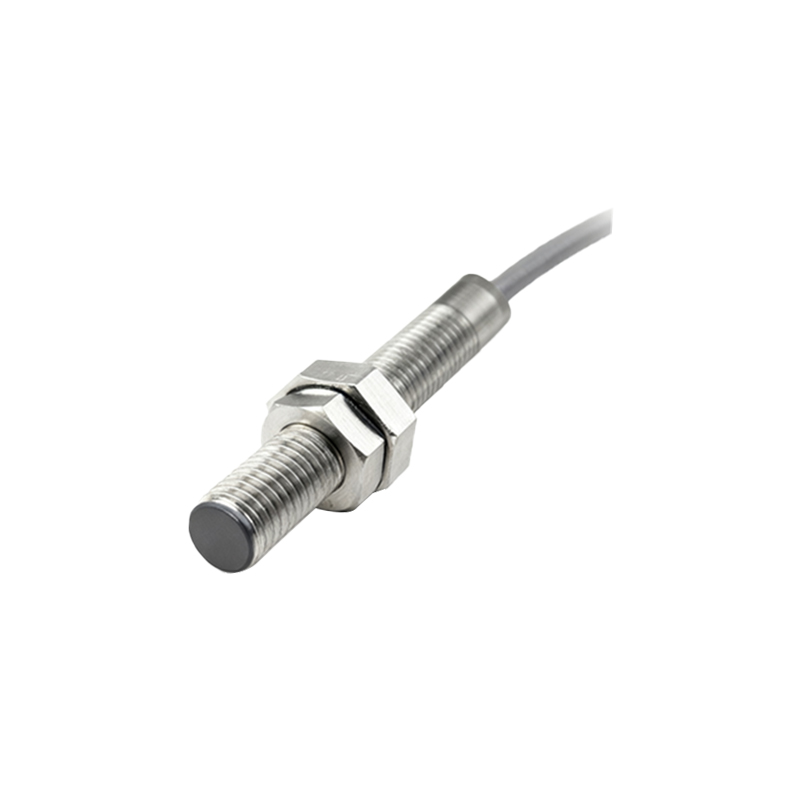
A proximity sensor, commonly referred to as a proximity switch, is a non-contact electronic device designed to detect the presence or absence of an object within a specified sensing range without any physical contact. Unlike mechanical limit switches, these sensors operate by emitting an electromagnetic field, beam, or ultrasonic sound wave and then detecting changes in the return signal or field. This fundamental principle allows for highly reliable, wear-free operation in demanding industrial environments. The primary function is to provide a discrete on/off signal to a programmable logic controller (PLC) or other control system, initiating actions such as counting, positioning, inspection, or automated process control. Their ability to function without touching the target object makes them indispensable in applications where contact is undesirable due to factors like high speed, delicate materials, or harsh conditions.
Core Operating Principles and Types
Proximity sensors are categorized based on their underlying detection technology. The most prevalent types in industrial automation are inductive, capacitive, and magnetic (Reed) sensors. Inductive proximity sensors are the workhorses of metal detection. They generate an oscillating electromagnetic field from a coil in the sensing face. When a metallic object enters this field, it induces eddy currents, which dampen the oscillation. The sensor's internal circuit detects this damping and triggers a switching output. Capacitive proximity sensors can detect both metallic and non-metallic materials, including liquids, powders, and plastics. They function by generating an electrostatic field. Any object that enters this field alters its capacitance, and the sensor detects this change to activate its output. Magnetic proximity sensors, often using a sealed Reed switch, are actuated by the presence of a permanent magnet, making them ideal for simple position detection in cylinders or doors.
Key Technical Specifications and Selection Criteria
Selecting the correct proximity switch requires careful analysis of several parameters. The sensing distance, or nominal range, is the first consideration and is typically specified for a standard target material. For inductive sensors, this is usually mild steel. Factors like target size, shape, and material composition can affect the actual usable range. The housing material, such as nickel-plated brass, stainless steel, or PBT plastic, must be chosen to withstand the environmental conditions, including exposure to chemicals, coolants, or physical impact. Output configuration is critical; sensors provide either a digital PNP (sourcing) or NPN (sinking) transistor output, which must match the input requirements of the controller. Other vital specs include response frequency (how quickly it can detect objects), repeat accuracy, and protection ratings like IP67 or IP69K for dust and water resistance.
Typical Industrial Applications and Benefits
The applications for proximity sensors span virtually every sector of manufacturing and automation. On assembly lines, they are used for part presence verification, ensuring a component is in place before a robotic arm performs a task. In material handling, they count objects on conveyors or detect the end position of a pallet. Machine tools rely on them for tool positioning and wear detection. Their non-contact nature offers significant advantages: elimination of mechanical wear and tear, leading to exceptionally long service life and reduced maintenance; high-speed operation suitable for fast-moving production lines; consistent and reliable detection unaffected by surface conditions like oil or dirt (for inductive types); and the ability to detect objects through certain non-metallic barriers, enabling novel sensing solutions.
Installation Considerations and Best Practices
Proper installation is paramount for optimal sensor performance and longevity. A primary concern is ensuring adequate clearance around the sensor body. Most manufacturers specify lateral and flush-mounting distances to prevent interference from adjacent metal structures, which can reduce the effective sensing range or cause false triggering. The sensor should be positioned so that the target approaches the active sensing face directly. Environmental factors must be mitigated; for instance, welding spatter can be blocked with a protective shield, and sensors in washdown areas must have appropriate IP ratings. Electrical wiring should follow manufacturer guidelines, paying close attention to correct polarity, load current, and the use of surge suppression devices when connecting to inductive loads like relays or solenoids to protect the sensor's output transistor.
Future Trends and Advancements
The evolution of proximity sensor technology continues to align with Industry 4.0 and smart manufacturing trends. Modern sensors are becoming more intelligent, incorporating IO-Link communication capabilities. This digital interface allows for bidirectional data exchange, enabling remote configuration, real-time diagnostics (like monitoring operating temperature or signal strength), and predictive maintenance alerts. Miniaturization is another key trend, with extremely small sensors being developed for use in compact machinery and consumer electronics assembly. Furthermore, advancements in materials and circuitry are enhancing sensing ranges, improving immunity to electromagnetic interference (EM