Defining Large-Scale Proximity Sensing
Large-scale proximity sensors represent a specialized category of non-contact detection devices designed to monitor the presence, absence, or position of objects over extended distances or across wide areas. Unlike standard proximity sensors with limited ranges, these systems are engineered for industrial-scale operations, often capable of detecting objects from several centimeters up to tens of meters away. The core principle remains the emission of a field or beam and the analysis of the return signal or changes in the field. However, scalability demands robust designs, advanced signal processing, and often, networked configurations to cover expansive zones such as factory floors, warehouse aisles, or outdoor logistical hubs. Their deployment is critical in automating large processes where precision and reliability at scale are non-negotiable.
Core Technologies and Operating Principles
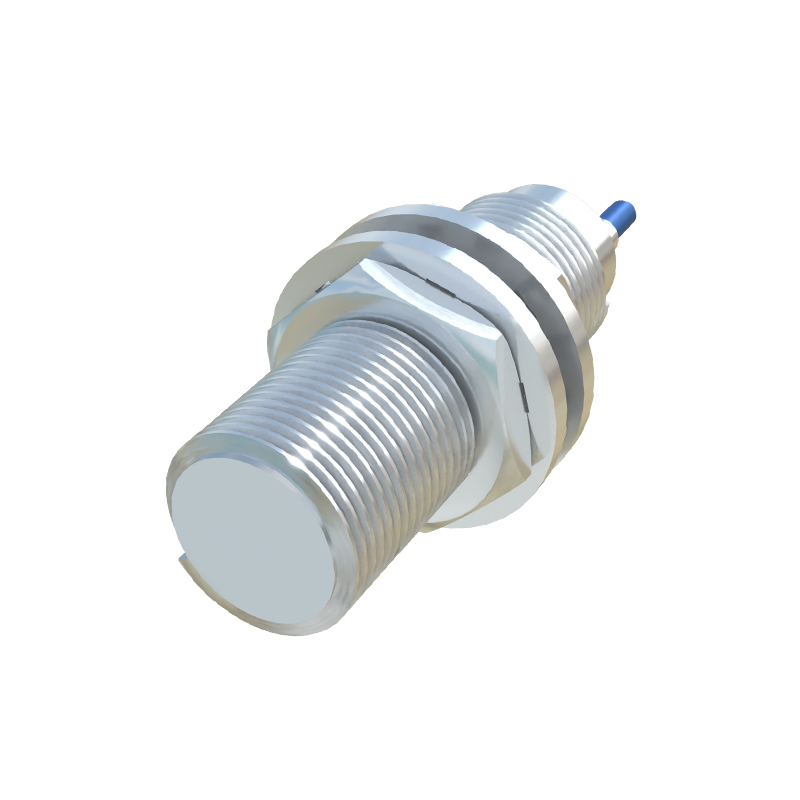
Several underlying technologies enable large-scale proximity detection, each with distinct advantages. Inductive sensors are stalwarts for detecting metallic objects, generating an electromagnetic field. While their range is typically limited, array configurations and specialized designs extend their effective coverage. Capacitive sensors can detect both metallic and non-metallic objects by sensing changes in capacitance, useful in material handling. Ultrasonic sensors emit high-frequency sound waves and measure the echo's return time, excelling in longer-range detection and tolerant of harsh environments. Photoelectric sensors, including through-beam, retro-reflective, and diffuse reflective types, use light beams (often laser) for highly accurate long-range sensing. Finally, LiDAR (Light Detection and Ranging) systems, using pulsed laser light to create high-resolution 3D maps, represent the cutting edge for large-area, high-precision spatial awareness in automation and robotics.
Primary Industrial Applications and Use Cases
The application spectrum for large-scale proximity sensors is vast and integral to modern industry. In automated manufacturing, they facilitate precise positioning of large assemblies, robotic guidance, and pallet detection on extended conveyor lines. Warehouse and logistics automation relies heavily on them for inventory tracking, automated guided vehicle (AGV) navigation, and door/gate control for loading bays. In the automotive sector, they monitor vehicle position on assembly lines and ensure safety in robotic welding cells. Furthermore, they are pivotal in security and access control systems for perimeter monitoring and in agriculture for large machinery guidance. The common thread is the need for reliable, wide-area detection that triggers subsequent automated actions or safety protocols without physical contact.
Critical Selection Criteria for System Integration
Selecting the appropriate large-scale proximity sensor system requires a meticulous evaluation of multiple parameters. The required sensing range and the size of the target object are primary drivers. Environmental factors pose significant challenges; sensors must be rated for conditions involving dust, moisture, temperature extremes, vibration, and ambient light interference. The response time and switching frequency must match the process speed. Output type (e.g., analog, digital IO, IO-Link, Ethernet-based) determines integration capability with Programmable Logic Controllers (PLCs) and networked systems. Finally, considerations around installation complexity, maintenance needs, and total cost of ownership, including calibration and durability, are paramount for sustainable operation.
Overcoming Implementation Challenges
Deploying these systems at scale is not without hurdles. Signal interference, whether from adjacent sensors, electrical noise, or environmental reflectors, can cause false triggers. Sophisticated filtering algorithms and careful physical placement are essential. For very large areas, a single sensor is often insufficient, necessitating a synchronized network of sensors. This introduces complexity in data fusion, wiring, and control logic. Calibration and long-term stability are also more demanding, as minor drifts can lead to significant errors over large distances. Manufacturers address these through features like background suppression, teach-in functions, and robust housing with high Ingress Protection (IP) ratings.
Emerging Trends and the Future Outlook
The future of large-scale proximity sensing is being shaped by convergence with broader Industry 4.0 trends. The integration of smart sensors with Industrial Internet of Things (IIoT) platforms is a key trend, enabling predictive maintenance, remote monitoring, and data analytics for process optimization. The fusion of multiple sensing technologies, such as combining LiDAR with vision systems, creates richer contextual awareness for autonomous systems. Furthermore, advancements in AI and edge computing allow sensors to perform preliminary object classification and anomaly detection at the source, reducing latency and network load. The drive towards greater precision, resilience in extreme environments, and seamless cyber-physical integration will continue to propel innovation in this foundational field of industrial automation.