Diffuse laser reflection sensors represent a sophisticated category of photoelectric sensors that have become indispensable in modern industrial automation, logistics, and safety systems. Unlike through-beam or retro-reflective sensors that require a separate receiver or a reflector, diffuse sensors house both the laser emitter and the receiver in a single unit. They operate on the principle of detecting the light reflected directly from the surface of the target object itself. This self-contained design simplifies installation and alignment, making them highly versatile for a wide range of detection tasks.
The core technology hinges on a focused laser diode that emits a precise, visible, or sometimes infrared, beam. When this beam strikes an object within its sensing range, a portion of the light is scattered back towards the sensor. A photoelectric receiver, typically a phototransistor or photodiode, detects this diffuse reflection. The sensor's internal electronics then evaluate the intensity of the returned signal. If the intensity exceeds a pre-set threshold—adjusted via a potentiometer or digital interface—the sensor's output switches state, indicating the presence of an object.
A critical parameter for these sensors is the sensing distance, which is highly dependent on the target's color, surface texture, and material. Light-colored, matte surfaces reflect more light, allowing for longer detection ranges. Conversely, dark, shiny, or absorbent surfaces reflect less light, significantly reducing the effective range. Manufacturers provide detailed specifications and correction factors to account for these variations. Advanced models incorporate background suppression or foreground suppression technologies. Background suppression variants use triangulation to measure the angle of the reflected beam, allowing them to ignore objects beyond a specific distance, even if they are highly reflective. This is crucial for precise positioning on conveyor belts. Foreground suppression models are designed to detect only objects very close to the sensor, ignoring the background entirely.
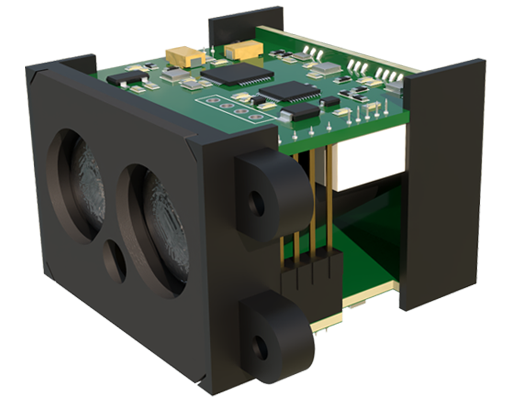
The applications for diffuse laser reflection sensors are extensive and critical. In packaging machinery, they detect the presence of boxes, bottles, or labels with high precision, ensuring proper filling and sealing operations. On assembly lines, they verify the presence of components for robotic pick-and-place systems. In material handling, they count items on conveyors or control the stacking height in palletizing systems. Their small, focused laser spot enables the detection of very small objects or precise edges, which is vital in electronics manufacturing. Furthermore, they serve as non-contact safety devices in areas where physical limit switches are impractical, detecting the intrusion of personnel or equipment into hazardous zones.
Selecting the appropriate sensor requires careful consideration of the operating environment. Factors such as ambient light, dust, fog, or vibrations can affect performance. Many industrial-grade sensors are housed in rugged metal or high-grade plastic casings with ingress protection ratings like IP67, making them resistant to water and dust. Output options include digital types like NPN, PNP, or push-pull, and analog versions (0-10V, 4-20mA) that provide continuous distance information for more complex control tasks. Communication protocols like IO-Link are increasingly common, enabling parameter setting, diagnostics, and process data integration directly into the control system.
Installation and maintenance are relatively straightforward but demand attention. The sensor must be mounted securely to minimize misalignment from vibration. The sensing window should be kept clean from obstructions like dust, oil, or condensation. Regular functional checks are recommended to ensure the threshold remains correctly set for the application, as material changes on the production line could affect performance.
In summary, diffuse laser reflection sensors offer a reliable, precise, and flexible solution for non-contact object detection. Their ability to provide a visible beam for easy alignment, combined with robust construction and advanced filtering technologies, makes them a cornerstone of automated systems. As industries move towards greater flexibility and smarter manufacturing, these sensors continue to evolve, integrating more intelligence and connectivity to meet the demanding needs of Industry 4.0 applications, from simple presence detection to complex positioning and quality control tasks.