Introduction to Infrared Photoelectric Sensors
Infrared (IR) measurement photoelectric sensors are pivotal components in modern industrial automation and control systems. These devices operate by emitting an infrared light beam and detecting changes in the received light to sense the presence, absence, or position of an object. Unlike visible light sensors, IR sensors utilize light in the infrared spectrum, typically between 700 nm and 1 mm wavelength, making them immune to ambient visible light interference. This characteristic is crucial for reliable operation in diverse industrial environments. The core principle hinges on the modulation of the emitted IR light, often at a specific frequency, allowing the receiver to distinguish the sensor's signal from other IR sources, such as sunlight or heating elements. This modulated approach ensures high noise immunity and stable detection performance, forming the backbone of countless non-contact measurement and detection tasks.
Core Operating Principles and Technologies
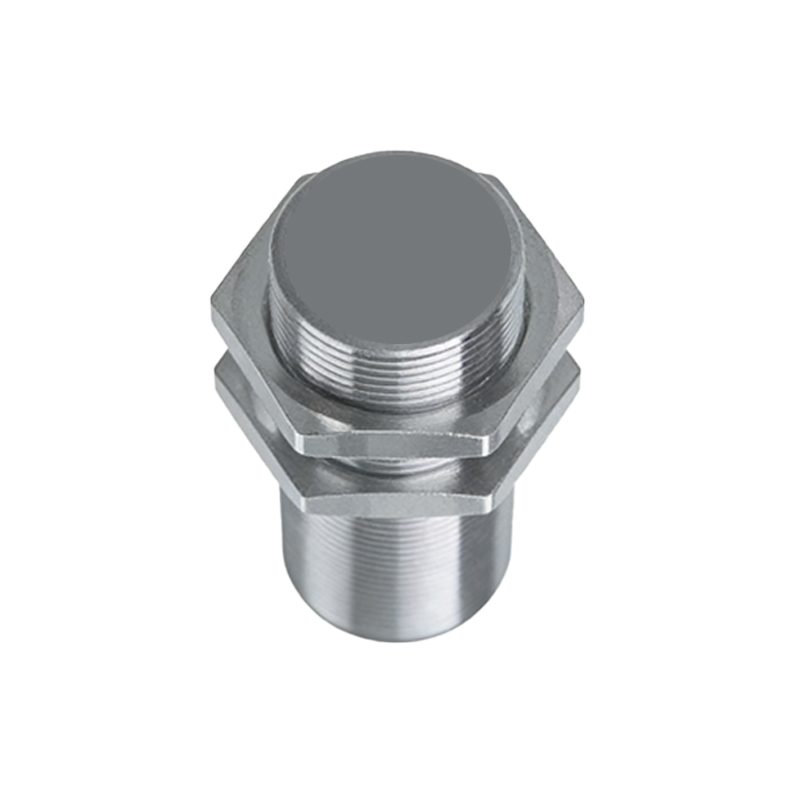
The fundamental operation involves three main components: an IR emitter (usually an IR LED), a receiver (phototransistor, photodiode, or specialized IC), and signal processing circuitry. There are three primary sensing modes: through-beam, retro-reflective, and diffuse-reflective. Through-beam sensors consist of separate emitter and receiver units; an object is detected when it interrupts the beam. This mode offers the longest sensing range and highest reliability. Retro-reflective sensors house both emitter and receiver in one housing, using a reflector to bounce the beam back. They detect an object when it blocks this reflected beam. Diffuse-reflective sensors, also single-unit, detect light reflected directly off the target object itself, making them highly dependent on the object's color, texture, and distance. Advanced versions incorporate background suppression or foreground suppression technologies, using triangulation principles to detect objects only within a precise defined range, ignoring surfaces beyond or before the set point.
Key Performance Parameters and Specifications
Selecting the appropriate IR photoelectric sensor requires a thorough understanding of its key specifications. Sensing range is paramount, varying significantly between modes—through-beam can reach tens of meters, while diffuse modes are typically limited to a few meters. Response time, often in milliseconds or microseconds, determines how quickly the sensor can detect a change, critical for high-speed production lines. Light-on/Dark-on operation defines the output logic state when an object is detected. Environmental ratings like IP (Ingress Protection) codes (e.g., IP67) are essential for durability against dust and water. Operating voltage, output type (NPN/PNP, analog, IO-Link), and housing material (metal or plastic) are other vital considerations. Furthermore, the minimum detectable object size and beam pattern (spot size) must match the application's precision requirements.
Industrial Applications and Use Cases
The versatility of IR measurement photoelectric sensors drives their adoption across numerous sectors. In packaging machinery, they count bottles, detect label presence, and control filling levels. Automotive assembly lines use them for part verification, robot guidance, and weld seam tracking. In material handling, sensors monitor conveyor belt jams, pallet positioning, and stack height. They are indispensable in electronic manufacturing for PCB positioning and component insertion verification. Safety applications include intrusion detection in perimeter guarding and door control systems. Advanced measurement tasks, such as checking object diameter, thickness, or edge detection, are achieved with specialized analog output or laser-based IR sensors offering extremely fine spot sizes.
Advantages Over Other Sensing Technologies
IR photoelectric sensors present distinct advantages compared to technologies like ultrasonic, capacitive, or inductive sensors. Their primary benefit is non-contact operation, eliminating mechanical wear and allowing detection of fragile objects. They offer very fast response times, superior to ultrasonic sensors. Unlike inductive sensors, they can detect non-metallic objects (plastic, glass, wood, liquids). Compared to capacitive sensors, they are less sensitive to environmental factors like humidity or target material composition. The ability to sense over long distances and the availability of precise, small-spot laser models for minute object detection further solidify their position. Their robustness, facilitated by modulated light and solid-state construction, ensures longevity in harsh conditions.
Common Challenges and Troubleshooting Tips
Despite their reliability, several challenges can affect performance. Optical interference from strong ambient IR light, like sunlight or furnace glow, can be mitigated by using sensors with robust modulation, physical shrouds, or optical filters. Sensing highly reflective or absorbent (dark) targets can cause issues with diffuse sensors; selecting a background suppression model or adjusting the sensitivity can resolve this. Lens contamination from dust, oil, or condensation is a frequent problem, requiring sensors with appropriate IP ratings, regular maintenance, or built-in lens cleaning systems. Alignment issues, especially for through-beam or retro-reflective types, can cause intermittent faults; using alignment indicators and stable mounting fixtures is crucial. Electrical noise in cabling can be addressed with proper shielding and grounding.
Future Trends and Technological Developments
The evolution of IR photoelectric sensors is geared towards smarter, more integrated, and more precise solutions. The integration of IO-Link communication is a significant trend, transforming sensors into intelligent devices that provide diagnostic data, parameter setting, and process values beyond a simple switch signal. Miniaturization continues, enabling installation in increasingly tight spaces. Enhanced measurement capabilities with higher resolution and faster analog outputs are expanding their role in precision inspection. Furthermore, the development of sensors with integrated multi-function capabilities, such as combining measurement with temperature monitoring or color detection, is on the rise. Advances in laser diode technology are also yielding sensors with even smaller, more precise beam spots for micro-part detection.
Guidelines for Selection and Installation
A successful application begins with a meticulous selection process. First, define the object characteristics: material, size, color, and surface texture. Second, determine the required sensing mode based on distance, accuracy, and installation constraints. Third, verify all environmental conditions: temperature, humidity, presence of contaminants, and ambient light. Fourth, specify the electrical requirements: supply voltage, output type, and connection method. During installation, ensure secure mounting to prevent vibration-induced misalignment. Precisely align through-beam and retro-reflective pairs using their built-in indicators. For diffuse sensors, conduct teach-in or sensitivity adjustment with the actual target object in place. Always follow manufacturer guidelines for wiring, cable routing, and environmental protection to ensure optimal and long-lasting sensor performance.