Introduction to Photoelectric Sensor Delay Control
Photoelectric sensors are pivotal components in modern industrial automation, enabling non-contact detection of objects through light-based technology. These sensors operate by emitting a light beam—typically infrared, visible, or laser—and detecting changes in the received light due to the presence or absence of an object. However, raw sensor signals can be susceptible to noise, vibration, or transient interruptions, which may lead to false triggers or missed detections in fast-paced manufacturing environments. To mitigate these issues, delay control mechanisms are integrated into sensor systems, allowing for precise timing adjustments that enhance reliability and accuracy. Delay control involves intentionally introducing a time lag in the sensor's output response, ensuring that only sustained signals are processed while filtering out brief anomalies. This functionality is critical in applications such as conveyor belt sorting, robotic assembly, and packaging lines, where consistent performance directly impacts productivity and safety. By understanding the principles behind delay control, engineers can optimize sensor configurations to match specific operational demands, reducing downtime and improving overall system efficiency.
Types of Delay Control in Photoelectric Sensors
Delay control in photoelectric sensors is categorized into two primary types: ON-delay and OFF-delay, each serving distinct purposes in industrial settings. ON-delay, also known as turn-on delay, refers to a configuration where the sensor's output signal is activated only after the detected object has been present for a predefined time period. This is particularly useful in scenarios where objects may momentarily pass by without requiring action, such as in buffer zones or during irregular material flow. For instance, in a bottling plant, an ON-delay can prevent false triggers from splashing liquids or debris, ensuring that only stable bottle positions are registered. Conversely, OFF-delay, or turn-off delay, maintains the output signal for a set duration after the object is no longer detected. This type is essential in processes requiring continuous operation despite brief interruptions, like in welding or sealing applications where gaps between products must not halt machinery. Advanced sensors may also incorporate programmable delay functions, allowing users to adjust timing parameters via digital interfaces or potentiometers. These variations enable tailored solutions for diverse automation challenges, from high-speed sorting to precision measurement tasks.
Implementation Techniques for Delay Adjustment
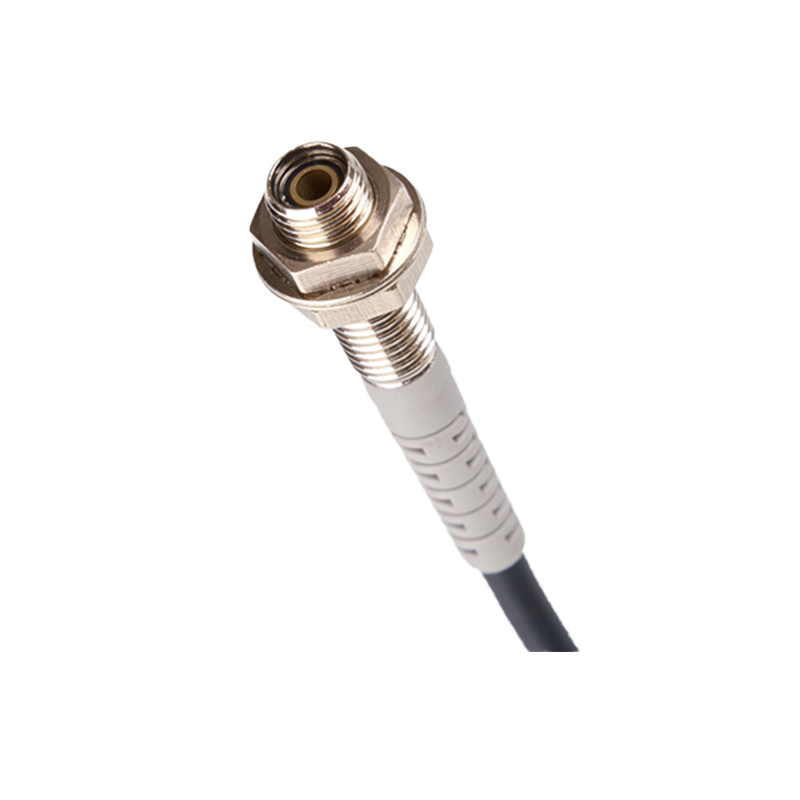
Implementing delay control in photoelectric sensors involves both hardware and software approaches, depending on the sensor model and application complexity. Hardware-based methods often utilize built-in timers or RC (resistor-capacitor) circuits within the sensor circuitry to create precise time delays. For example, adjustable potentiometers on sensor housings allow operators to manually set delay times, typically ranging from milliseconds to several seconds, without requiring external devices. This simplicity makes hardware solutions ideal for straightforward applications like door control or basic counting systems. In contrast, software-based implementations leverage microcontrollers or PLCs (Programmable Logic Controllers) to manage delay logic through programmable code. Sensors with digital outputs can be integrated into automation networks, where delay parameters are configured via HMI (Human-Machine Interface) panels or computer software. This flexibility supports complex sequences, such as cascading delays across multiple sensors in an assembly line. Additionally, modern smart sensors feature self-diagnostic capabilities, automatically adjusting delays based on environmental conditions like ambient light or temperature fluctuations. When selecting an implementation technique, factors such as response speed, accuracy, and scalability must be considered to ensure seamless integration with existing industrial systems.
Applications and Benefits in Industrial Automation
The application of photoelectric sensor delay control spans numerous industries, enhancing efficiency and safety in automated processes. In automotive manufacturing, delay-controlled sensors coordinate robotic arms for precise part placement, preventing collisions by ensuring objects are firmly positioned before proceeding. Similarly, in food processing, delays help filter out false signals from steam or moving packaging materials, maintaining hygiene and compliance with regulatory standards. Another key benefit is noise reduction; by ignoring transient interruptions, delay control minimizes electrical interference from nearby machinery, leading to more stable operations. This reliability translates to reduced maintenance costs and fewer production errors, as sensors consistently deliver accurate data for control systems. Moreover, delay adjustments can optimize energy consumption—for instance, by keeping lights or motors active only when necessary, thereby supporting sustainable practices. Case studies from logistics warehouses demonstrate how OFF-delays in conveyor sensors prevent jams during package sorting, improving throughput by up to 20%. Overall, integrating delay control not only boosts precision but also extends sensor lifespan by reducing wear from unnecessary activations, making it a cost-effective investment for long-term automation projects.
Best Practices for Configuring Delay Parameters
Configuring delay parameters in photoelectric sensors requires careful analysis of operational conditions to avoid common pitfalls. First, conduct a thorough assessment of the detection environment, including factors like object speed, size, and reflectivity, as well as potential sources of interference such as ambient light or vibration. For example, in high-speed packaging lines, delays should be set slightly longer than the shortest expected object presence to account for variations without causing bottlenecks. It is also advisable to perform real-time testing with sample objects to fine-tune settings, using oscilloscopes or data loggers to monitor signal stability. Avoid excessive delay times, as they can introduce latency that disrupts synchronization with other machinery, leading to process inefficiencies. Instead, aim for the minimum delay necessary to filter out noise while maintaining responsiveness. Regular calibration is essential, especially in dynamic environments where conditions change over time; sensors should be checked periodically to ensure delays remain aligned with operational needs. Additionally, document configuration settings and update them as processes evolve, facilitating troubleshooting and future upgrades. By adhering to these best practices, engineers can maximize the benefits of delay control, achieving a balance between reliability and speed that drives industrial automation forward.
Future Trends and Innovations in Sensor Technology
The future of photoelectric sensor delay control is shaped by advancements in IoT (Internet of Things) and AI (Artificial Intelligence), promising smarter and more adaptive systems. Emerging sensors are incorporating embedded AI algorithms that analyze detection patterns in real-time, automatically adjusting delays based on predictive analytics rather than fixed parameters. For instance, in smart factories, sensors could learn from production data to optimize delays for varying product types, reducing manual reconfiguration efforts. IoT connectivity enables remote monitoring and adjustment via cloud platforms, allowing engineers to manage sensor networks from centralized dashboards. This trend supports Industry 4.0 initiatives, where seamless data exchange between devices enhances overall automation intelligence. Furthermore, miniaturization and energy-efficient designs are making sensors more versatile for applications in robotics and wearable technology. Research into new materials, such as graphene-based photodetectors, may lead to faster response times and higher precision, further refining delay control capabilities. As industries increasingly prioritize flexibility and sustainability, these innovations will drive the evolution of photoelectric sensors toward more autonomous and eco-friendly solutions, solidifying their role as cornerstone components in next-generation automation.