Introduction to Cylindrical Metal Proximity Sensors
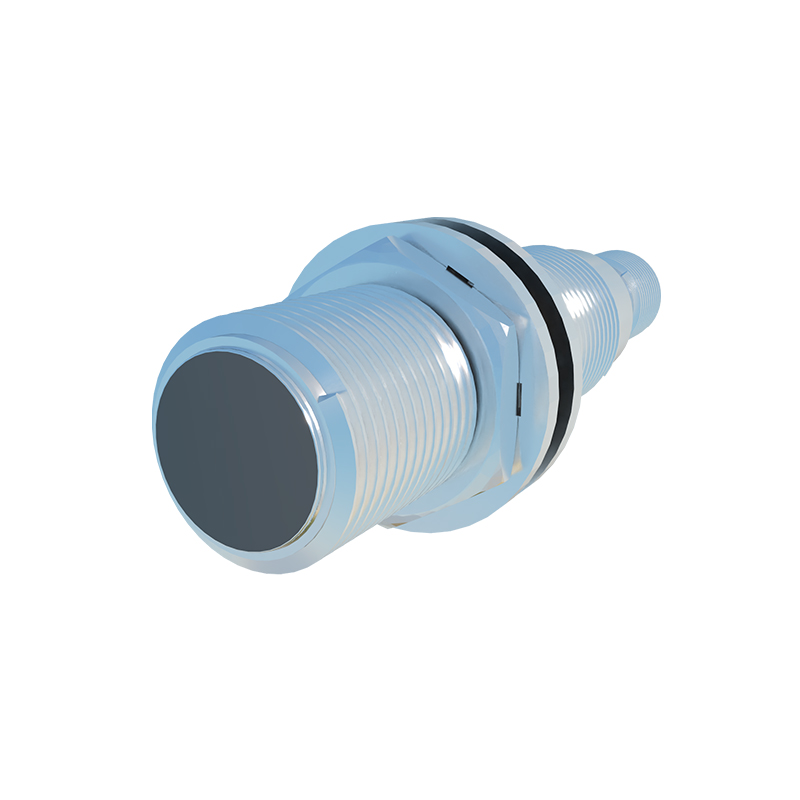
Cylindrical metal proximity sensors are indispensable components in modern industrial automation. Characterized by their robust, tubular housing, these sensors are engineered for durability in harsh environments. Their primary function is to detect the presence or absence of metallic objects without any physical contact. This non-contact detection principle eliminates mechanical wear, ensuring high reliability and a long operational lifespan. Commonly constructed from materials like stainless steel or nickel-plated brass, the cylindrical form factor allows for easy installation in standard mounting holes, making them a versatile choice for machinery, conveyor systems, and robotic applications. Their ability to function in the presence of dust, oil, and coolant splashes makes them superior to many other sensing technologies.
The Core Operating Principle: Electromagnetic Induction
The fundamental working principle of most cylindrical metal proximity sensors is based on electromagnetic induction. At the heart of the sensor is a coil wound around a ferrite core, which forms part of an oscillator circuit. When power is applied, this oscillator generates a high-frequency electromagnetic field that radiates from the active face of the sensor. In the absence of a metallic target, the oscillator operates at a constant amplitude. However, when a conductive metal object enters this oscillating field, eddy currents are induced on the surface of the target. These eddy currents draw energy from the oscillator circuit, causing a measurable drop in the oscillation amplitude. This amplitude change is detected by a threshold circuit, which subsequently triggers a change in the sensor's output state, signaling the presence of the target.
Key Internal Components and Their Functions
Understanding the internal architecture is crucial. The main components include the oscillator coil, the ferrite core, the detection circuit, and the output switching device. The oscillator generates the sensing field. The ferrite core concentrates and directs the electromagnetic field axially from the sensor's face, defining the sensing range. The detection circuit, often comprising sophisticated integrated circuits, continuously monitors the oscillator's amplitude. It is responsible for filtering out noise and providing hysteresis to prevent output chattering when a target is at the edge of the sensing range. Finally, the output stage can be a solid-state transistor (PNP or NPN for DC models) or a reed relay, which physically switches the load connected to the sensor, such as a programmable logic controller (PLC) input or a relay coil.
Factors Influencing Sensing Performance
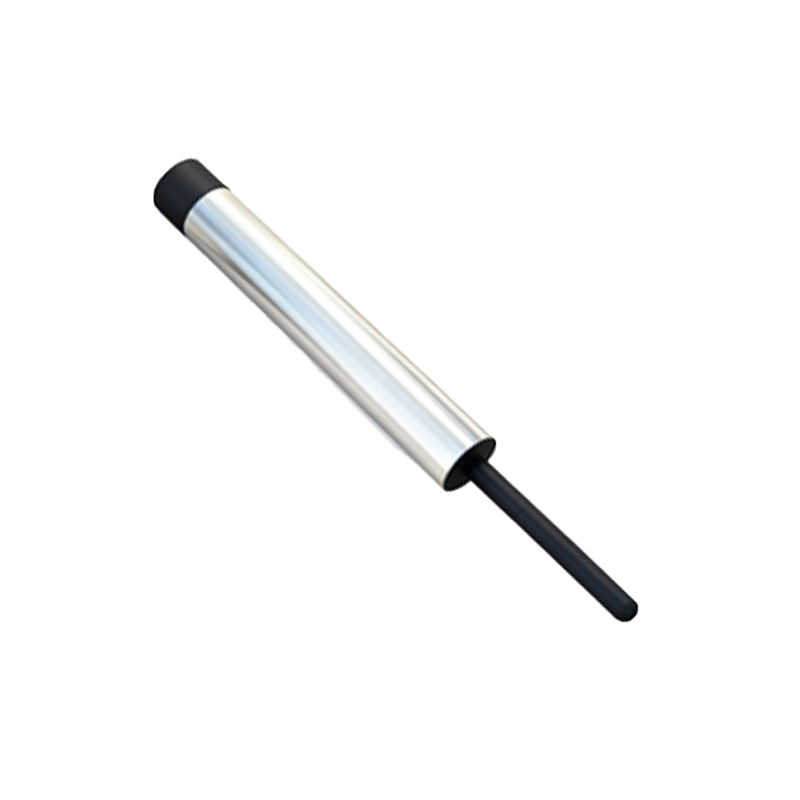
Several critical factors determine the performance and selection of a cylindrical proximity sensor. The nominal sensing distance, or Sn, is specified for a standard target (usually a square of mild steel). This distance is reduced for non-ferrous metals like aluminum or copper due to their different electrical conductivity and permeability. The size and shape of the target also significantly impact the effective sensing range; larger targets are detected more readily. The mounting conditions are equally important; embedding the sensor in a metal bracket (flush mounting) reduces its effective range compared to non-flush mounting, due to the shielding effect of the surrounding metal. Environmental factors such as temperature extremes, strong external magnetic fields, or the presence of other sensors in close proximity can also affect performance.
Output Types and Wiring Configurations
Cylindrical proximity sensors are available with various output configurations to interface with different control systems. The two primary DC output types are PNP (sourcing) and NPN (sinking). A PNP sensor switches the positive voltage to the load, while an NPN sensor switches the negative or ground side. AC models typically use a two-wire configuration that carries both power and the switched load current. Many modern sensors feature a Normally Open (NO) or Normally Closed (NC) logic function, and some offer programmable outputs. The standard 3-wire DC design includes separate wires for power supply positive, power supply negative, and the switched output signal, often color-coded (brown for +V, blue for 0V, and black for output) for easy installation and troubleshooting.
Typical Applications in Industrial Settings
The applications for cylindrical metal proximity sensors are vast. They are commonly used for position verification, such as detecting whether a cylinder is fully extended or retracted. On assembly lines, they count metallic parts passing on a conveyor. In machine tools, they serve as end-of-travel limit switches for slides and tables, offering higher speed and reliability than mechanical limit switches. They are integral to automated packaging systems for detecting the presence of metal containers or lids. In material handling, they ensure proper positioning of pallets or robotic grippers. Their sealed construction allows them to be used in wash-down areas of food and beverage plants, demonstrating their versatility across nearly every manufacturing sector.
Advantages Over Other Sensing Technologies
Compared