Introduction to Photoelectric Temperature Sensing
Photoelectric sensors for temperature measurement represent a sophisticated non-contact method widely utilized in industrial automation and process control. Unlike traditional thermocouples or resistance temperature detectors (RTDs) that require physical contact, these sensors operate by detecting the infrared radiation emitted by all objects based on their temperature. The core principle hinges on Planck's law of blackbody radiation, where the intensity and spectral distribution of emitted radiation are directly correlated to the object's absolute temperature. This technology is particularly advantageous for measuring moving objects, hazardous environments, or applications where contamination must be avoided. The sensor typically comprises an optical system to collect radiation, a photodetector to convert radiation into an electrical signal, and signal processing electronics to interpret the data. By analyzing the infrared energy, the sensor can determine temperature with high precision, often without interfering with the target process.
Core Working Principle: Infrared Radiation Detection
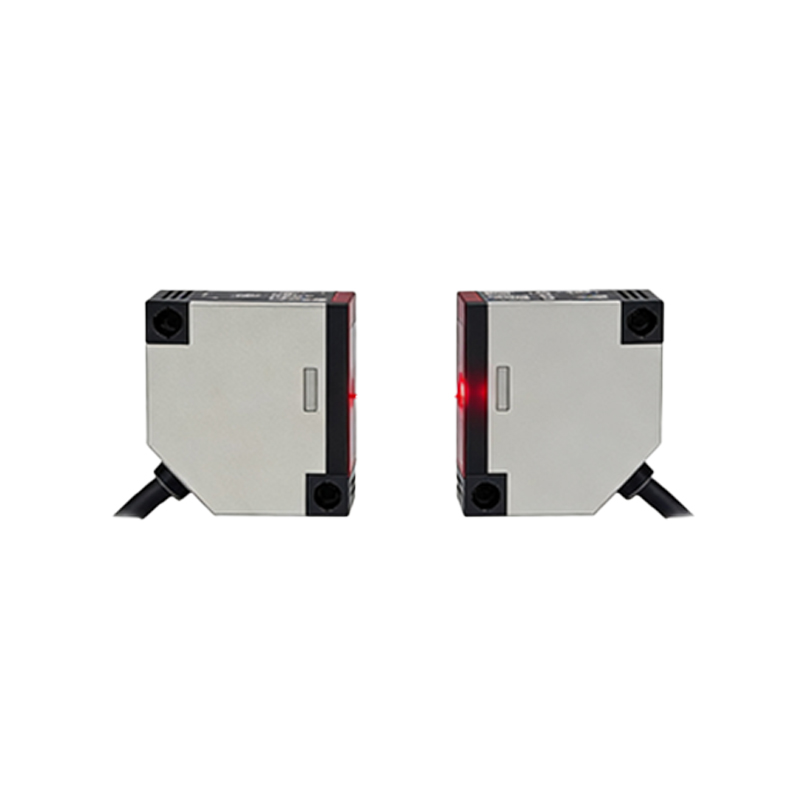
The fundamental operation of a photoelectric temperature sensor is based on detecting infrared (IR) radiation. All objects with a temperature above absolute zero emit electromagnetic radiation, primarily in the infrared spectrum. The sensor's optical lens focuses this emitted IR radiation onto a photodetector, which is a critical component made from materials like silicon, germanium, or indium gallium arsenide. These materials exhibit the photoelectric effect, where incident photons of sufficient energy dislodge electrons, generating a photocurrent proportional to the radiation intensity. The relationship between radiation intensity and temperature is governed by the Stefan-Boltzmann law, which states that the total energy radiated per unit surface area is proportional to the fourth power of the absolute temperature. Therefore, even minor temperature changes result in measurable variations in the photocurrent, enabling accurate temperature readings.
Key Components and Their Functions

A typical photoelectric temperature sensor consists of several integral components. The optical system, including lenses or fiber optics, gathers and directs IR radiation from the target to the detector. Optical filters may be employed to select specific wavelength bands, enhancing accuracy for particular materials or temperature ranges. The photodetector, such as a photodiode or phototransistor, converts the IR radiation into an electrical signal. Subsequent signal conditioning circuitry, including amplifiers and analog-to-digital converters, processes this weak signal to eliminate noise and improve signal-to-noise ratio. A microprocessor or dedicated IC then applies algorithms, often based on pre-calibrated curves or emissivity corrections, to compute the temperature. The housing is designed to protect sensitive electronics from environmental factors like dust, moisture, and electromagnetic interference, ensuring reliable operation in harsh industrial settings.
Emissivity: A Critical Factor in Accuracy
Emissivity is a paramount parameter affecting measurement accuracy in photoelectric temperature sensing. It defines the efficiency with which a surface emits thermal radiation compared to a perfect blackbody, which has an emissivity of 1. Real-world materials have emissivities less than 1, varying with surface finish, composition, and temperature. For instance, polished metals exhibit low emissivity (around 0.1), while oxidized surfaces or non-metals have higher values (0.8-0.95). Sensors often include adjustable emissivity settings to compensate for different materials. Advanced models may employ ratio or multi-wavelength pyrometry techniques to minimize emissivity errors by measuring radiation at two or more wavelengths, thereby reducing dependency on precise emissivity values. Proper calibration and understanding of the target's emissivity are essential to prevent significant temperature measurement deviations.
Applications in Industrial and Scientific Fields
Photoelectric temperature sensors find extensive applications across diverse sectors due to their non-invasive nature and rapid response. In manufacturing, they monitor temperatures in processes like metal forging, plastic extrusion, and glass production, ensuring product quality and preventing equipment overheating. The electronics industry uses them for inspecting circuit boards and semiconductor components during soldering or testing. In scientific research, these sensors facilitate temperature mapping in experimental setups or astronomical observations. They are also crucial in energy management for assessing thermal insulation efficiency and in automotive industries for monitoring engine components. Their ability to measure from a distance makes them ideal for hazardous environments, such as high-voltage installations or radioactive areas, enhancing safety and operational efficiency.
Advantages and Limitations of the Technology
The primary advantages of photoelectric temperature sensors include non-contact measurement, which avoids contamination and does not affect the target's temperature. They offer fast response times, often in milliseconds, suitable for dynamic processes. High accuracy and the ability to measure extremely high temperatures (up to several thousand degrees Celsius) are significant benefits. However, limitations exist. Accuracy can be compromised by environmental factors like dust, smoke, or steam that obstruct IR radiation. Emissivity variations require careful calibration, and measurements can be influenced by ambient light or reflective surfaces. Additionally, these sensors typically measure surface temperature only, not internal temperatures. Despite these challenges, ongoing advancements in detector sensitivity, digital signal processing, and smart calibration algorithms continue to expand their reliability and application scope.
Future Trends and Technological Developments
The future of photoelectric temperature sensing is poised for innovation driven by miniaturization, enhanced connectivity, and improved intelligence. Emerging trends include the integration of micro-electromechanical systems (MEMS) to create smaller, low-cost sensors for IoT applications. Wireless connectivity enables real-time temperature monitoring in distributed industrial networks. Advances in multispectral and hyperspectral imaging allow for detailed temperature profiling across surfaces, useful in medical diagnostics or material science. Machine learning algorithms are being incorporated to automatically adjust for emissivity and environmental interferences, boosting accuracy. Furthermore, developments in quantum dot photodetectors and graphene-based sensors promise higher sensitivity and broader spectral ranges. As industries increasingly prioritize automation and precision, photoelectric temperature sensors will evolve to offer smarter, more adaptive solutions for complex measurement challenges.