What is a Proximity Sensor?
A proximity sensor is a non-contact electronic device designed to detect the presence or absence of an object within its sensing range without any physical contact. It emits an electromagnetic field or a beam of radiation and looks for changes in the field or return signal. The object being detected is often referred to as the target. These sensors are fundamental components in industrial automation, robotics, consumer electronics, and security systems, providing reliable detection for control, counting, positioning, and inspection tasks. Their ability to operate without touching the target makes them ideal for harsh environments, high-speed applications, and situations where contact could damage either the sensor or the target.
Core Working Principle
The fundamental principle behind all proximity sensors involves the interaction between the sensor and the target object. This interaction alters a specific physical property (like an electromagnetic field or capacitance) which is then converted by the sensor's circuitry into a usable electrical signal, typically a simple ON/OFF switch signal. The sensor continuously monitors its own emitted field. When a target enters this field, it causes a detectable change—such as eddy currents in a metal object or a change in dielectric constant for non-metals. This change is processed, and the output state of the sensor switches, signaling the presence of the target. This entire process happens in milliseconds, enabling real-time detection and control.
Main Types of Proximity Sensors

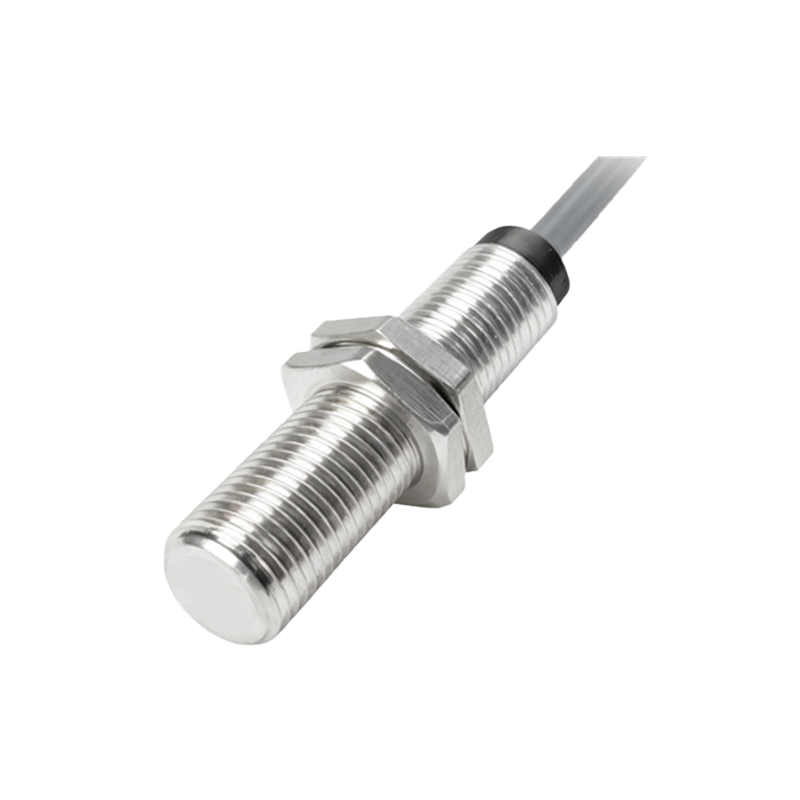
Proximity sensors are primarily categorized based on their detection technology. The four most common types are inductive, capacitive, ultrasonic, and photoelectric sensors. Inductive proximity sensors are the workhorses of industrial automation, capable of detecting only metallic objects. They generate an oscillating electromagnetic field. When a metal target enters this field, it induces eddy currents on the metal's surface, which dampens the oscillator's amplitude. This damping effect is detected, triggering the output switch. These sensors are highly reliable, resistant to environmental contaminants like dust and oil, and offer long operational life.
Inductive Proximity Sensors
Inductive sensors are exclusively for detecting ferrous and non-ferrous metals like steel, aluminum, copper, and brass. Their sensing range depends on the type of metal; for instance, steel is detected at the nominal range, while aluminum or copper may be detected at a reduced range (often 60-70% of the nominal). They come in various housing shapes (cylindrical, rectangular, ring-shaped) and output configurations (NPN or PNP, normally open or normally closed). Key specifications include sensing distance, repeat accuracy, switching frequency, and housing material (often nickel-plated brass or stainless steel for durability). They are immune to non-metallic substances and are perfect for applications like detecting metal parts on a conveyor, checking for broken tools, or monitoring valve positions.
Capacitive Proximity Sensors
Capacitive proximity sensors can detect both metallic and non-metallic materials, including liquids, powders, granules, plastics, and wood. They operate by generating an electrostatic field. Any object with a dielectric constant different from air (virtually all materials) will change the capacitance of the sensing face when it approaches. This change in capacitance is measured, and when it exceeds a preset threshold, the sensor activates. Many capacitive sensors feature a sensitivity adjustment potentiometer, allowing them to be tuned to ignore certain materials or container walls. Common applications include liquid level detection in tanks, monitoring fill levels of powders or grains, and detecting non-metallic objects on production lines.
Ultrasonic Proximity Sensors
Ultrasonic sensors use sound waves beyond the range of human hearing (typically above 20 kHz) to detect objects and measure distance. They consist of a transmitter that emits ultrasonic pulses and a receiver that listens for the echo reflected from a target. By calculating the time between the emission and reception of the pulse (time-of-flight), the sensor can determine the distance to the object. They are excellent for detecting objects of virtually any material, shape, or color, as long as the surface is capable of reflecting sound. They are used for precise distance measurement, presence detection of clear objects (like glass bottles), and level sensing of bulk materials, even in dusty or steamy environments where optical sensors might fail.
Photoelectric Proximity Sensors
Photoelectric sensors use light to detect objects. They consist of a light emitter (usually an LED) and a receiver. They are further divided into three main modes: through-beam, retro-reflective, and diffuse (proximity) mode. The diffuse mode is the true "proximity" type, where the emitter and receiver are housed in the same unit. The sensor detects light reflected directly from the