Introduction to Retroreflective Photoelectric Sensing
Retroreflective photoelectric sensors are a cornerstone of industrial automation, offering reliable object detection at medium to long ranges. Unlike through-beam sensors that require separate emitter and receiver units, retroreflective models house both components in a single housing. They function by emitting a light beam towards a specialized reflector, known as a retroreflector or reflex mirror. This reflector is designed to return the light beam directly back to the receiver along the same path, regardless of the angle of incidence. When an object interrupts this beam, the sensor detects the loss of the returned signal and triggers an output. This design simplifies installation and alignment compared to through-beam systems, making it ideal for applications where mounting two separate units is impractical.
The Challenge of Specular Reflection
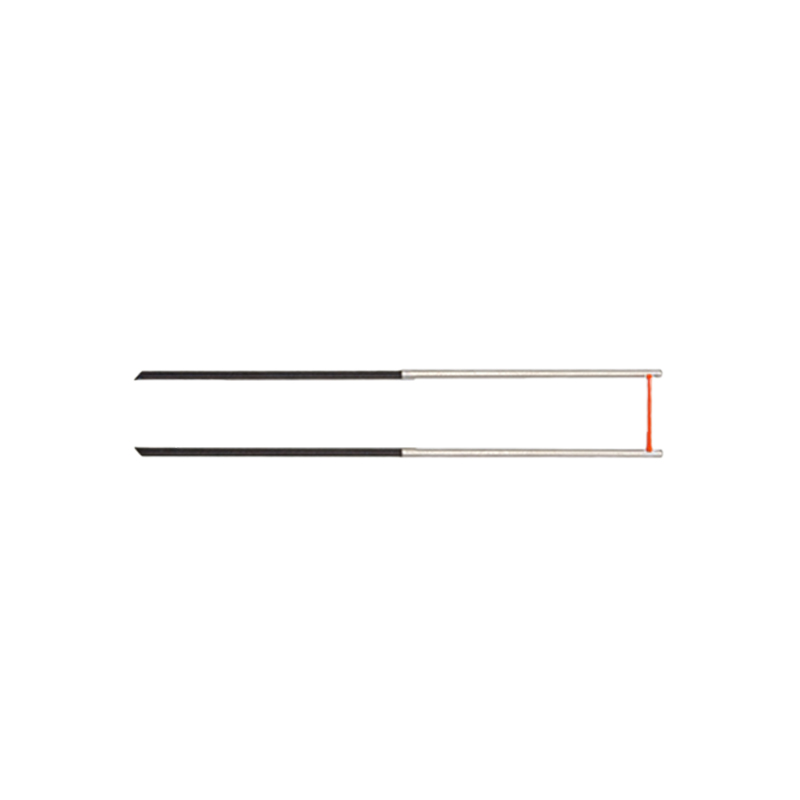
A significant limitation of standard retroreflective sensors arises when detecting shiny or highly reflective objects, such as polished metal, glass, or glossy packaging materials. These surfaces act like mirrors, causing specular reflection. In specular reflection, the angle of incidence equals the angle of reflection. If a shiny object passes through the sensor's beam at a specific angle, it can reflect the emitted light directly back to the receiver, mimicking the signal from the retroreflector. The sensor may then fail to detect the object, resulting in a missed detection or a "false negative." This reliability issue in environments with reflective targets has historically necessitated the use of more expensive or complex sensor types, like polarized retroreflective or true through-beam sensors.
Principle of Diffuse Reflection in Retroreflective Mode
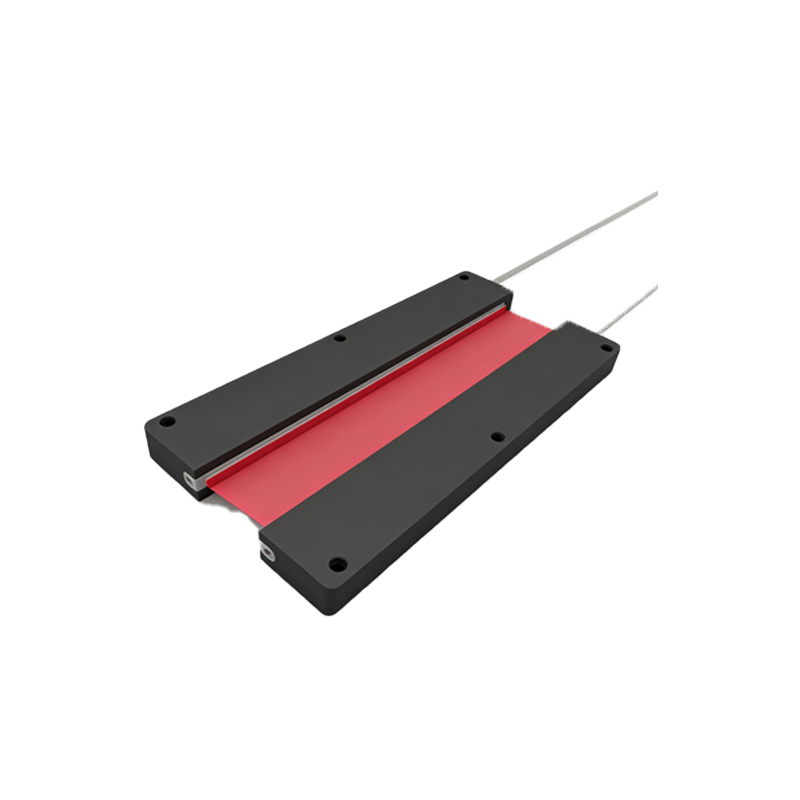
To overcome the challenge of specular reflection, advanced retroreflective sensors incorporate a diffuse reflection operating principle, often termed "diffuse reflection mode" or "background suppression" within a retroreflective form factor. This technology does not use a standard retroreflector. Instead, it relies on the natural diffuse reflection properties of the target object or its background. The sensor emits a focused beam of light. The receiver is not looking for a strong, direct return from a reflector but is precisely calibrated to detect the scattered light reflected off a matte-surface object or a non-reflective background at a specific, pre-set distance. The key innovation is the use of triangulation or a specially arranged receiver array. It measures the angle of the returning scattered light, allowing it to distinguish between an object at the set sensing distance and the background beyond it or highly reflective surfaces that reflect light at a different angle.
Technical Advantages and Operational Benefits
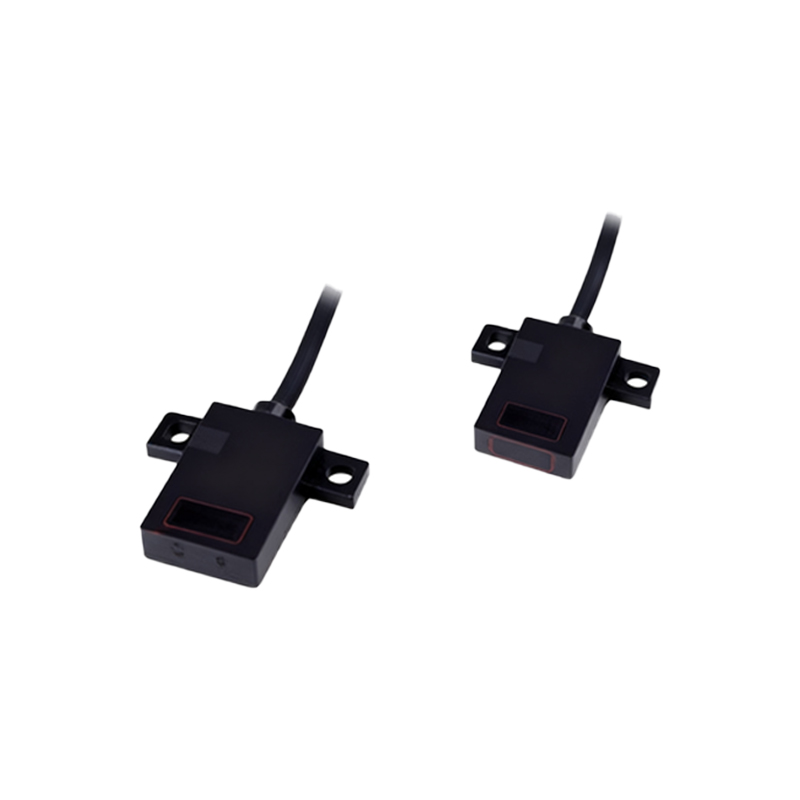
The integration of diffuse reflection technology into a retroreflective-style sensor offers several distinct advantages. First and foremost, it provides exceptional immunity to interference from shiny objects. Since it detects based on light scatter and angle rather than beam interruption, specular reflections from glossy surfaces are ignored, ensuring reliable detection. Second, it allows for precise sensing distance setting. Engineers can adjust the sensor to detect objects only within a very specific range, ignoring anything closer or farther away. This is crucial for applications like detecting objects on a conveyor belt while ignoring the belt itself or machinery in the background. Finally, it maintains the installation simplicity of a single-housing sensor, eliminating the need for a separate reflector and reducing wiring complexity.
Typical Industrial Applications
This hybrid sensor technology finds application in numerous challenging industrial scenarios. In packaging lines, it reliably detects transparent plastic films, glossy labels, and shiny metallic foils without false triggers. In automotive assembly, it can detect polished car body parts or chrome components. It is invaluable in logistics for detecting packages with varied surface finishes on high-speed sortation systems. Another common use is in palletizing and depalletizing, where it must distinguish the presence of a cardboard box (diffuse surface) while ignoring the reflective stretch wrap or shiny pallet nails. Furthermore, it is used for precise positioning where the sensing distance must be exact, such as in robotic pick-and-place cells where the robot arm needs to know the precise location of a component.
Selection Criteria and Installation Considerations
When selecting a retroreflective sensor with diffuse reflection capability, key parameters must be evaluated. The sensing range and the ability to fine-tune the background suppression distance are paramount. The response time must be fast enough for high-speed production lines. The sensor housing should have an appropriate ingress protection (IP) rating for the environment, whether it is dusty, humid, or subject to washdowns. Light source choice is also critical; red LED light is common and visible for easier alignment, while infrared LED or laser models offer longer ranges and smaller spot sizes for detecting very small objects. During installation, careful alignment is less critical than with standard retroreflective sensors, but the sensor must be positioned so that the target object passes within its defined sensing window. Environmental factors like ambient light, dust, and steam should be assessed, as they can affect the performance of any photoelectric sensor.
Conclusion and Future Outlook
Retroreflective photoelectric sensors utilizing diffuse reflection technology represent a sophisticated solution to a persistent problem in industrial sensing. By merging the convenience of a single-housing design with the intelligent, angle-based detection of diffuse reflection, they deliver unmatched reliability for detecting objects with difficult surface properties. As factory automation evolves towards greater flexibility and smaller batch sizes, the ability to reliably handle a wider variety of materials without sensor reconfiguration becomes increasingly valuable. Future developments may include sensors with integrated machine learning algorithms to automatically adapt to different surface types, enhanced connectivity for Industry 4.0 data collection, and even more compact designs for integration into tighter spaces, solidifying their role as a versatile and intelligent component in the automated factory.