Introduction to Fresnel Lenses in Sensing Technology
A Fresnel lens is a compact, lightweight optical component crucial for modern photoelectric sensors. Unlike a conventional bulky plano-convex lens, a Fresnel lens achieves its focusing power through a series of concentric grooves etched or molded onto a thin, flat surface. Each groove acts as an individual refracting surface, bending light to a common focal point. This ingenious design, inspired by Augustin-Jean Fresnel's work for lighthouses, allows for significant reductions in material, weight, and physical depth. In photoelectric sensors, this translates to more compact housings and the ability to create long, narrow detection beams essential for precise sensing at a distance. The efficiency and form factor of Fresnel lenses have made them indispensable in retro-reflective and through-beam sensor configurations, where controlled beam propagation is paramount.
Core Optical Principles and Functionality
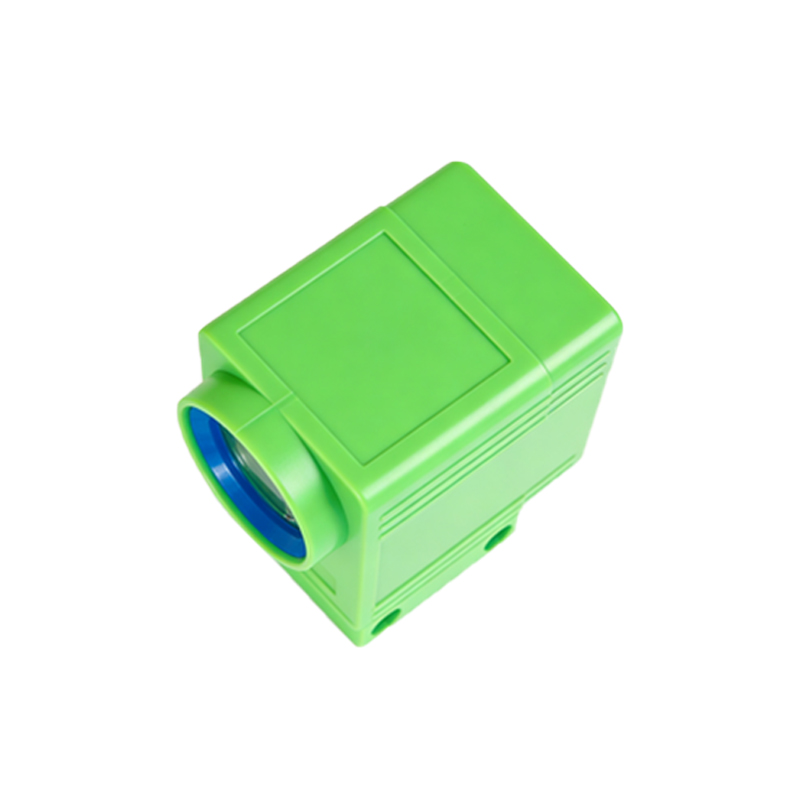
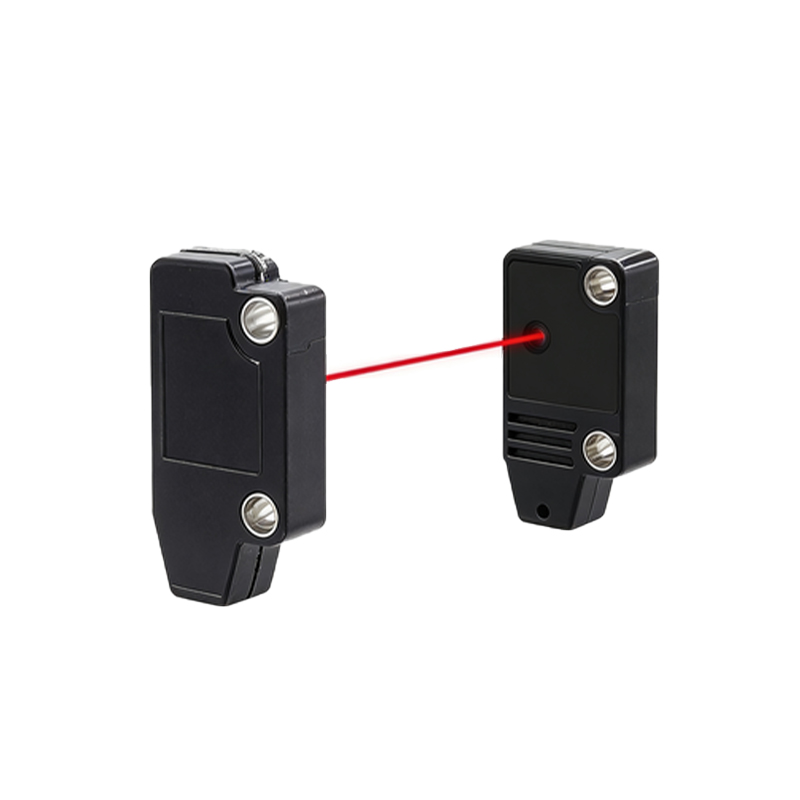
The primary function of a Fresnel lens within a photoelectric sensor is to collimate or focus infrared or visible light emitted from an LED or laser diode. In an emitter, the lens collimates the divergent light into a tight, parallel beam, maximizing energy transfer over long distances and improving signal-to-noise ratio. In a receiver, the lens collects the incoming light—whether direct, reflected, or retro-reflected—and focuses it onto a small photodetector element, typically a phototransistor or photodiode. This focusing action dramatically increases the effective detection area and sensitivity of the receiver. The groove pitch and profile are meticulously calculated to minimize spherical aberration and ensure that light rays converge accurately. This precise optical control enables sensors to detect small objects or achieve very long sensing ranges that would be impossible with a simple aperture or bare emitter/detector pair.
Material Selection and Manufacturing Techniques
Fresnel lenses for industrial photoelectric sensors are predominantly injection-molded from optical-grade polymers such as polycarbonate (PC), acrylic (PMMA), or cyclic olefin copolymer (COC). Material choice is critical and balances factors like optical clarity, refractive index, temperature stability, and resistance to chemicals and UV degradation. Polycarbonate offers high impact strength and good temperature range, while acrylic provides excellent transparency and lower cost. The molding process requires high-precision tooling to replicate the microscopic groove structure faithfully. Advanced diamond turning is often used to create the master mold. Post-molding, anti-reflective coatings may be applied to lens surfaces to reduce losses from back-reflection, thereby increasing overall optical throughput and sensor performance, especially in low-light or high-ambient-noise conditions.
Key Design Considerations for Sensor Performance
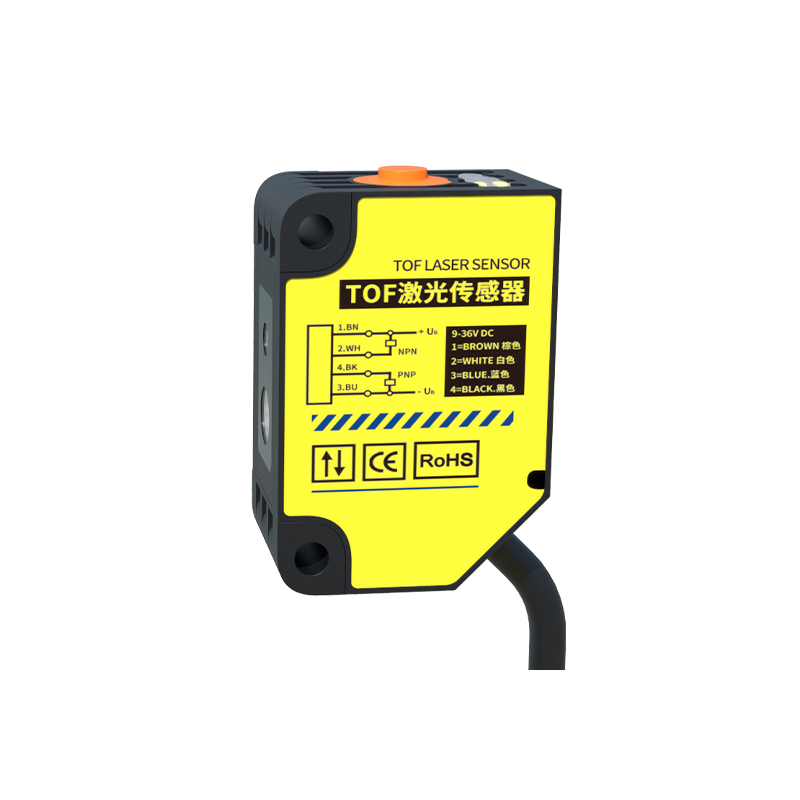
Engineers must navigate several trade-offs when designing or selecting a Fresnel lens for a sensor application. The focal length determines the beam's convergence point and the sensor's optimal working range. The lens diameter impacts the amount of light collected; a larger diameter improves sensitivity but increases the sensor head size. Groove density is another vital parameter; finer grooves reduce stray light and improve image quality but are more challenging and costly to manufacture. Furthermore, the lens must be designed to work within the specific spectral wavelength of the emitter (e.g., 880nm infrared). A poor spectral match leads to absorption losses. Environmental sealing is also a concern, as dust or condensation on the lens surface can scatter or block the light beam, causing false triggers or detection failures. Many industrial sensors incorporate hydrophobic coatings or physical barriers to mitigate this.
Application-Specific Lens Configurations
Photoelectric sensor manufacturers utilize specialized Fresnel lens designs to enable unique sensing modes. A standard single-zone lens creates a focused beam for general-purpose detection. A background suppression sensor employs a dual-receiver lens system that focuses light from two distinct ranges onto separate detector elements, allowing the sensor to ignore objects beyond a set distance. For diffuse reflective sensors with a fixed focus, the lens is optimized to create a precise "spot" at a specific working distance, enhancing sensitivity for small objects. Some lenses incorporate cylindrical elements to shape the beam into a thin curtain or sheet of light for edge detection or contour profiling. The versatility of the Fresnel lens design allows it to be tailored for applications ranging from object counting on high-speed conveyors to precise positioning in automated assembly robots.
Advantages and Limitations in Industrial Environments
The advantages of Fresnel lenses are compelling. Their thin profile enables the design of ultra-compact sensors for space-constrained installations. They are cost-effective for mass production, reducing the overall sensor cost. Their light weight minimizes mechanical stress. Optically, they provide excellent long-range performance and beam definition. However, limitations exist. The concentric grooves can cause minor scattering, leading to a slight reduction in optical efficiency compared to a perfect conventional lens. They can also be more susceptible to scratching, which can degrade performance. In high-precision applications requiring extremely sharp focal points, hybrid designs combining Fresnel and conventional lens elements are sometimes employed to balance performance and size.
Future Trends and Innovations
The evolution of Fresnel lens technology continues to push the boundaries of photoelectric sensing. Micro-replication techniques are enabling even smaller, more complex groove structures for micro-sensors. The integration of diffractive optical elements (DOEs) with Fresnel profiles is creating lenses with multiple focal points or bespoke beam patterns for advanced detection algorithms. There is also growing research into using new polymer composites with enhanced thermal stability and lower moisture absorption for use in harsh outdoor or automotive applications. As Industry 4.0 and IoT demand smarter sensors, Fresnel lenses will be integral to enabling features like built-in condition monitoring, where the lens system itself might help diagnose contamination levels or emitter degradation by analyzing scattered light patterns.