Introduction to Photoelectric Sensor M51P3
The M51P3 photoelectric sensor represents a significant advancement in industrial sensing technology, designed to deliver reliable performance in demanding environments. As a key component in automation and control systems, this sensor utilizes modulated infrared light to detect objects with high precision. Its robust construction ensures durability against factors such as vibration, dust, and ambient light interference, making it suitable for diverse applications ranging from packaging and material handling to assembly line monitoring. The M51P3 series is engineered to meet international standards, offering users a versatile solution for both presence detection and distance measurement tasks.
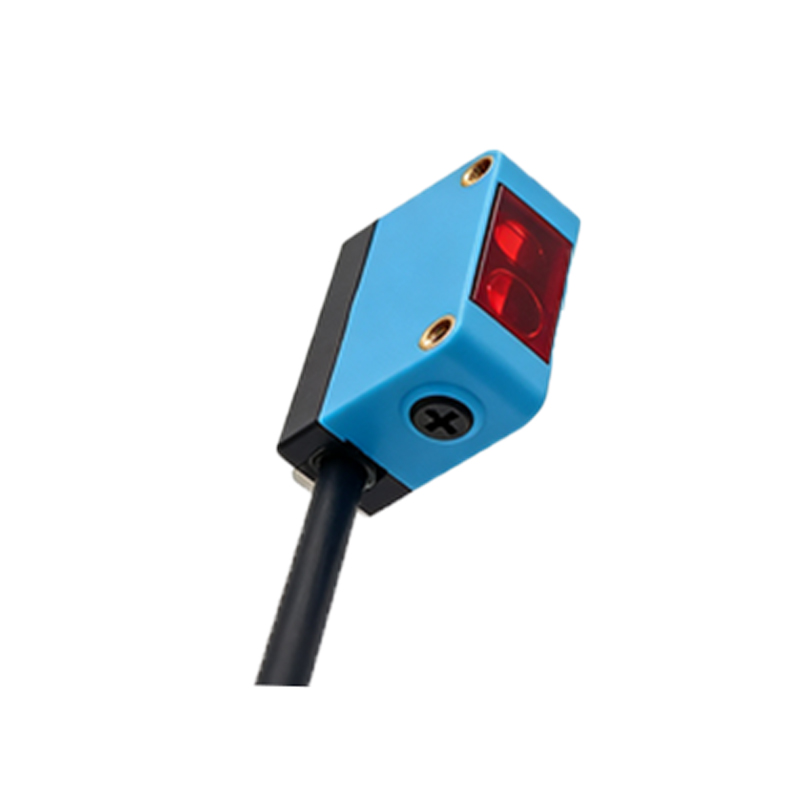
Technical Specifications and Operating Principles
Operating on the principle of light beam interruption or reflection, the M51P3 sensor emits a focused infrared signal that is either received directly (in through-beam models) or reflected off a target (in retro-reflective or diffuse models). Key technical parameters include a sensing range of up to 15 meters for through-beam types, with a response time of less than 1 millisecond, ensuring rapid detection in high-speed processes. The sensor features a built-in amplifier with adjustable sensitivity, allowing fine-tuning for specific object characteristics. It supports various output configurations, including NPN/PNP transistor outputs and analog options, compatible with PLCs and other control devices. Power supply requirements typically range from 10-30V DC, with low power consumption for energy-efficient operation.
Key Features and Design Advantages
One of the standout features of the M51P3 is its compact, cylindrical housing made of nickel-plated brass or stainless steel, providing IP67 protection against water and dust ingress. The sensor incorporates advanced optics with a visible red beam indicator for easy alignment during installation. Additionally, it includes diagnostic LEDs for status monitoring, such as power-on and output activation signals. The M51P3 is designed with a stable housing design that minimizes false triggers caused by background objects or environmental fluctuations. Its temperature tolerance from -25°C to 55°C ensures reliable performance in extreme conditions, while the optional teach-in function simplifies setup for varying detection thresholds.
Installation and Configuration Guidelines
Proper installation is critical for optimal sensor performance. Mount the M51P3 securely using standard brackets, ensuring the optical axis is aligned with the target path. Avoid placing the sensor near reflective surfaces or direct sunlight to prevent interference. For through-beam models, align the emitter and receiver precisely; for diffuse types, maintain the recommended sensing distance based on object size and reflectivity. Configuration involves adjusting the sensitivity potentiometer or using the teach-in button to set the detection level. Regular testing with actual objects under operating conditions is advised to verify settings. Maintenance includes periodic lens cleaning and checking electrical connections for corrosion or wear.
Common Applications in Industrial Settings
The M51P3 photoelectric sensor is widely employed across industries for tasks such as object counting on conveyor belts, detecting fill levels in containers, and positioning components in robotic systems. In automotive manufacturing, it ensures part presence during assembly, while in logistics, it monitors package movement through sorting facilities. The sensor’s high-speed response makes it ideal for detecting small items in pharmaceutical packaging or verifying label placement on products. Its robustness also suits outdoor applications like vehicle detection in parking systems or monitoring bulk material flow in agriculture. By integrating with PLC networks, the M51P3 enhances automation efficiency and reduces downtime.
Troubleshooting and Maintenance Tips
If the M51P3 sensor malfunctions, start by checking the power supply and wiring connections for faults. Ensure the lens is clean and free of obstructions. Use the diagnostic LEDs to identify issues: a steady power LED indicates normal voltage, while a flickering output LED may signal misalignment or insufficient signal strength. Adjust sensitivity if detection is inconsistent, and verify that the target object falls within the specified sensing range. For persistent problems, consult the manufacturer’s datasheet for error codes or consider environmental factors like extreme temperatures. Regular calibration and replacement of worn parts, such as cables, can extend the sensor’s lifespan and maintain accuracy.
Future Trends and Industry Relevance
As Industry 4.0 evolves, photoelectric sensors like the M51P3 are increasingly integrated into smart factories with IoT connectivity for real-time data monitoring. Advances in miniaturization and energy efficiency are expected to enhance their versatility. The M51P3’s design aligns with trends toward modular systems that support easy upgrades and interoperability with digital protocols. Its reliability in harsh conditions positions it as a cornerstone for emerging applications in renewable energy and automated logistics. By adopting such sensors, industries can achieve higher productivity, reduced waste, and improved safety standards, underscoring the M51P3’s ongoing relevance in a competitive market.