Introduction to Agilent Photoelectric Sensors
Agilent Technologies, a leader in measurement and sensing solutions, offers a comprehensive portfolio of photoelectric sensors renowned for their precision, reliability, and innovation. These sensors are fundamental components in modern industrial automation, enabling non-contact detection of objects, measurement of distance, and monitoring of processes with exceptional accuracy. Operating on the principle of converting light signals into electrical signals, Agilent photoelectric sensors utilize advanced optical technologies to perform in diverse and demanding environments. From manufacturing assembly lines to logistics and packaging systems, they provide the critical data necessary for process control, quality assurance, and operational efficiency. The core strength of these sensors lies in their ability to deliver consistent performance, even when subjected to factors like ambient light interference, target color or reflectivity variations, and harsh industrial conditions. This introduction sets the stage for understanding the sophisticated engineering and broad applicability that define Agilent's offerings in this vital field of industrial sensing.
Core Technologies and Operating Principles
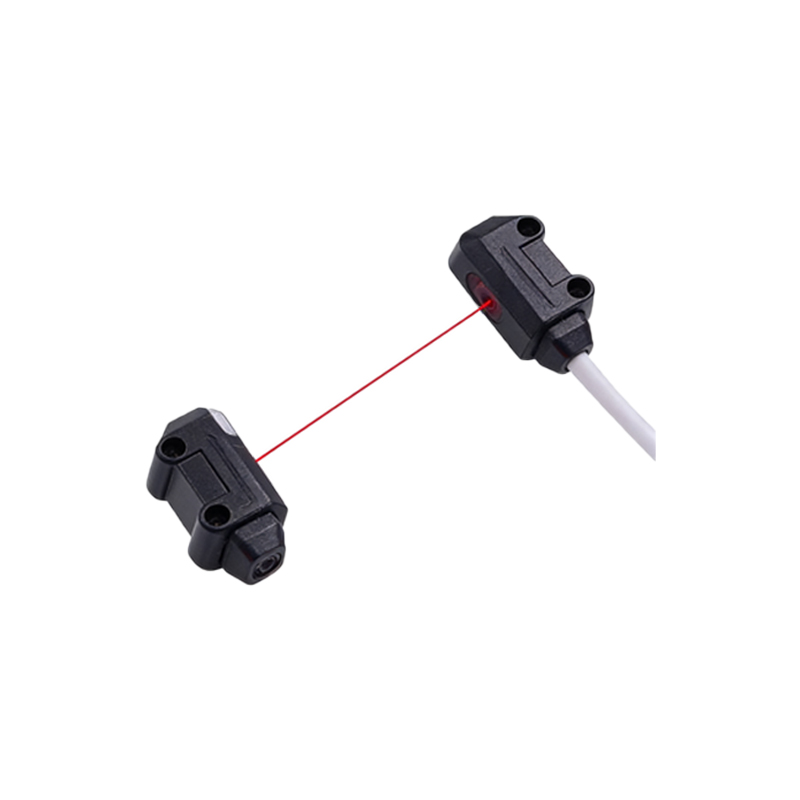
Agilent photoelectric sensors are built upon several key optical sensing modes, each tailored for specific application challenges. The through-beam (or opposed) mode employs a separate transmitter and receiver. An object is detected when it interrupts the light beam traveling between the two units. This mode offers the longest sensing range and highest reliability for detection. The retro-reflective mode uses a single housing containing both emitter and receiver, along with a reflector. Detection occurs when the object breaks the beam reflected back to the sensor. Diffuse (or proximity) mode sensors also house the emitter and receiver together but detect light reflected directly off the target object. This mode is ideal for applications where installing a reflector or separate receiver is impractical. Furthermore, Agilent integrates advanced features such as background suppression in diffuse sensors, which uses triangulation to ignore distant background objects, and precise color recognition or contrast detection capabilities. The heart of these systems often involves high-quality LEDs or laser diodes as light sources and sophisticated photodetectors and signal processing circuitry to ensure stable and accurate output.
Key Product Features and Specifications
The performance of Agilent photoelectric sensors is defined by a set of critical specifications. Sensing range is a primary parameter, varying from a few centimeters in precise diffuse models to several meters in through-beam configurations. Response time, typically in the millisecond range, determines how quickly the sensor can detect a change and trigger an output, which is crucial for high-speed production lines. Many models feature adjustable sensitivity, allowing engineers to fine-tune the sensor for specific targets and to compensate for environmental dust or lens contamination. Output types are versatile, including digital outputs like NPN/PNP transistors and relay contacts, as well as analog outputs (e.g., 4-20 mA, 0-10V) for proportional distance measurement. Robust construction is a hallmark, with ingress protection (IP) ratings such as IP67 or IP69K ensuring resistance to water, oil, and dust. Additionally, features like built-in diagnostics via LED indicators, teach-in functionality for easy setup, and compatibility with various mounting accessories and connection methods (e.g., M8/M12 connectors) enhance their usability and integration into complex control systems.
Applications Across Industrial Sectors
The versatility of Agilent photoelectric sensors drives their adoption across a wide spectrum of industries. In automotive manufacturing, they are indispensable for part presence verification on robotic welding lines, bottle fill-level detection in fluid dispensing, and precise positioning of components during assembly. The packaging industry relies on them for label detection, cap placement verification on bottles, and counting products on conveyor belts. In material handling and logistics, these sensors manage warehouse automation by detecting parcel sizes on sortation systems, ensuring pallet integrity, and providing position feedback for automated guided vehicles (AGVs). Electronics assembly lines use miniature sensors for PCB board positioning and component insertion checks. Furthermore, they play a role in food and beverage processing for detecting transparent films or monitoring fill levels without product contact, adhering to strict hygiene standards. Each application leverages the sensor's non-contact nature, speed, and precision to enhance productivity, reduce waste, and improve overall system safety.
Advantages Over Alternative Sensing Technologies
When compared to other proximity sensing technologies like inductive or capacitive sensors, Agilent photoelectric sensors offer distinct advantages. Their primary benefit is the ability to detect virtually any material—metal, plastic, glass, wood, or liquid—as long as it affects a light beam. This universality makes them far more flexible than inductive sensors, which only detect metals. They also provide much longer sensing distances than capacitive sensors. The non-contact operation eliminates mechanical wear and tear, ensuring a long operational lifespan and minimal maintenance. The high switching frequency and fast response enable them to keep pace with the most rapid automated processes. For challenging detection tasks, such as seeing clear glass, detecting small objects, or ignoring a colored background, the specialized models with background suppression or color sensing capabilities provide solutions that are often unattainable with other sensor types. This combination of versatility, speed, and precision solidifies their position as a preferred choice for complex automation tasks.
Selection Guidelines and Integration Considerations
Selecting the appropriate Agilent photoelectric sensor requires a systematic analysis of the application requirements. Engineers must first define the object to be detected: its size, material, color, and surface finish. The required sensing distance and the available space for sensor mounting will dictate the suitable sensing mode (through-beam, retro-reflective, or diffuse). Environmental factors are critical; the presence of dust, fog, steam, or intense ambient light may necessitate sensors with specific spectral filters (e.g., infrared vs. visible red light), polarized lenses, or higher IP ratings. The electrical interface must match the control system's input requirements, considering voltage levels and output type (sourcing or sinking). For integration, proper alignment is crucial, especially for through-beam and retro-reflective types. Mounting hardware should secure the sensor against vibration. Regular maintenance, primarily lens cleaning, is recommended to sustain optimal performance. Agilent provides detailed datasheets, application notes, and configuration tools to assist in this selection process, ensuring the sensor integrates seamlessly and performs reliably in its intended role.
Future Trends and Innovations
The future of Agilent photoelectric sensors is intertwined with the evolution of Industry 4.0 and smart manufacturing. A key trend is the increasing integration of intelligence and connectivity directly into the sensor housing. Future models may feature integrated IO-Link communication, a standard that allows for bidirectional data exchange beyond simple on/off signals. This enables remote configuration, real-time diagnostic data monitoring (like lens contamination levels or temperature), and predictive maintenance alerts. Miniaturization will continue, allowing sensors to fit into increasingly compact machinery. Enhanced performance in challenging conditions, such as improved immunity to welding sparks or highly reflective surfaces, will be a focus. Furthermore, the convergence of sensing technologies may lead to hybrid sensors that combine photoelectric sensing with other modalities, like distance measurement (LiDAR principles) or simple vision-based inspection, providing richer data from a single point. These innovations will further empower engineers to build more adaptive, efficient, and interconnected automated systems.