Introduction to Capacitive Sensing Technology
Capacitive proximity sensors operate on a fundamental principle: they detect changes in capacitance. All objects possess a dielectric constant, which influences the capacitance of an electric field. An M12 capacitive sensor generates an electrostatic field from its sensing face. When a target object enters this field, it alters the capacitance. The sensor's internal oscillator circuit detects this change, triggering a switching output. Unlike inductive sensors that only detect metals, capacitive sensors can detect a vast array of materials, including liquids, powders, granules, plastics, and wood. This versatility stems from their ability to sense the dielectric properties of materials, making them indispensable in diverse industrial settings where non-metallic object detection is required.
Key Features of the M12 Form Factor
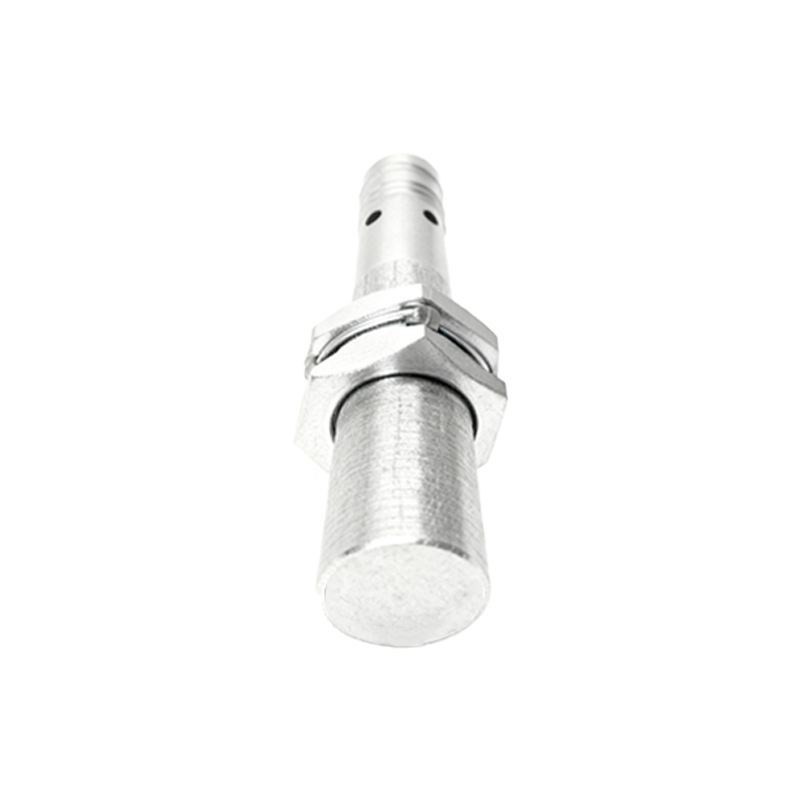
The M12 designation refers to the sensor's threaded housing diameter of 12 millimeters. This compact, cylindrical form factor has become an industry standard for sensor connectivity and mounting. Its key advantages include robust mechanical construction, excellent resistance to vibration, and IP67 or higher ingress protection ratings, making it suitable for harsh environments involving dust, moisture, and washdowns. The standardized threading allows for easy installation into matching mounting nuts or brackets, facilitating quick replacement and maintenance. The M12 form factor also typically features a 4-pin or 2-pin quick-disconnect connector, enabling simple wiring and integration into control systems without the need for complex terminations.
Material Detection and Application Scenarios
The primary strength of an M12 capacitive proximity sensor lies in its material-agnostic detection capability. Common industrial applications include level detection of liquids in non-metallic tanks, such as monitoring coolant, water, or chemical levels through a plastic or glass wall. They are equally effective for detecting the presence or absence of plastic caps on bottles, monitoring powder levels in hoppers, or sensing the fill level of cardboard boxes on a conveyor. In packaging machinery, they can detect transparent films or low-density foams that would be invisible to photoelectric sensors. Their ability to ignore airborne dust and minor contamination, when properly adjusted, adds to their reliability in challenging processes like woodworking or food production.
Adjustment and Calibration for Optimal Performance
Most M12 capacitive sensors feature a potentiometer for sensitivity adjustment. This is a critical setup step. The sensitivity determines the sensing distance and the sensor's response to different dielectric materials. A higher sensitivity setting increases the sensing range but may also cause the sensor to react to background objects or container walls (a phenomenon known as "false triggering"). Calibration is typically performed by placing the target object at the desired sensing position and adjusting the potentiometer until the output switches. For detecting materials through a container wall, the sensor must be calibrated with the wall in place, as the wall itself affects the dielectric field. Some advanced models offer teach-in functions or built-in diagnostics to simplify this process.
Electrical Outputs and Wiring Considerations
M12 capacitive proximity sensors are available with various output types to interface with programmable logic controllers (PLCs) and other control devices. The most common are DC versions with NPN (sinking) or PNP (sourcing) transistor outputs, typically operating on 10-30V DC. Analog output versions (e.g., 4-20mA or 0-10V) are also available for continuous level monitoring. The choice between NPN and PNP depends on the input circuit of the controller. Wiring is straightforward using the standardized color code of the M12 connector: brown for DC+, blue for DC-, and black for the switched output signal. Proper shielding and cable routing are recommended in environments with strong electromagnetic interference to ensure signal integrity.
Environmental Factors and Installation Best Practices
While robust, the performance of capacitive sensors can be influenced by environmental conditions. Extreme temperatures can affect electronic components and sensing distance. Humidity and condensation on the sensing face can cause false triggers, as water has a high dielectric constant. For liquid detection, it is often advisable to mount the sensor horizontally or at an angle to prevent material buildup on the active face. Maintaining a stable mounting position is crucial, as movement can change the capacitance to ground. A critical installation rule is to ensure a sufficient "dead zone" around the sensor—keeping conductive materials like metal brackets or tank walls at a distance greater than the sensor's sensing range to prevent interference with the electrostatic field.
Comparison with Inductive and Photoelectric Sensors
Understanding when to choose a capacitive sensor over other types is key to optimal system design. Inductive proximity sensors are superior for exclusive metal detection, offer longer sensing ranges for metals, and are completely unaffected by non-metallic substances like water or dust. Photoelectric sensors excel at long-range detection and can sense