Introduction to Human-Sensing Proximity Technology
In the evolving landscape of industrial automation and smart building management, the ability to detect human presence accurately and reliably has become paramount. Proximity sensors, long the workhorses for object detection, have undergone significant advancements to specialize in sensing human proximity. Unlike standard inductive or capacitive sensors that detect metallic or general material presence, these specialized sensors are engineered to recognize the unique biological and physical signatures of a person. This capability is foundational for applications ranging from energy conservation in lighting and HVAC systems to critical safety interlocks in machinery and collaborative robotics. The core principle hinges on detecting subtle changes in an environmental field—be it infrared radiation, capacitive coupling, or ultrasonic waves—caused by the approach or presence of a human body.
Key Sensing Methodologies and Operating Principles
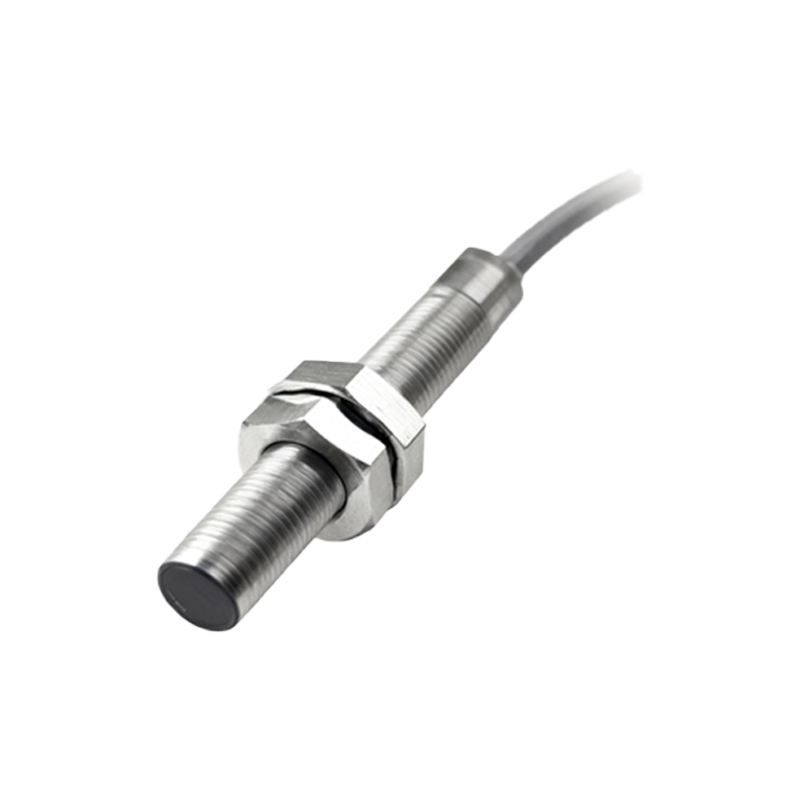
Several distinct technologies enable proximity sensors to detect humans, each with its own advantages and ideal use cases. Passive Infrared (PIR) sensors are among the most common, detecting changes in infrared radiation emitted by the human body. They are highly effective for motion detection but may not reliably register a stationary person. Active Infrared sensors, which emit and receive reflected IR beams, can detect presence without motion but may be influenced by other warm objects. Microwave and Radar-based sensors emit high-frequency radio waves and analyze the Doppler shift or disturbance in the reflected signal caused by movement, offering excellent range and the ability to penetrate non-metallic materials. Finally, Capacitive Proximity Sensors create an electrostatic field and detect changes in capacitance when a human body, a conductive object, enters this field. This method is highly effective for very short-range, static presence detection, such as in touchless faucets or elevator call buttons.
Design Considerations for Reliable Detection
Designing a system that reliably senses human proximity requires careful consideration of several engineering parameters. Sensitivity and range must be calibrated to the specific application; a sensor for an automatic door requires a different detection profile than one for a machine safety curtain. Environmental factors pose significant challenges. Temperature fluctuations can affect PIR sensors, while electromagnetic interference (EMI) can disrupt microwave and capacitive units. Sensor placement, field of view, and potential shielding by obstacles are critical mechanical design aspects. Furthermore, engineers must account for the "dead zone" common in many sensors—the area immediately adjacent to the sensor where detection is unreliable. False triggering, such as from small animals, moving machinery, or HVAC airflow, must be minimized through intelligent signal processing, adjustable time delays, and differential sensing techniques.
Integration into Control Systems and Networks
Modern human-sensing proximity sensors are rarely standalone devices. Their true value is realized through seamless integration into broader control architectures. Typically featuring standard output options like NPN/PNP transistors, analog voltage/current (0-10V, 4-20mA), or IO-Link for digital communication, these sensors feed critical presence data into Programmable Logic Controllers (PLCs), building management systems (BMS), or direct microcontroller inputs. In advanced Industry 4.0 or smart building scenarios, sensors with network connectivity (e.g., over Ethernet/IP, PROFINET, or BACnet) can provide rich, real-time data on occupancy patterns. This integration allows for sophisticated logic: dimming lights only when a space is unoccupied for a set duration, triggering safety protocols when a worker enters a hazardous robot cell, or activating display screens as a customer approaches a kiosk.
Applications in Industrial and Commercial Settings
The applications for human-sensing proximity technology are vast and growing. In industrial safety, they form the basis of presence-sensing device initiation (PSDI) for presses and light curtains for robotic cells, ensuring machinery halts before contact occurs. In collaborative robotics, these sensors allow robots to slow down or stop their motion when a human coworker approaches too closely. Within commercial buildings, they are the cornerstone of occupancy-based lighting and climate control, leading to substantial energy savings. Other applications include touchless interfaces for public hygiene, people counting for retail analytics, automatic door and gate operation, and smart inventory systems that detect when personnel are accessing a storage area. The drive towards smarter, safer, and more efficient environments continues to expand the frontier for these sensors.
Future Trends and Technological Advancements
The future of human proximity sensing lies in increased intelligence, miniaturization, and sensor fusion. Emerging sensors are incorporating machine learning algorithms directly at the edge to better distinguish human presence from other environmental noise, improving accuracy and reducing false positives. The miniaturization of radar-on-chip technology is enabling the embedding of sophisticated presence detection into consumer electronics and compact IoT devices. Furthermore, the trend towards multi-technology sensor fusion—combining, for example,