Introduction to the PRCM12 Proximity Sensor
The PRCM12 represents a significant advancement in inductive proximity sensing technology, engineered for reliability in demanding industrial environments. As a cylindrical, shielded sensor, it is designed for flush mounting in metal, offering precise non-contact detection of metallic objects. Its compact M12 housing facilitates easy integration into automated machinery, conveyor systems, and robotic cells. The core principle relies on generating an electromagnetic field; when a ferrous or non-ferrous metal target enters this field, it causes a change in oscillation amplitude, triggering the sensor's solid-state output. This fundamental operation makes the PRCM12 a cornerstone for position verification, part counting, and end-of-travel detection.
Key Technical Specifications and Performance
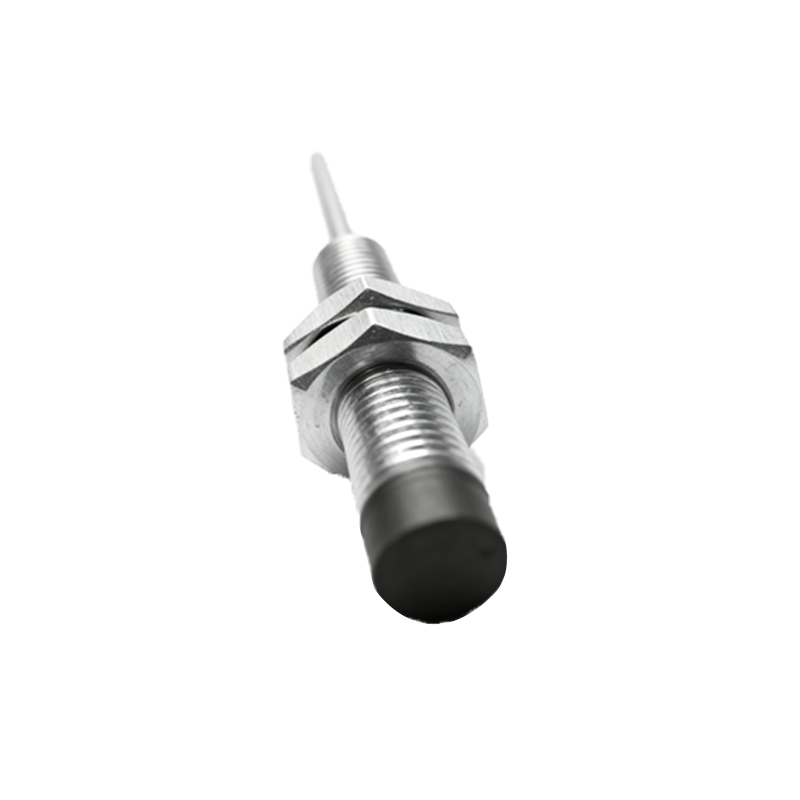
The performance of the PRCM12 is defined by a robust set of specifications. Typically, it operates with a standard sensing range, often up to 2mm for steel targets, though this varies slightly based on target material. It is compatible with a wide voltage range, commonly 10-30V DC, making it versatile for various control system architectures. The output configuration is usually a 3-wire design, offering either a Normally Open (NO) or Normally Closed (NC) PNP or NPN switching signal. Key performance metrics include a high switching frequency, allowing for detection of rapidly moving objects, and a minimal hysteresis to ensure repeatable operation. Its housing is rated IP67 or higher, providing excellent resistance to dust ingress and temporary immersion, which is critical for washdown or outdoor applications.
Electrical Characteristics and Wiring Configuration
Correct electrical integration is paramount for optimal performance. The PRCM12's 3-wire system comprises a brown wire for positive supply (V+), a blue wire for common negative (0V), and a black wire for the switching output. For a PNP (sourcing) sensor, the black wire provides a positive voltage to the load when activated. For an NPN (sinking) version, it provides a path to ground. It is essential to include a protective series resistor or a suppressor module when connecting to inductive loads like relays or solenoids to clamp voltage spikes and prolong sensor life. The sensor incorporates reverse polarity protection and short-circuit protection, enhancing its durability against common installation errors.
Installation Considerations and Mounting Practices
Proper installation directly impacts sensing reliability. As a shielded (flush-mountable) sensor, the PRCM12 can be installed embedded in a metal bracket without a loss of sensing field, allowing for a very clean and protected installation. However, maintaining the recommended clearance between the sensor face and the surrounding metal is still advised to prevent any residual interference. Installers must ensure that only the specified target material enters the sensing field, as adjacent machinery or metal structures can cause false triggering. For optimal results, the target should approach the sensor face perpendicularly, and the sensing distance should be derated for non-ferrous metals like aluminum or copper.
Application Scenarios in Industrial Automation
The PRCM12 finds extensive use across diverse sectors. In automotive assembly lines, it verifies the presence of engine blocks or confirms that a robot gripper has successfully picked up a component. In packaging machinery, it counts bottles or detects the position of a filler head. On metal stamping presses, it serves as a safety or position check to confirm a part has been ejected. Its robustness makes it ideal for material handling, where it monitors pallet positions on conveyors. In machine tools, it acts as a tool breakage detector or a limit switch for axis movement. The consistent, wear-free operation of the PRCM12 eliminates mechanical failure points associated with traditional limit switches.
Troubleshooting and Maintenance Guidelines
Despite its ruggedness, systematic troubleshooting may be required. Common issues include failure to detect a target. This can stem from an incorrect power supply, wiring error, or the target being outside the sensing range or made of an unsuitable material. Using a multimeter to check voltage at the sensor terminals and the output signal during activation is the first step. Persistent false triggering often indicates electrical noise interference or metallic debris near the sensing face. Ensuring proper grounding, using shielded cables in high-noise environments, and regular cleaning of the sensor face are essential maintenance practices. The PRCM12 is largely maintenance-free, but periodic functional checks are recommended as part of preventative maintenance schedules.
Comparison with Other Sensor Types
While the PRCM12 excels in metallic object detection, understanding its place relative to other technologies is crucial. Compared to capacitive sensors, it is insensitive to non-metallic materials like plastics or liquids, offering superior selectivity in metal-dominant environments. Versus photoelectric sensors, it is unaffected by ambient light, dust