In the realm of precision measurement, laser distance sensors have become indispensable tools across numerous industries. Among the prominent names in this field, Raystar has established itself as a significant player, offering advanced sensing solutions that combine accuracy, reliability, and innovation. This article delves into the core technology behind Raystar laser distance sensors, their operational principles, and their diverse applications in the modern world.
At its heart, a Raystar laser distance sensor operates on the Time-of-Flight (ToF) principle or phase-shift measurement. The sensor emits a focused laser beam towards a target object. This beam reflects off the surface and returns to the sensor's receiver. By precisely calculating the time delay between emission and reception of the laser pulse, or by analyzing the phase shift of a modulated laser wave, the sensor's internal processor can determine the distance to the target with remarkable accuracy. This non-contact method is a key advantage, allowing for measurements of moving, hot, fragile, or otherwise inaccessible objects without physical interaction.
Raystar sensors are engineered to excel in challenging environments. They typically feature robust housings with high Ingress Protection (IP) ratings, making them resistant to dust, water, and mechanical shocks. This durability is crucial for deployment in industrial settings like manufacturing plants, construction sites, and outdoor logistics. Furthermore, advanced models incorporate algorithms to filter out ambient light interference and handle varying surface reflectivities, ensuring stable readings whether the target is a dark, absorptive material or a bright, reflective surface.
The applications for Raystar laser distance sensors are vast and continually expanding. In industrial automation, they are pivotal for positioning control, dimensional checks, and fill level monitoring in bins or silos. On construction sites, they facilitate tasks such as area calculation, alignment, and volume measurement, enhancing both speed and safety. The logistics and warehousing sector relies on these sensors for palletizing, container profiling, and automated guided vehicle (AGV) navigation, optimizing space and workflow efficiency.
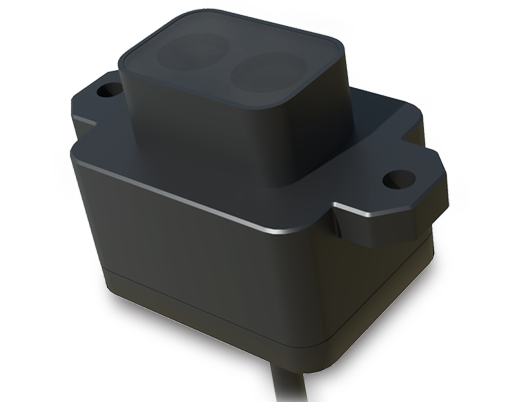
Another critical domain is robotics. Mobile robots and robotic arms use laser sensors for obstacle detection, SLAM (Simultaneous Localization and Mapping), and precise manipulation, enabling more autonomous and intelligent operations. In the transportation sector, they contribute to vehicle safety systems, toll collection, and train positioning. Even in agriculture, these sensors assist in monitoring crop growth and guiding automated machinery.
Selecting the right Raystar sensor involves considering several parameters: measurement range, accuracy, response time, laser class (for safety), and output interface (e.g., analog, digital, IO-Link). For instance, a short-range, high-accuracy sensor is ideal for precise assembly tasks, while a long-range model with a fast update rate suits vehicle detection on highways. Proper installation is also vital; factors like mounting angle, environmental conditions (extreme temperatures, vibrations), and target characteristics must be evaluated to achieve optimal performance.
Looking ahead, the evolution of Raystar and similar technologies points toward even greater miniaturization, enhanced data fusion with other sensor types, and deeper integration with the Industrial Internet of Things (IIoT). Smart sensors with embedded diagnostics and wireless connectivity will enable predictive maintenance and centralized data analytics, driving further efficiencies.

In conclusion, Raystar laser distance sensors represent a sophisticated convergence of optics, electronics, and software. Their ability to deliver fast, precise, and contactless distance data makes them a cornerstone technology for automation, quality control, and intelligent systems. As industries strive for higher productivity and smarter processes, the role of reliable measurement solutions like those from Raystar will only become more central, pushing the boundaries of what is possible in measurement and control.
