In modern industrial automation and robotics, sensing technologies play a critical role in enabling precision, safety, and efficiency. Among the most widely utilized are laser sensors and proximity sensors. While both serve the fundamental purpose of detection and measurement without physical contact, their operating principles, capabilities, and ideal applications differ significantly. Understanding these differences is essential for engineers and system integrators to select the optimal sensor for a given task.
Laser sensors operate by emitting a focused beam of coherent light, typically from a laser diode. This beam is directed toward a target, and the sensor measures the interaction of the light with the target to determine distance, position, height, or presence. The most common measurement principles include time-of-flight (ToF), triangulation, and phase-shift analysis. Time-of-flight sensors calculate distance by measuring the time it takes for a laser pulse to reflect back to a receiver. Triangulation sensors use a laser emitter, a receiver (like a CCD or PSD), and geometric principles to pinpoint a target's position with high resolution. Laser sensors are renowned for their exceptional accuracy, often down to micrometer levels, and their ability to measure over long ranges, sometimes exceeding hundreds of meters. They perform well in applications requiring precise profiling, contour mapping, or exact distance measurement to specific points. However, their performance can be influenced by environmental factors such as ambient light, dust, fog, or the target's surface properties (e.g., color, reflectivity, transparency). Highly reflective or transparent materials may pose challenges.
Proximity sensors, on the other hand, are a broader category of non-contact detectors that sense the presence or absence of an object within a defined range, known as the sensing distance. They do not typically provide precise distance measurement but rather a binary or analog output indicating an object is within a certain field. Common types include inductive, capacitive, ultrasonic, and photoelectric sensors. Inductive proximity sensors detect metallic objects by generating an electromagnetic field. Capacitive sensors can detect both metallic and non-metallic materials (like liquids, plastics, or wood) by sensing changes in capacitance. Ultrasonic sensors use sound waves, making them suitable for detecting objects of various materials and under challenging conditions like dust or mist. Photoelectric sensors, which use a light beam (often infrared LED, not laser), are versatile for presence detection over longer ranges than inductive/capacitive types. Proximity sensors are generally more robust against environmental contaminants like dirt or oil, particularly the inductive and capacitive variants. They are simpler in operation, often more cost-effective for basic detection tasks, and excel in harsh industrial environments. Their primary limitation is lower precision and a limited sensing range compared to laser sensors.
The choice between a laser sensor and a proximity sensor hinges on the application's specific requirements. Laser sensors are the preferred solution for high-precision metrology. Examples include measuring the thickness of materials, checking part dimensions in quality control, guiding robotic arms for precise assembly, and performing 3D scanning. In logistics, laser sensors are used for volume measurement of packages. In contrast, proximity sensors are the workhorses of factory automation for tasks like object counting, limit switching, jam detection, and position verification. An inductive sensor might detect a metal gear tooth in a motor, a capacitive sensor could monitor fluid levels in a tank, and an ultrasonic sensor might be used for pallet detection in a warehouse. Photoelectric sensors are ubiquitous on conveyor lines for detecting the passage of boxes.
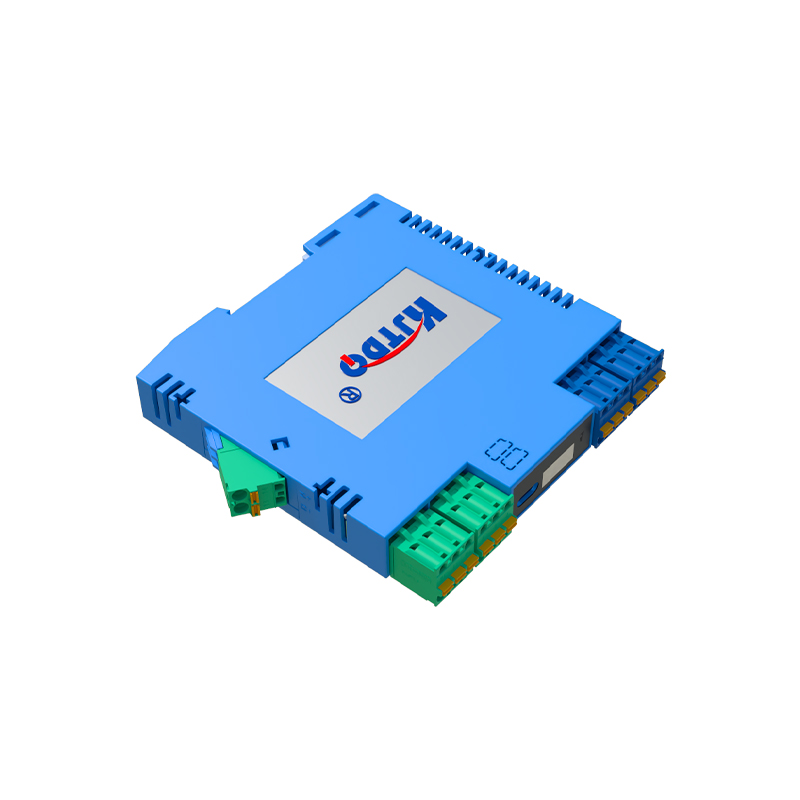
A key consideration is the trade-off between precision, range, environmental robustness, and cost. Laser sensors offer superior accuracy and range but at a higher price point and with greater sensitivity to operating conditions. Proximity sensors provide reliable, durable, and economical detection for a vast array of standard industrial applications but lack fine measurement capability. In some advanced systems, both sensor types may be used complementarily; for instance, a proximity sensor could trigger a system, and a laser sensor then performs a precise measurement.
In conclusion, laser sensors and proximity sensors are not direct competitors but specialized tools for different challenges. Laser sensors are the precision instruments for exact measurement and profiling, while proximity sensors are the robust, reliable solutions for object presence detection in automation. By carefully evaluating factors such as required accuracy, target material, sensing distance, environmental conditions, and budget, professionals can leverage the strengths of each technology to build smarter, more efficient, and more reliable automated systems.