Understanding Photoelectric Proximity Sensors
Photoelectric proximity sensors are indispensable components in modern industrial automation, utilizing light beams to detect the presence, absence, or distance of objects without physical contact. These sensors operate primarily through three main sensing methods: through-beam, retro-reflective, and diffuse reflective. The through-beam type employs separate emitter and receiver units, offering the longest sensing ranges and highest reliability. Retro-reflective sensors use a single unit with a reflector, bouncing the light beam back to the receiver. Diffuse reflective sensors detect objects by measuring the light reflected directly from the target itself. Each method has distinct advantages in terms of range, environmental tolerance, and target material suitability, forming the foundation upon which customization is built. The core principle involves emitting a light beam—often infrared, visible red, or laser—and analyzing the received signal to determine object proximity. This non-contact detection is crucial for applications requiring high-speed operation, delicate handling, or harsh environmental conditions where mechanical wear is a concern.
The Imperative for Customization in Industrial Applications

While standard photoelectric sensors cover a broad range of common tasks, the complexity and specificity of modern manufacturing and logistics demand tailored solutions. Off-the-shelf sensors may fall short in scenarios involving unique target materials, extreme temperatures, intense vibration, corrosive atmospheres, or stringent hygiene requirements like those in food and pharmaceutical processing. Customization addresses these challenges by modifying key parameters such as sensing range, beam pattern, response time, housing material, and output configuration. For instance, an automotive assembly line requiring detection of glossy black plastic components would need a sensor with a specialized lens and tuned amplifier to overcome low reflectivity. Similarly, outdoor applications in material handling might require sensors with hardened, weatherproof housings and temperature compensation circuits to function reliably from -40°C to 70°C. The drive for increased efficiency, reduced downtime, and integration with Industry 4.0 systems further propels the need for sensors that are not merely components but optimized solutions.
Key Customizable Parameters and Features
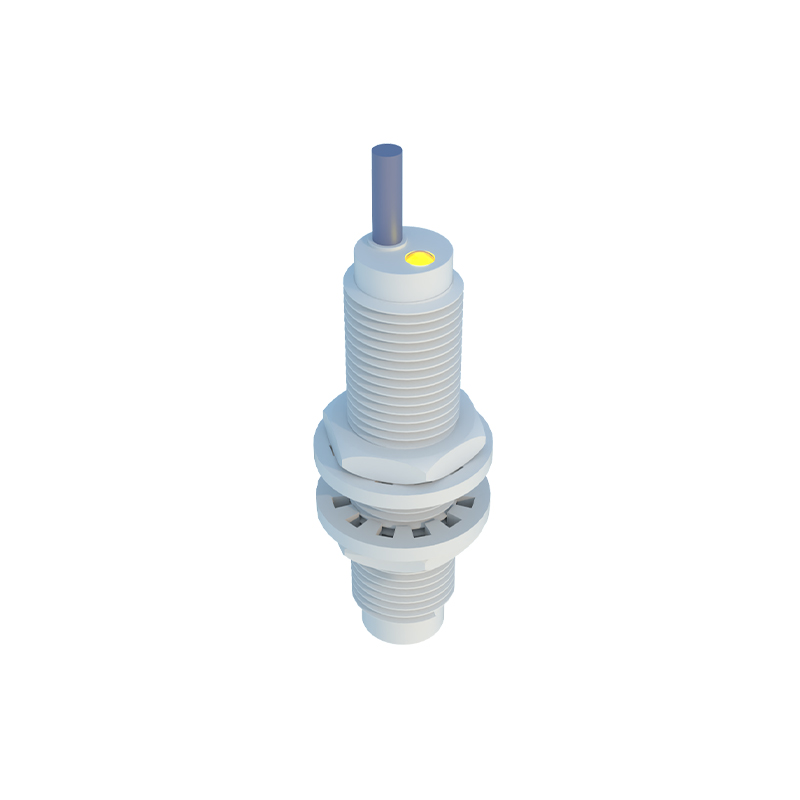
The customization of a photoelectric proximity sensor involves a systematic adjustment of its physical and electronic characteristics. Housing design is paramount; materials can be specified in stainless steel, specialized plastics, or coatings to resist chemicals, high-pressure washdowns, or UV exposure. The optical system can be tailored through lens selection (focused, wide-angle, or fiber-optic extensions), light source type (modulated LED or laser for precision), and specific wavelengths to ignore ambient light or detect particular colors. Electrical outputs are adapted to match control systems, including options for NPN/PNP transistors, analog current/voltage, IO-Link, or Ethernet protocols. Sensing range and sensitivity thresholds are fine-tuned, and background suppression features can be incorporated for precise detection against varying backgrounds. Additional features like programmable logic, multi-output configurations, and enhanced diagnostics for predictive maintenance are also common custom requests. Engineers work closely with clients to define these parameters, ensuring the sensor performs predictably in its intended niche.
The Collaborative Design and Implementation Process
Achieving a successful custom sensor solution is a collaborative journey between the client's engineering team and the sensor manufacturer's application specialists. The process typically initiates with a detailed application audit, where environmental factors, target properties, required performance metrics, and integration constraints are documented. Prototyping follows, where a modified standard sensor or a fully custom design is tested in a simulated or actual operating environment. This phase is iterative, often leading to refinements in mounting brackets, connector types, or signal processing algorithms. Rigorous validation testing under stress conditions ensures long-term reliability. Once finalized, the manufacturing process leverages scalable production techniques to maintain consistency, with thorough quality checks at each stage. Post-deployment, support includes detailed documentation, calibration guidelines, and often remote monitoring capabilities. This end-to-end partnership transforms a generic detection task into a robust, seamless component of a larger automated system, enhancing overall line performance and intelligence.
Future Trends and Integration with Smart Systems
The future of custom photoelectric sensors is intrinsically linked to the evolution of smart factories and the Industrial Internet of Things (IIoT). Next-generation sensors are being designed not just as detection devices but as data nodes. Customization increasingly involves embedding advanced functionalities like integrated condition monitoring, which tracks lens contamination or LED degradation to alert for preventive maintenance. Sensors are being tailored with unique digital identities and communication protocols to plug directly into networked architectures, providing rich diagnostic and process data to supervisory systems. Furthermore, advancements in miniaturization and laser technology allow for customization in increasingly compact spaces with micron-level precision. The ability to customize software parameters—such as teach-in functions, filtering, and logic operations—remotely via digital interfaces adds a