Introduction to Deceleration Photoelectric Sensors
Deceleration photoelectric sensors represent a sophisticated category within industrial automation, specifically designed to detect the slowing down or precise positioning of moving objects. Unlike standard photoelectric sensors that primarily detect presence or absence, these devices are engineered to monitor and respond to changes in speed or rate of movement. They integrate the fundamental principles of photoelectric sensing with advanced signal processing to interpret motion parameters. The core function revolves around emitting a light beam, typically from an LED or laser diode, towards a target. The reflected or transmitted light is then captured by a receiver. By analyzing the modulation, interruption pattern, or Doppler shift in this received light signal over time, the sensor's internal circuitry can accurately determine if an object is decelerating from a known or expected speed. This capability is crucial in applications where controlling the slowdown of conveyors, robotic arms, or rotating machinery is essential for process safety, precision assembly, or quality control.
Core Working Principles and Technologies
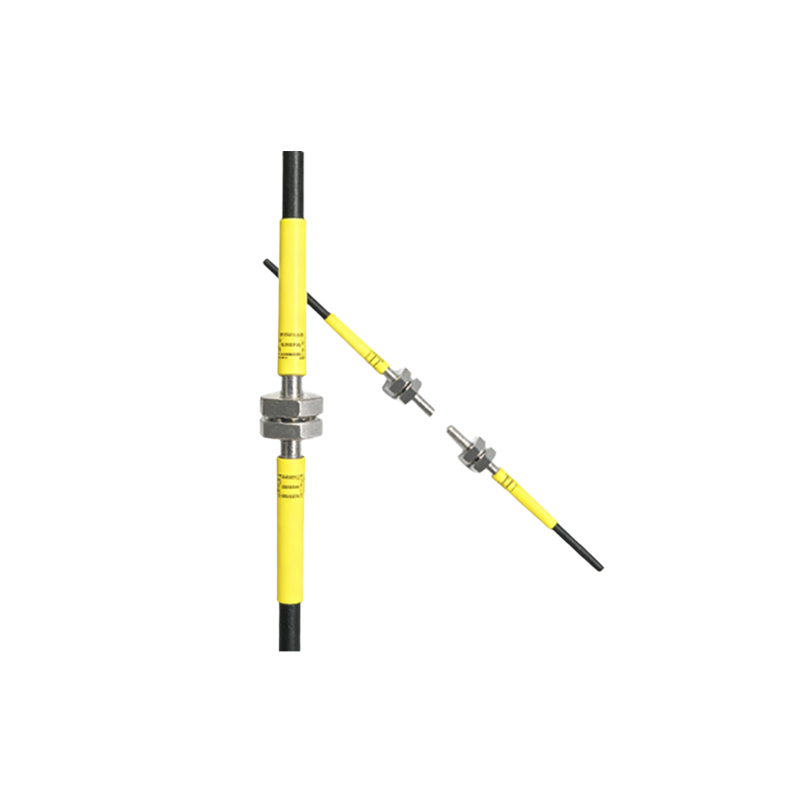
The operational mechanism of a deceleration photoelectric sensor hinges on precise temporal analysis of light signals. Two primary technologies are prevalent: pulse-counting and frequency-shift analysis. In the pulse-counting method, the sensor is paired with a coded disk or a regularly patterned target attached to a rotating shaft. The sensor counts the number of light interruptions per unit time. A decrease in the pulse frequency directly indicates a deceleration event. The system compares this real-time frequency against a preset threshold or a reference signal to trigger an output. The second technology involves the analysis of the Doppler effect. Here, the sensor emits a coherent light beam (often from a laser source) towards a moving surface. The frequency of the reflected light shifts slightly depending on the velocity of the target. A change in this shift corresponds to a change in speed, allowing the sensor to detect deceleration with high sensitivity, even without physical contact or a patterned target. Advanced models incorporate microprocessors to perform complex calculations, filtering out background noise and providing stable, reliable detection.
Key Applications in Industrial Automation
The application spectrum for deceleration photoelectric sensors is vast and critical across multiple industries. In conveyor systems, they are indispensable for monitoring belt speed, ensuring smooth deceleration before sorting stations, accumulation zones, or loading docks to prevent product damage and jams. Within the automotive manufacturing sector, these sensors monitor the precise slowdown of robotic welders or assembly arms, guaranteeing accurate positioning for component placement. They play a vital role in winding and unwinding machinery for textiles, paper, and films, where maintaining constant tension requires exact control over deceleration rates to avoid breaks or slack. In packaging lines, sensors ensure that rapidly moving products decelerate appropriately before entering sealing or labeling stations. Furthermore, they are integral to safety systems on automated guided vehicles (AGVs) and elevator doors, where detecting an unexpected or controlled slowdown is paramount for obstacle avoidance and passenger safety.
Advantages Over Other Speed Monitoring Devices
Deceleration photoelectric sensors offer distinct benefits compared to traditional mechanical or magnetic speed sensors like encoders or tachometers. Their primary advantage is non-contact measurement. Since they do not require physical coupling to the moving part, there is no wear and tear, leading to significantly higher longevity and reduced maintenance. They provide fast response times, capable of detecting minute speed changes almost instantaneously, which is crucial for high-speed automation processes. The installation is generally more flexible and simpler, as only alignment of the light beam is needed, avoiding complex mechanical linkages. They are also less susceptible to environmental factors like dust or oil when equipped with appropriate housings and lenses, unlike mechanical contacts which can fail in dirty conditions. Additionally, their digital output can be easily integrated into modern Programmable Logic Controller (PLC) networks for centralized monitoring and control.
Critical Selection Criteria and Installation Tips
Selecting the appropriate deceleration photoelectric sensor requires careful consideration of several parameters. First, define the required sensing range and the nature of the target (color, material, surface finish), as these affect reflectivity and signal strength. The response time and resolution (minimum detectable speed change) must match the application's dynamics. Output type is crucial; options include digital (PNP/NPN) switches that activate at a set deceleration threshold, or analog outputs (4-20 mA, 0-10V) that provide a continuous signal proportional to speed, offering more detailed control. Environmental robustness, indicated by Ingress Protection (IP) ratings, is essential for withstanding dust, moisture, or washdowns. For installation, ensure stable mounting to prevent vibration-induced misalignment. Precisely align the emitter and receiver (for through-beam types) or align the sensor perpendicularly to the target surface (for reflective types). Avoid optical interference from ambient light or other sensors by using modulated light sources and proper shielding. Regular maintenance should include lens cleaning to ensure optimal performance.
Future Trends and Conclusion
The future of deceleration photoelectric sensing is aligned with Industry 4.0 trends, focusing on enhanced intelligence and connectivity. Next-generation sensors are evolving into smart devices with integrated IO-Link communication, enabling real-time parameter adjustment, advanced diagnostics, and predictive maintenance data transmission directly to control systems. Miniaturization will allow their deployment in tighter spaces. Furthermore, the integration of multi-functional sensing—capable of measuring distance, speed, and deceleration simultaneously—is on the horizon, providing more comprehensive machine health and process monitoring. In conclusion, deceleration photoelectric sensors are vital components for modern industrial automation, offering precise, reliable, and non-contact monitoring of speed reductions. Their correct selection, application, and integration are fundamental to optimizing safety, efficiency, and productivity in increasingly sophisticated manufacturing and material handling environments.