Introduction to Photoelectric Sensors
Photoelectric sensors are essential components in industrial automation, utilizing light beams to detect the presence, absence, or distance of objects. These sensors operate by emitting a light source—typically infrared, visible red, or laser—and measuring changes in the received light intensity. Their non-contact nature makes them ideal for applications requiring high precision, durability, and minimal maintenance. Industries such as manufacturing, packaging, and material handling rely heavily on photoelectric sensors for tasks like object counting, positioning, and quality control. With advancements in technology, modern sensors offer enhanced features like background suppression, fiber-optic capabilities, and programmable logic, catering to diverse operational needs.
Through-Beam Photoelectric Sensors
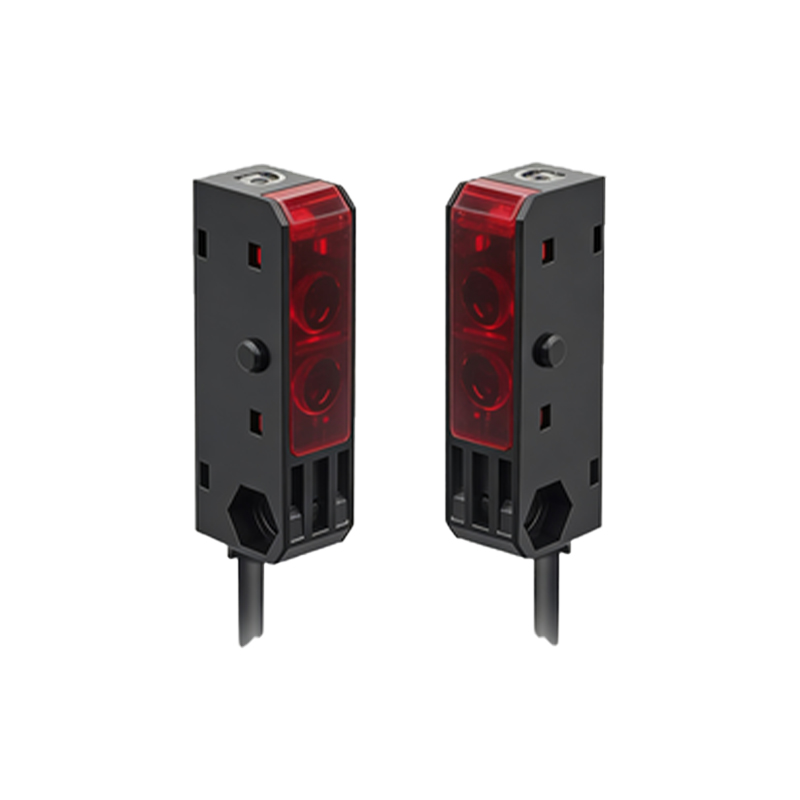
Through-beam sensors, also known as opposed-mode sensors, consist of separate emitter and receiver units placed opposite each other. The emitter projects a continuous light beam toward the receiver, and an object is detected when it interrupts this beam. This configuration provides the longest sensing range among photoelectric sensors, often exceeding 100 meters, and ensures high reliability in challenging environments with dust, dirt, or vibrations. Common applications include detecting large objects on conveyor belts, monitoring door positions, and ensuring safety in automated machinery. However, installation requires precise alignment of the two units, which can be time-consuming in complex setups.
Retroreflective Photoelectric Sensors
Retroreflective sensors integrate the emitter and receiver into a single housing, using a reflector to bounce the light beam back to the receiver. When an object blocks the reflected beam, the sensor triggers a detection signal. These sensors offer a moderate sensing range, typically up to 10 meters, and simplify installation compared to through-beam types. They are widely used in packaging lines, vehicle detection systems, and assembly processes. A key consideration is that highly reflective objects may cause false triggers; thus, models with polarization filters are available to distinguish between the reflector and shiny surfaces, enhancing accuracy in varied industrial settings.
Diffuse Reflective Photoelectric Sensors
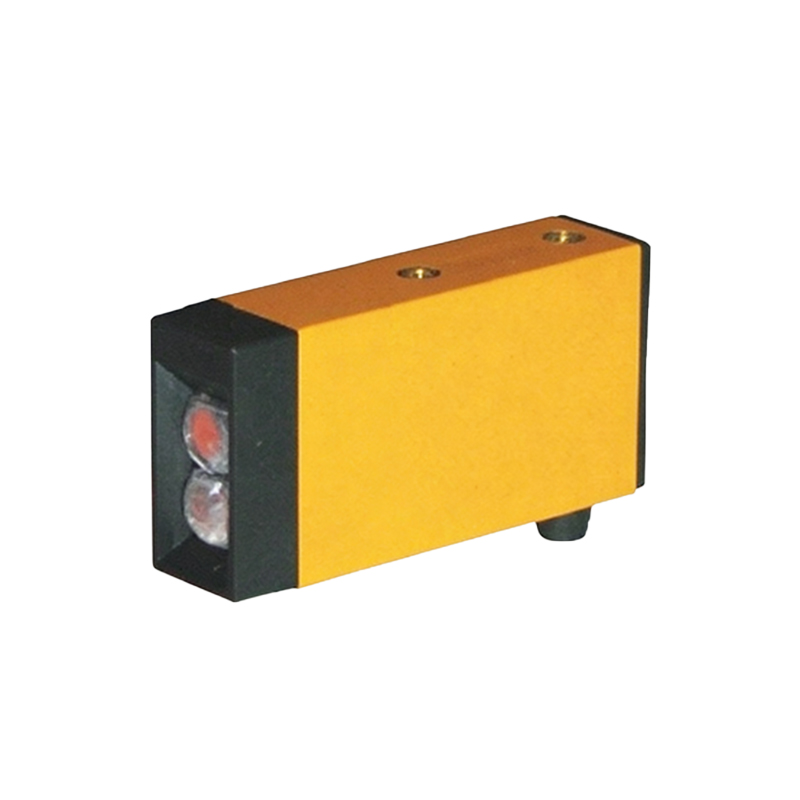
Diffuse reflective sensors, or proximity-mode sensors, house both emitter and receiver in one unit and detect objects based on light reflected directly from the target surface. The sensing range is shorter, usually under 2 meters, making them suitable for close-range applications like detecting small parts, monitoring fill levels in containers, or guiding robotic arms. Their performance depends on the object’s color, texture, and reflectivity—lighter surfaces yield better detection. Advanced versions incorporate background suppression technology, which uses triangulation to ignore distant objects, ensuring precise detection even with inconsistent surfaces or changing environmental conditions.
Fiber-Optic Photoelectric Sensors
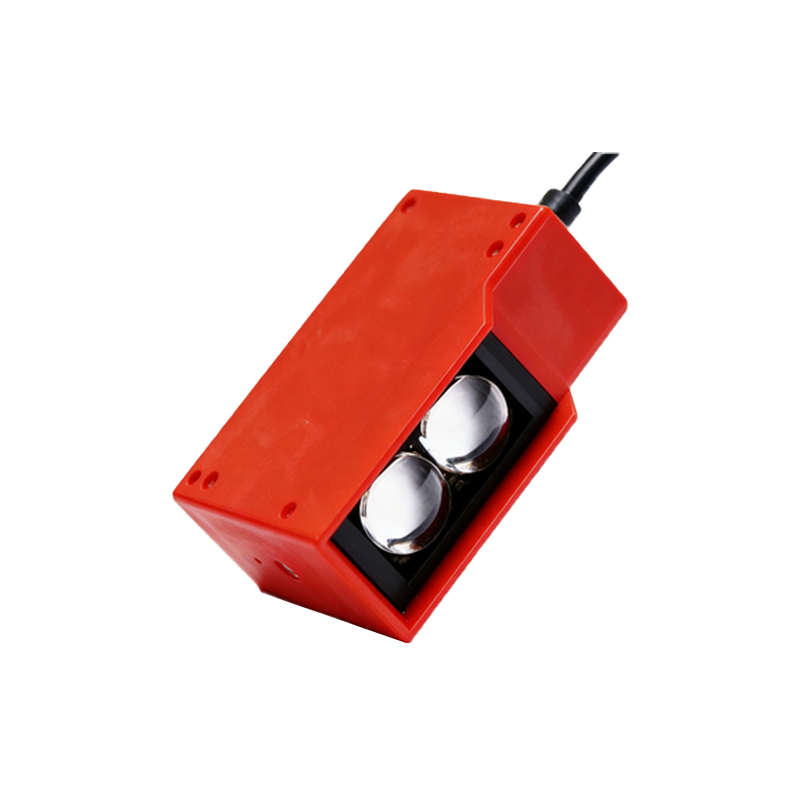
Fiber-optic sensors employ flexible fiber cables to transmit light between the sensor amplifier and the sensing point, allowing detection in confined or hazardous spaces. The amplifier can be mounted remotely, protecting it from extreme temperatures, chemicals, or mechanical stress. These sensors are ideal for high-speed applications, such as detecting minute electronic components or monitoring hot materials in metalworking. They come in through-beam and diffuse reflective variants, with customizable cable lengths and tip shapes to fit specific needs. While offering exceptional versatility, they may require careful calibration to optimize sensitivity and avoid signal loss over long distances.
Laser Photoelectric Sensors
Laser sensors use focused laser beams for high-precision detection, capable of sensing tiny objects or measuring exact distances with sub-millimeter accuracy. They operate in through-beam, retroreflective, or diffuse reflective modes, with ranges extending beyond 50 meters in some models. Applications include precision alignment in semiconductor manufacturing, thickness measurement in paper production, and edge detection in cutting machinery. Their narrow beam minimizes interference from ambient light, but they are generally more expensive than standard LED-based sensors. Regular maintenance is necessary to ensure lens cleanliness, as contaminants can degrade performance in sensitive industrial environments.
Selection Criteria for Industrial Use
Choosing the right photoelectric sensor involves evaluating factors like sensing range, environmental conditions, target properties, and response time. For long-range detection in dusty areas, through-beam sensors are preferable, while diffuse reflective types suit short-range tasks with varied surfaces. Consider IP ratings for dust and water resistance, especially in outdoor or washdown applications. Additionally, output options (e.g., NPN, PNP, analog) and connectivity features should align with control systems. Consulting manufacturer datasheets and testing in real conditions can prevent operational failures, ensuring reliability in automation processes.
Future Trends in Photoelectric Sensing
The evolution of photoelectric sensors is driven by Industry 4.0, with trends toward miniaturization, smart connectivity, and enhanced durability. Integrated IoT capabilities enable real-time data monitoring and predictive maintenance, reducing downtime in smart factories. Innovations like multi-function sensors that combine detection with measurement or color recognition are expanding application scopes. Furthermore, energy-efficient designs and robust materials are addressing sustainability and harsh environment challenges. As automation becomes more pervasive, photoelectric sensors will continue to adapt, offering smarter, faster, and more adaptable solutions for global industries.