What Are Photoelectric Sensors?
A photoelectric sensor is an electronic device that utilizes a light transmitter, typically an LED or laser diode, and a photoelectric receiver to detect the presence, absence, or distance of an object. The fundamental principle involves the emission of a light beam from the transmitter. This beam is then either reflected off a target object, interrupted by an object, or received directly. The receiver detects changes in the received light's intensity, pattern, or time-of-flight, converting this optical signal into an electrical output signal. This output is used to trigger a control action, such as counting, positioning, or inspection within an automated system. Their non-contact nature, high speed, and reliability make them indispensable in modern industrial automation.
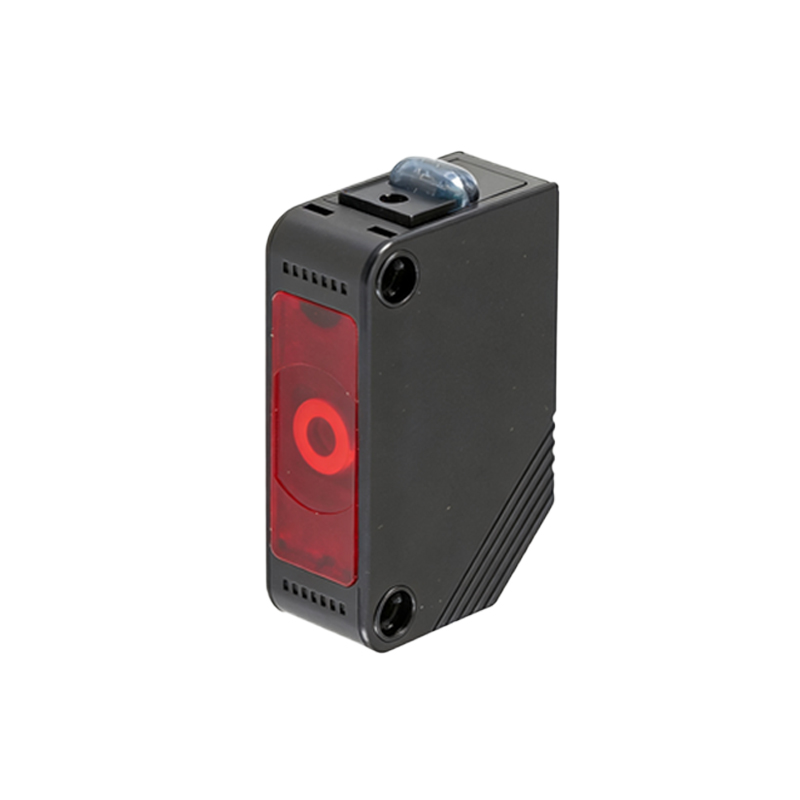
Core Operating Principles
Photoelectric sensors operate based on three primary sensing modes: through-beam, retro-reflective, and diffuse reflective. In the through-beam (or opposed) mode, the transmitter and receiver are housed in separate units positioned opposite each other. Detection occurs when an object breaks the light beam path between them. This mode offers the longest sensing range and highest reliability. The retro-reflective mode uses a single housing containing both emitter and receiver. The light beam is directed towards a specialized reflector, which sends the beam back to the receiver. An object is detected when it interrupts this return beam. Diffuse reflective sensors also have a combined emitter and receiver, but they detect light reflected directly off the target object itself. The sensing distance depends on the object's color, texture, and reflectivity.
Key Components and Technologies
The performance of a photoelectric sensor is defined by its core components. The light source is critical; red LED is common for general purpose, infrared for discreet operation, and laser diodes are used for precise, long-range detection. Advanced sensors employ modulated LED light to combat ambient light interference. The receiver is typically a phototransistor or photodiode. Modern sensors integrate sophisticated circuitry for background suppression, which allows them to ignore distant background objects, and for measuring the time-of-flight of a light pulse to determine exact distance, a technology known as background suppression or distance measurement. Fiber optic cables are often used as light guides in harsh or space-constrained environments.
Common Types and Specialized Variants
Beyond the basic modes, several specialized types exist. Background suppression (BGS) sensors are a type of diffuse sensor that can detect an object within a precise, defined range while ignoring objects beyond it. Contrast sensors detect differences in surface color or reflectivity. Luminescence sensors detect the presence of materials that glow under UV light. Color sensors can distinguish between specific colors by analyzing the reflected light's wavelength. Furthermore, sensors are classified by their output type, including digital (PNP/NPN), analog (4-20mA, 0-10V), and IO-Link for smart sensor communication and parameterization.
Typical Industrial Applications
The application scope of photoelectric sensors is vast. In packaging machinery, they detect product presence on conveyors, count items, and verify label placement. In material handling, they provide precise positioning for robotic arms and detect stack height. They are essential in the automotive industry for part verification and assembly line control. In electronics manufacturing, they ensure component placement accuracy. Safety applications include presence detection in hazardous areas and door monitoring. Their ability to detect small, transparent, or shiny objects makes them superior to other sensor types like inductive or capacitive in numerous scenarios.
Selection Criteria and Installation Considerations
Selecting the appropriate photoelectric sensor requires analyzing several factors. The primary consideration is the sensing mode, dictated by the object's properties, required sensing distance, and installation constraints. The sensing range must have a sufficient margin. Environmental conditions are crucial; sensors are rated with IP (Ingress Protection) codes for dust and water resistance, and some are built for washdown or extreme temperatures. The output type must be compatible with the controller (PLC). Lens style (visible or coaxial), response time, and light source color are also key. Proper alignment, stable mounting, and protection from optical obstructions and intense ambient light are vital for reliable operation.
Advantages and Limitations
Photoelectric sensors offer significant advantages: non-contact sensing eliminates mechanical wear, they provide fast response times suitable for high-speed processes, and they can detect a wide variety of materials regardless of metallic properties. Their sensing ranges are generally longer than inductive or capacitive sensors. However, limitations exist. Their performance can be affected by environmental factors like dust, fog, or heavy condensation, which can scatter or block the light beam. The detection of transparent objects or highly reflective surfaces can be challenging and may require specialized sensor types. Proper selection and installation are necessary to mitigate these potential issues.