Introduction to Inductive Proximity Sensing
Inductive proximity sensors are fundamental components in modern industrial automation, renowned for their non-contact detection capabilities. These sensors operate on the principle of electromagnetic induction. At their core is an oscillator circuit that generates a high-frequency electromagnetic field emanating from the sensor's active face. When a metallic target object enters this field, eddy currents are induced on the target's surface. This causes a measurable change in the oscillator's amplitude, which is then processed by the sensor's evaluation circuitry to trigger a solid-state output switch. This robust operating principle makes them exceptionally reliable for detecting the presence or absence of metallic objects without any physical contact, thereby eliminating mechanical wear and enabling high-speed operation.
The Embedded Sensor Design Philosophy
Embedded, or flush-mountable, inductive proximity sensors represent a specialized design optimized for seamless integration into machinery. Unlike non-embedded (non-flush) types, these sensors can be mounted flush with, or even recessed within, a metal mounting bracket without triggering a false detection. This is achieved through a carefully engineered magnetic field geometry that is focused axially in front of the sensor face, with minimal lateral spread. This design allows the sensor to be surrounded by metal on its sides without affecting its sensing range or performance. The primary advantage is protection; the sensor's sensing face is less exposed to physical damage from impacts or abrasion, making it ideal for harsh environments and applications with space constraints where protruding sensors would be vulnerable.
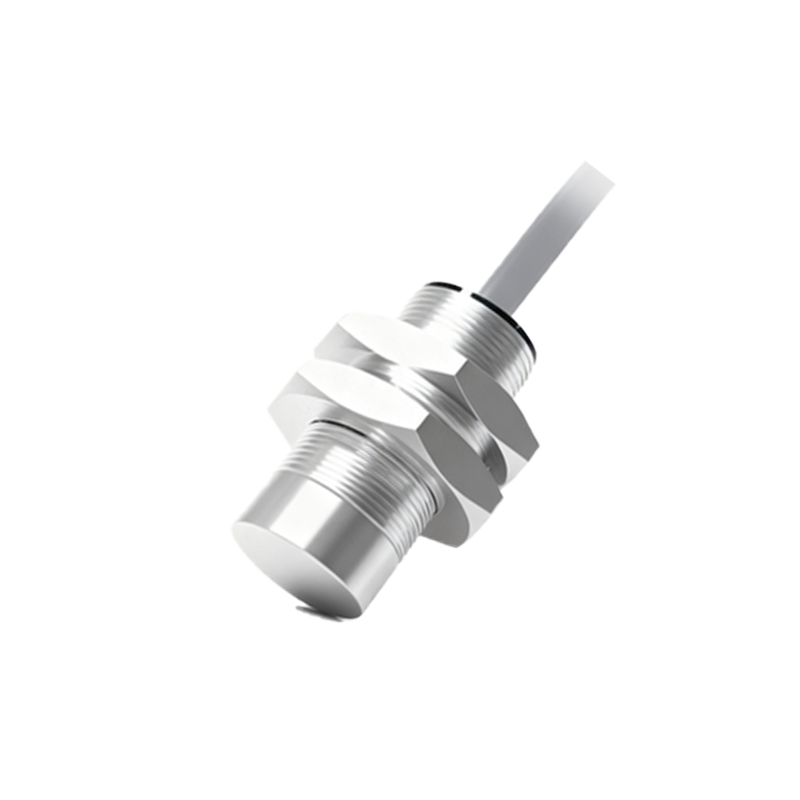
Key Technical Specifications and Selection Criteria
Selecting the appropriate embedded inductive sensor requires careful analysis of several key parameters. The nominal sensing distance (Sn) is a critical specification, typically ranging from 1 to 15 mm for standard embedded models. It is crucial to note that this rated distance is defined for a standard target of mild steel. For other metals like stainless steel, aluminum, or copper, a correction factor must be applied, as these materials induce eddy currents with different efficiencies, effectively reducing the practical sensing range. Other vital specifications include the operating voltage (commonly 10-30V DC or 20-250V AC), output type (PNP/NPN, NO/NC), switching frequency, housing material (often nickel-plated brass or stainless steel), and environmental ratings such as IP67 or IP69K for resistance to dust and water ingress.
Advanced Features and Modern Innovations
Contemporary embedded inductive sensors incorporate advanced features that enhance functionality and diagnostic capabilities. Many models now include IO-Link communication, transforming a simple switch into an intelligent device that can transmit parameters like switching frequency counts, temperature data, and signal strength back to the controller for predictive maintenance. Other innovations include weld-field immunity, which prevents false triggering in environments with strong electromagnetic interference from resistance welding equipment. Furthermore, manufacturers have developed sensors with extended temperature ranges, enhanced chemical resistance for washdown areas, and factor-1 designs that offer the same sensing range for all metals, simplifying material handling applications with mixed metal types.
Primary Industrial Applications and Use Cases
The robustness and reliability of embedded inductive proximity sensors make them indispensable across numerous industries. In automotive manufacturing, they are used for part presence verification on assembly lines, end-of-stroke detection on cylinders, and tool positioning in machining centers. In packaging machinery, they monitor fill levels by detecting metal components or count products on conveyor belts. Within metalworking, they provide precise position feedback for CNC machine tools, such as detecting the home position of a spindle or the open/closed status of a chuck. Their flush-mounting capability is particularly valued in hydraulic and pneumatic systems, where they are integrated directly into cylinder bodies for piston rod position sensing.
Installation Best Practices and Maintenance Guidelines
Correct installation is paramount for optimal sensor performance and longevity. When mounting an embedded sensor, ensure the surrounding metal (the mounting nut or bracket) is flush with or slightly recessed from the sensor's active face. Maintain the specified lateral clearance from adjacent metal structures to prevent shielding effects. For sensing distances, a practical rule is to use 50-80% of the nominal range to account for target material variations, temperature drift, and voltage fluctuations. While these sensors are virtually maintenance-free due to their non-contact nature, periodic checks are recommended. This includes verifying the mechanical integrity of the housing and cable, cleaning the sensing face of debris or metal swarf, and confirming the output signal under normal operating conditions using a multimeter or PLC input status.
Conclusion and Future Outlook
Embedded inductive proximity sensors remain a cornerstone of industrial sensing technology. Their simple yet effective operating principle, combined with rugged embedded designs, provides an unmatched solution for reliable metallic object detection in demanding environments. The ongoing integration of digital communication protocols like IO