Introduction to Infrared Proximity Sensing
Infrared (IR) proximity sensors are fundamental components in modern automation, robotics, and consumer electronics. These devices operate by emitting an infrared light beam and detecting its reflection from a nearby object. Unlike mechanical switches or ultrasonic sensors, IR sensors offer contactless detection, high response speed, and immunity to acoustic noise. The core principle relies on the fact that infrared light, with wavelengths typically between 700 nm and 1 mm, is invisible to the human eye but can be efficiently generated and detected by semiconductor components like IR LEDs and photodiodes or phototransistors. This makes them ideal for applications requiring discreet, non-intrusive presence detection.
Core Operating Principles and Components
A basic IR proximity sensor consists of two key elements: an emitter and a receiver. The emitter is usually an infrared light-emitting diode (IR LED) that projects a modulated IR signal. Modulation, often at a frequency of 38 kHz or 40 kHz, is crucial to distinguish the sensor's own signal from ambient infrared noise, such as sunlight or incandescent lighting. The receiver is typically a photodiode or phototransistor tuned to the same modulation frequency. When an object enters the detection field, it reflects a portion of the emitted IR radiation back to the receiver. The sensor's internal circuitry then processes this signal, often converting the intensity of the reflected light into a digital output (object present/absent) or an analog voltage proportional to distance, depending on the sensor type and design.
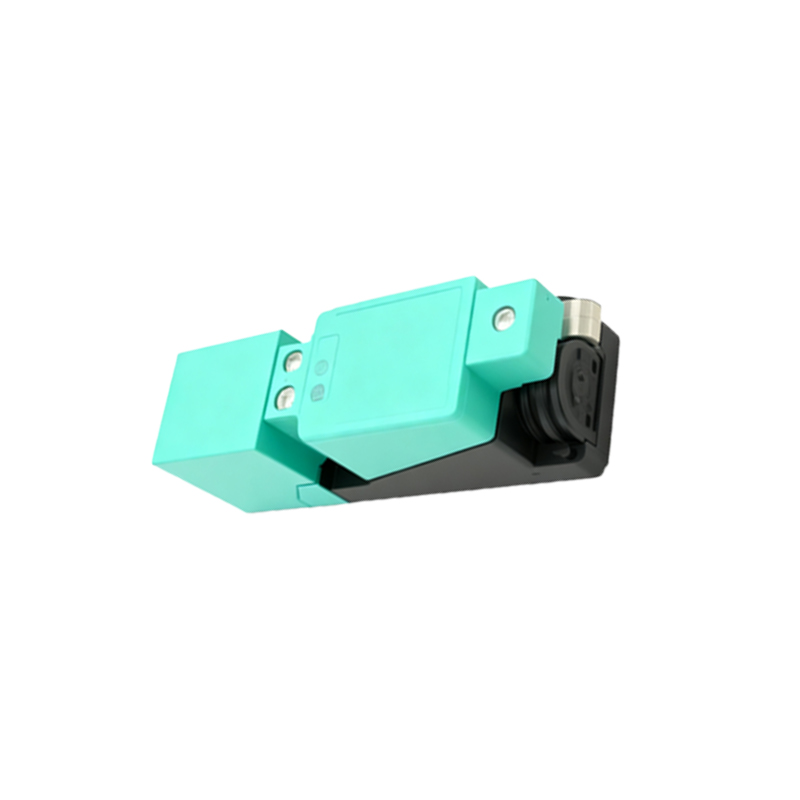
Key Types and Technologies
IR proximity sensors are broadly categorized into two main types: reflective and beam-break (or thru-beam). Reflective sensors house both the emitter and receiver in a single unit, facing the same direction. They detect objects that reflect the IR beam back to the receiver. Their range is limited and can be affected by the object's color and reflectivity. Beam-break sensors have physically separated emitter and receiver units, aligned to create an uninterrupted beam. An object is detected when it interrupts this beam. This type offers longer, more consistent detection ranges and is less sensitive to object surface properties. Advanced versions include time-of-flight (ToF) sensors, which measure the time delay between emission and reception of a pulsed IR signal to calculate precise distance, and triangulation-based sensors for high-accuracy, short-range measurements.
Primary Industrial and Commercial Applications
The versatility of IR proximity sensors drives their adoption across numerous sectors. In industrial automation, they are used for object counting on conveyor belts, jam detection in machinery, and determining the position of robotic arms or end-effectors. The consumer electronics market heavily utilizes miniaturized versions for smartphone screen blanking during calls and touchless gesture interfaces. In automotive systems, they contribute to safety features like obstacle detection in parking assistance systems. Furthermore, they are integral to home appliances (automatic faucets, soap dispensers), security systems (intrusion detection), and even interactive displays in public spaces. Their low power consumption also makes them suitable for battery-operated devices.
Critical Selection Criteria for Engineers
Selecting the appropriate IR proximity sensor requires careful analysis of several parameters. Detection range is paramount; engineers must match the sensor's specified range to the application's needs, considering potential reductions due to low-reflectivity targets. The sensing object's material, color, and surface finish significantly impact performance, as dark, matte, or non-reflective surfaces absorb IR light. Environmental conditions like ambient light (especially sunlight containing IR), dust, fog, or temperature extremes must be evaluated, as they can cause false triggers or reduced sensitivity. Other factors include response time, output type (digital PNP/NPN or analog 0-10V/4-20mA), power supply requirements, physical size, and mounting configuration. Always consult the sensor's datasheet for detailed performance graphs under varying conditions.
Advantages, Limitations, and Comparison with Alternatives
IR proximity sensors offer distinct advantages: fast response, no physical contact, long operational life, resistance to environmental factors like vibration, and relatively low cost. They are excellent for detecting small objects and operate effectively in dirty environments where capacitive sensors might fail. However, they have limitations. Performance can degrade in direct sunlight or environments with strong IR sources. Transparent objects (like glass) or highly absorptive materials may not be detected reliably. Their range is typically shorter than ultrasonic sensors. Compared to ultrasonic sensors, IR sensors are faster and smaller but more susceptible to optical interference. Compared to inductive or capacitive sensors, IR sensors can detect non-metallic objects but have a shorter range and are affected by surface properties.
Installation Best Practices and Troubleshooting
Proper installation is key to