Introduction to Safety Rated Proximity Sensors
In industrial automation and machinery, ensuring the safety of personnel and equipment is paramount. A safety rated proximity sensor is a specialized type of non-contact sensing device designed to detect the presence or absence of an object within its sensing range, but with a critical distinction: it is engineered and certified to meet stringent international safety standards. Unlike standard proximity sensors used for general process control, these sensors incorporate redundant circuits, self-monitoring features, and fault diagnostics to achieve a high level of reliability and integrity. Their primary function is to provide a safety-related output signal that can be directly connected to safety control systems, such as safety PLCs or relays, to initiate a controlled shutdown or enter a safe state when a hazardous condition is detected.
Core Design Principles and Safety Architecture
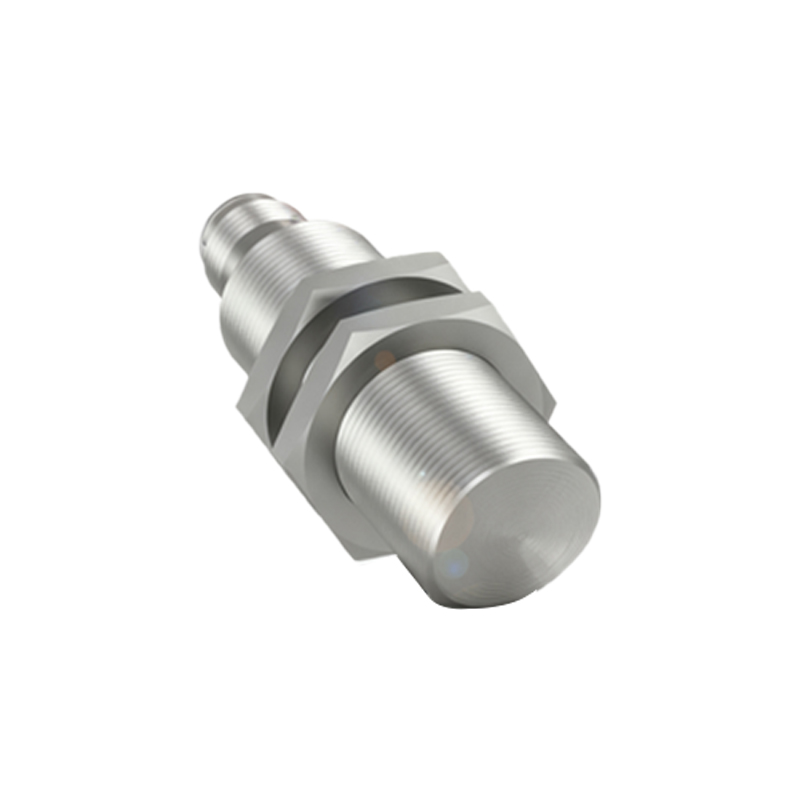
The fundamental design of a safety rated proximity sensor is built upon the principles of functional safety, as outlined in standards like ISO 13849-1 and IEC 61508. Key architectural features include redundancy, where two independent sensing channels work in tandem. If one channel fails, the other can still provide a safe shutdown signal. Cross-monitoring between these channels is continuous, checking for discrepancies such as short circuits, wire breaks, or internal component failures. Additionally, these sensors employ diverse technologies or evaluation methods within a single housing to prevent common-cause failures. For instance, a sensor might combine inductive and magnetic principles. This robust design ensures that even in the event of a fault, the sensor defaults to a safe state—typically by opening the output circuit—thereby preventing the machinery from operating unsafely.
Key Safety Standards and Certifications
Compliance with recognized standards is what defines a sensor as "safety rated." The most relevant standards include IEC 60947-5-3 for proximity devices with defined behavior under fault conditions, and IEC 61496 for electro-sensitive protective equipment. These sensors undergo rigorous testing by accredited bodies to achieve specific Safety Integrity Levels (SIL) as per IEC 61508 or Performance Levels (PL) as per ISO 13849-1. Common certifications you will find include SIL 2/3 and PL d/e. These ratings quantify the probability of a dangerous failure per hour and guide engineers in integrating the sensor into an overall safety function. Using a certified sensor is not optional; it is a legal and ethical requirement in most jurisdictions for safeguarding hazardous machine zones.
Common Types and Technologies
Safety rated proximity sensors are available in the same fundamental technologies as their standard counterparts, but with the enhanced safety architecture. Inductive safety sensors are prevalent for detecting metallic objects, often used as non-contact safety interlocks on guards or to detect the position of machine parts. Capacitive safety sensors can detect non-metallic materials and are sometimes used in specialized applications. Magnetic safety sensors (reed or solid-state) are frequently employed in conjunction with coded magnets for door position monitoring on safety gates. Furthermore, safety laser scanners, which are advanced active optoelectronic protective devices, also fall under this category, creating two-dimensional protective fields around machinery.
Typical Applications in Industry
These sensors are indispensable in any application where machine access poses a risk. A classic application is as a monitored door switch on a safety gate or hinged guard. The safety sensor confirms the guard is securely closed before machine motion is allowed. They are also used for position and presence monitoring in robotic cells, ensuring a robot arm is in a safe retracted position before an operator can enter the cell. In press brakes and stamping presses, safety rated sensors monitor the position of tools or the presence of hands in the danger zone. They are also critical in material handling, such as ensuring the correct positioning of pallets or containers before a process begins, preventing collisions or drops.
Integration into Safety Control Systems
Integrating a safety rated proximity sensor correctly is as important as selecting the right device. The sensor's output signals are typically connected to a dedicated safety evaluation unit. These outputs are often complementary (e.g., one signal goes high while the other goes low in a safe condition) to facilitate continuous monitoring by the safety controller. The wiring must follow strict guidelines, often requiring shielded cables and separate conduits from standard power cables to avoid interference. The entire safety function, from sensor to final switching element (like a contactor), must be validated to achieve the target PL or SIL. This involves calculating the Mean Time to Dangerous Failure (MTTFd), Diagnostic Coverage (DC), and other parameters to ensure the complete loop meets the required risk reduction.
Benefits and Operational Advantages
Beyond the primary benefit of protecting human life and health, safety rated proximity sensors offer significant operational advantages. They enable the design of