Introduction to Photoelectric Sensor Fundamentals
Photoelectric sensors are indispensable components in modern industrial automation, functioning by emitting a light beam to detect the presence, absence, or distance of an object. The core principle involves a light source, typically an LED (for visible red, infrared, or laser light), and a photodetector, such as a phototransistor or photodiode. When the emitted light beam is either reflected from an object (diffuse mode), broken by an object (through-beam mode), or reflected back from a reflector (retro-reflective mode), it causes a change in the state of the photodetector. This change in light intensity is converted into an electrical signal, which forms the basis of the switching action. The reliability, non-contact nature, and high-speed response of these sensors make them superior to mechanical limit switches in countless applications, from packaging lines to safety systems.
Core Components of the Switch Circuit
A functional photoelectric sensor switch circuit comprises several key electronic components beyond the emitter and detector pair. The emitter side requires a current-limiting resistor to protect the LED from overcurrent and ensure consistent light output. On the detector side, the phototransistor is typically configured in a common-emitter amplifier setup. A pull-up or pull-down resistor is crucial here to define the output voltage level when the transistor is in its 'off' state. For more stable operation, especially in electrically noisy industrial environments, additional components like capacitors for filtering and Schmitt triggers for hysteresis are integrated. The hysteresis provided by a Schmitt trigger prevents output chatter when the detected light level is near the switching threshold, ensuring a clean, definitive on/off signal.
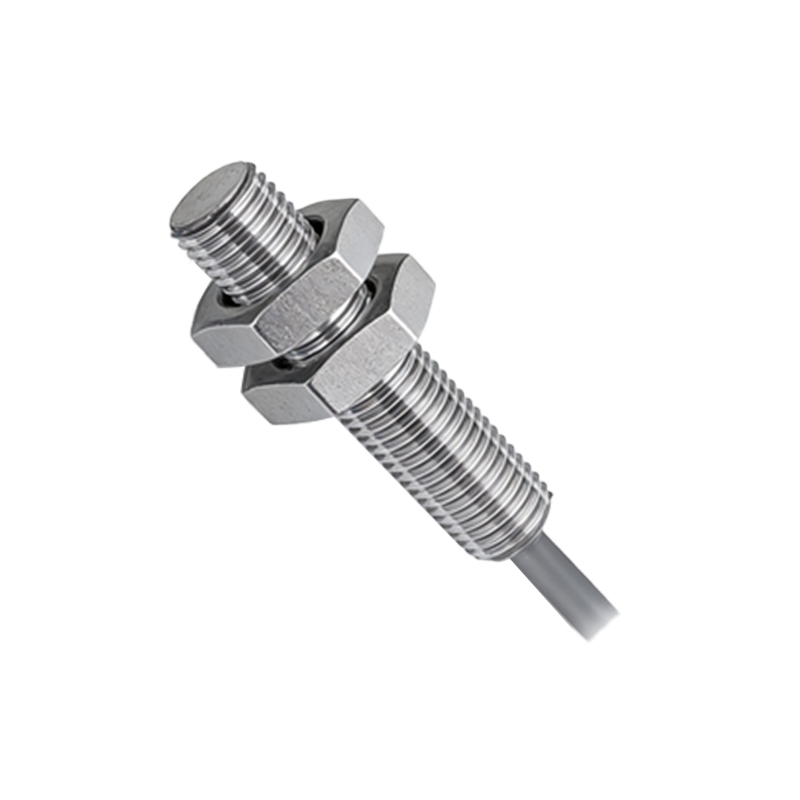
Through-Beam and Retroreflective Circuit Configurations
Through-beam sensors, offering the longest sensing ranges and highest reliability, consist of separate emitter and receiver units. The circuit for the receiver is designed for maximum sensitivity to detect the uninterrupted light beam. When the beam is blocked, the phototransistor ceases to conduct, causing the output voltage to swing to its opposite logic state. Retroreflective sensors house both emitter and receiver in the same housing, relying on a reflector. A critical circuit consideration for this mode is polarization filtering or modulated light to prevent the sensor from being fooled by shiny objects that might reflect light directly. The receiver circuit often includes a tuned amplifier that responds only to the specific modulated frequency of the emitter, effectively rejecting ambient light interference from factory lighting.
Diffuse Reflective and Background Suppression Designs
Diffuse reflective sensors detect light reflected directly from the target object. Their circuit design is the most challenging due to the variable reflectivity of different objects and the influence of background surfaces. Standard diffuse sensors have a fixed switching threshold. More advanced designs incorporate background suppression technology, either through triangulation optics or with a dual-receiver PSD (Position Sensitive Device) chip. The associated circuit compares the signal from two closely spaced photodetectors. By analyzing the ratio of the reflected light's spot position, the circuit can determine if the object is within the precise sensing window, effectively ignoring more distant background reflections, which is vital for detecting objects on conveyor belts.
Output Stage and Interface with Control Systems
The final stage of the photoelectric sensor switch circuit is the output driver. Common output types include NPN (sinking) and PNP (sourcing) transistor outputs, which are standard for programmable logic controller (PLC) inputs. Analog voltage or current outputs (0-10V, 4-20mA) are used for distance measurement or grayscale detection. For robust communication, circuits with IO-Link digital interfaces are becoming prevalent, embedding a microcontroller to handle signal processing and bidirectional data exchange. The output stage must be protected against short-circuits, reverse polarity, and voltage transients, often using dedicated protection ICs or robust discrete components to ensure longevity in harsh conditions.
Critical Considerations for Reliable Operation
Designing a reliable photoelectric sensor circuit requires careful attention to several environmental and electrical factors. Lens contamination from dust, oil, or moisture is a primary cause of failure; some circuit designs include monitoring the emitter's output to trigger a maintenance warning. Electrical noise from motors and solenoids can induce false triggers, necessitating proper shielding, twisted-pair cabling, and robust filtering in the circuit. Supply voltage stability is paramount, as fluctuations can affect the emitter's intensity and the detector's sensitivity. Furthermore, selecting the correct wavelength (e.g., infrared for reduced ambient light interference, or laser for precise positioning) is a system-level decision that directly impacts the circuit's performance requirements.
Application-Specific Circuit Optimizations
Practical applications demand specific optimizations to the standard switch circuit. In high-speed counting applications, the circuit bandwidth must be high, with fast-responding components and minimal propagation delay. For color detection or contrast sensing, circuits are designed to work with specific wavelengths and often include potentiometers or digital registers for sensitivity adjustment. In safety light curtains, where multiple beams create a protective screen, the circuits are designed for synchronous operation and continuous self-checking, with redundant paths to ensure a safe shutdown upon any fault detection. Each optimization adds layers of complexity to the fundamental on/off switching circuit, tailoring it to solve precise industrial problems.