Introduction to Proximity Sensing
Proximity sensors are fundamental components in modern industrial automation, robotics, and smart systems. They detect the presence or absence of an object within a specified range without physical contact. The core principle involves emitting a field or beam of electromagnetic radiation, such as infrared light, laser, or radio waves, and analyzing the changes in the return signal. Large-scale implementations extend this basic concept to monitor vast areas or numerous points simultaneously, enabling complex applications like factory-wide asset tracking, automated warehouse management, and perimeter security systems. The shift from single-point detection to networked, large-scale sensing represents a significant evolution, driven by advancements in sensor miniaturization, wireless communication, and data processing power.
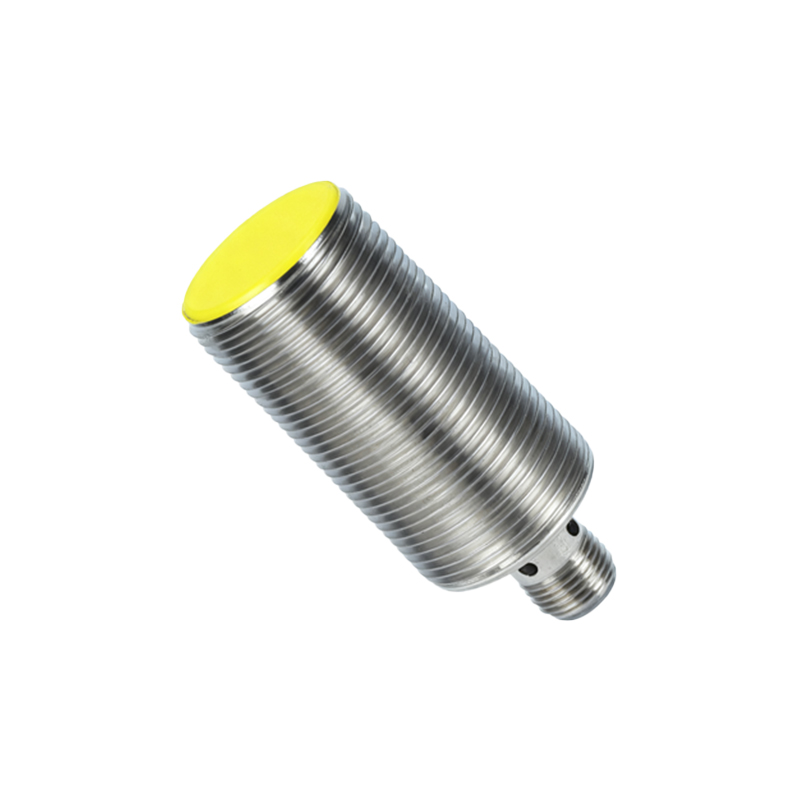
Core Operating Principles and Modalities
The technology underpinning large-scale proximity sensing is diverse, with each modality offering distinct advantages. Inductive sensors generate an oscillating electromagnetic field and detect eddy currents induced in metallic targets, making them ideal for harsh industrial environments. Capacitive sensors create an electrostatic field and sense changes in capacitance caused by any material, including liquids and non-metals. Photoelectric sensors, one of the most common for large areas, use a light emitter and receiver; they can be configured in through-beam, retro-reflective, or diffuse reflection modes to suit different ranges and object properties. Ultrasonic sensors calculate distance by measuring the time-of-flight of sound waves. For the largest scales, technologies like LiDAR (Light Detection and Ranging) and UWB (Ultra-Wideband) radar are employed, providing precise distance and positional data over hundreds of meters.
System Architecture for Large-Scale Deployment
Deploying proximity sensing on a large scale requires a robust system architecture far beyond a collection of individual sensors. It typically forms a hierarchical network. At the edge are the sensor nodes, often equipped with basic processing capabilities to filter noise and pre-process data. These nodes connect via wired fieldbus protocols (e.g., IO-Link, PROFINET) or wireless mesh networks (e.g., Zigbee, WirelessHART) to gateway devices. The gateways aggregate data and interface with higher-level control systems, such as PLCs (Programmable Logic Controllers) or SCADA (Supervisory Control and Data Acquisition) systems. Cloud platforms are increasingly integrated for advanced analytics, predictive maintenance, and system-wide visualization. This architecture ensures reliable data flow, centralized management, and scalability.
Key Challenges and Technical Considerations
Scaling proximity sensing introduces significant engineering challenges. Signal interference is a primary concern, especially in dense deployments where sensor fields can overlap or be affected by environmental noise like machinery vibration or ambient light. Power management is critical for wireless and battery-operated nodes; energy-harvesting techniques are often explored. Data integrity and latency must be carefully managed to ensure real-time or near-real-time responsiveness for safety and control applications. Furthermore, sensor calibration and long-term drift compensation become complex tasks across hundreds of units. Engineers must also consider the physical environment, selecting sensors with appropriate ingress protection (IP) ratings and materials resistant to chemicals, temperature extremes, and mechanical stress.
Integration with Industry 4.0 and IoT
Large-scale proximity sensor networks are a cornerstone of Industry 4.0 and the Industrial Internet of Things (IIoT). They provide the essential data layer for digital twins, creating a virtual, real-time representation of a physical system. By feeding continuous positional and presence data into AI and machine learning algorithms, these systems enable predictive analytics, optimizing production flow, preventing collisions in autonomous guided vehicle (AGV) fleets, and managing inventory with unprecedented accuracy. The interoperability of sensor data through standardized communication protocols like OPC UA is vital, allowing seamless integration with Manufacturing Execution Systems (MES) and Enterprise Resource Planning (ERP) software, closing the loop between the shop floor and top-level business planning.
Future Trends and Advancements
The future of large-scale proximity sensing is geared towards greater intelligence, integration, and miniaturization. The development of MEMS (Micro-Electro-Mechanical Systems) technology is producing smaller, cheaper, and more power-efficient sensors. The integration of AI directly at the sensor edge, known as edge AI, allows for local decision-making, reducing data transmission loads and latency. Furthermore, the convergence of different sensing modalities—combining vision, LiDAR, and radar in sensor fusion systems—will provide richer, more reliable contextual awareness. Research into novel materials and quantum sensing may eventually lead to sensors with extreme sensitivity and range, opening new frontiers for large-scale monitoring in sectors from smart agriculture to urban infrastructure management.