Introduction to Proximity Sensing
Proximity sensors are indispensable components in the automation and control landscapes of modern industry. These non-contact devices detect the presence or absence of an object within a defined sensing range without any physical contact. Their operation hinges on various physical principles, primarily electromagnetic fields, light, or sound. This fundamental capability forms the bedrock for a vast array of functions, enabling smarter, faster, and more reliable systems. From intricate assembly lines to heavy-duty machinery, the application of proximity sensors is a testament to their versatility and critical role in enhancing operational efficiency, safety, and precision.
Primary Function: Object Detection and Positioning
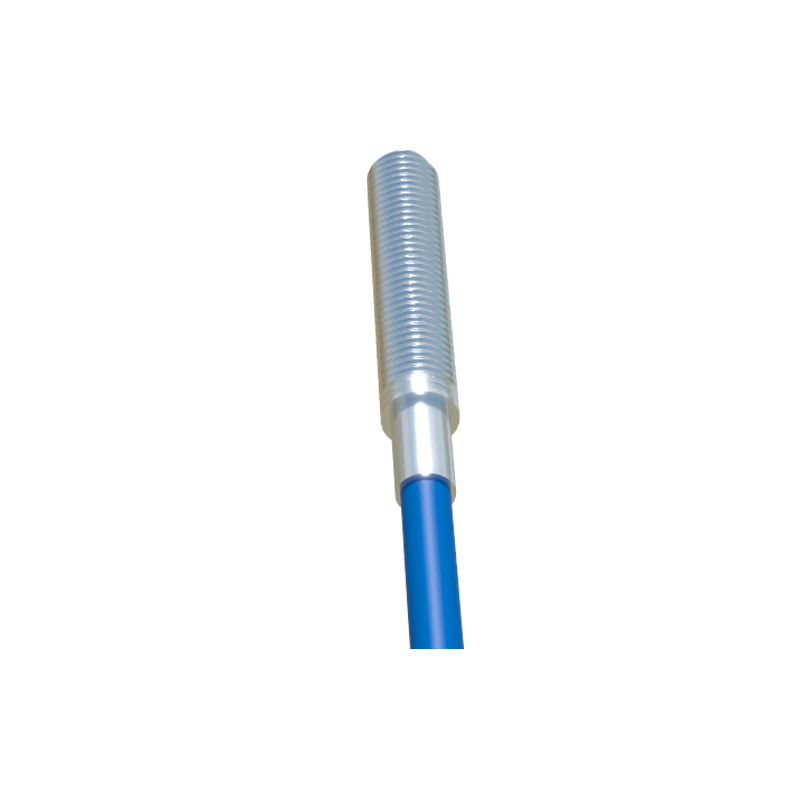
The core and most widespread function of a proximity sensor is precise object detection and positioning. In automated production lines, these sensors reliably confirm the presence of components at specific stations—for instance, verifying a part has arrived at a robotic welding cell or is correctly seated in a fixture. Inductive sensors excel at detecting metallic objects, while capacitive sensors can handle non-metallic materials like plastic, wood, or liquids. Photoelectric sensors use light beams for longer-range detection. This precise positioning ensures the correct sequence of operations, prevents jams, and is fundamental for process control and coordination between different machines, forming the sensory nervous system of any automated process.
Critical Role in Safety and Machine Guarding
Safety is paramount in industrial environments, and proximity sensors are vital in creating safe workspaces. They are integral to safety interlock systems on machine guards, doors, and enclosures. For example, a capacitive or magnetic sensor can detect if a safety door is properly closed. If the door is open, the sensor sends a signal to immediately halt the dangerous machinery, preventing potential injury. Light curtains, which are arrays of photoelectric sensors, create an invisible protective screen around hazardous areas; if an operator breaks this beam, the equipment stops instantly. This function not only protects personnel but also helps companies comply with stringent occupational health and safety regulations.
Enabling Precision in Counting and Sorting
Proximity sensors provide high-speed, accurate counting capabilities essential for inventory management and production tracking. On conveyor belts, sensors count every bottle, box, or component that passes by. This data is crucial for batch control, yield calculation, and triggering downstream actions like sorting. In sorting applications, a sensor detects an object and, often in conjunction with an identification system (like a barcode reader), triggers a diverter arm or pusher to route the item to the correct lane. The reliability and speed of sensors like high-frequency ultrasonic or compact photoelectric models make them perfect for these high-throughput tasks, minimizing errors and maximizing throughput.
Function in Level Monitoring and Control
Level detection of solids and liquids is another critical industrial function. In silos, tanks, and hoppers, sensors monitor material levels to prevent overfilling or running empty, which can cause process downtime or damage. Ultrasonic sensors measure the distance to the material surface from the top of a tank. Capacitive sensors can detect the presence of material directly through a non-metallic container wall. Tilt switches use a magnetic principle to detect when a bulk solid reaches a certain angle. This continuous or point-level monitoring allows for automated control of filling pumps and conveyors, ensuring smooth material flow and inventory management.
Supporting Speed and Motion Control
Proximity sensors are key enablers in motion control systems. They are used for speed monitoring by detecting the teeth of a gear, holes in a disk, or markers on a rotating shaft. By measuring the frequency of pulses generated as targets pass by, the system can calculate rotational or linear speed. This information is fed back to variable frequency drives (VFDs) or motor controllers to maintain precise speed regulation. Furthermore, in linear actuators or hydraulic cylinders, magnetic proximity sensors (often called reed switches or Hall-effect sensors) detect the end-of-travel positions of the piston, providing critical feedback for controlling stroke length and initiating the return cycle.
Ensuring Quality Control and Inspection
Beyond simple presence detection, advanced proximity sensing functions contribute directly to quality assurance. Sensors can verify specific features: a photoelectric sensor can check for the presence of a label or a cap on a bottle. Inductive sensors can distinguish between different metals or detect a broken drill bit by its absence. Vision sensors, an advanced form, can perform complex inspections for orientation, color, or dimensional accuracy. By identifying defects or missing components early in the production process, these sensors prevent waste, reduce rework costs, and ensure that only products meeting quality standards proceed down the line.
Conclusion: The Integral Component
In summary, the functions of proximity sensors extend far beyond simple detection. They