Laser sensors represent a cornerstone of modern industrial automation and precision measurement. Operating on the principle of emitting a focused beam of coherent light, these devices detect the presence, distance, displacement, or profile of an object by analyzing the properties of the reflected light. The core technology hinges on the interaction between the emitted laser and the target. Common measurement methods include time-of-flight, triangulation, and phase-shift analysis, each offering distinct advantages in terms of range, accuracy, and environmental robustness.
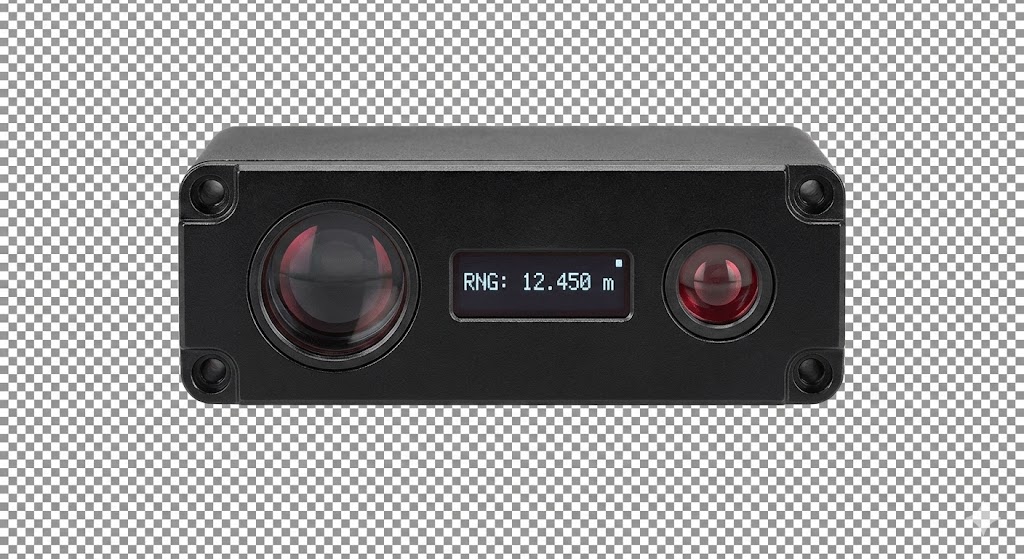
The market offers a diverse array of laser sensor types tailored for specific tasks. Laser distance sensors, for instance, provide non-contact measurement of ranges from millimeters to hundreds of meters. Laser displacement sensors excel in capturing minute changes in an object's position or thickness with micron-level resolution. For contour and dimension inspection, laser profile scanners generate precise 2D or 3D representations of an object's surface. Furthermore, laser photoelectric sensors are workhorses for simple object detection, utilizing the interruption or reflection of the beam to trigger a signal. The choice between a red laser or a more advanced Class 2 blue laser often depends on the required visibility and precision on different surface materials.
The industrial applications of laser sensors are vast and critical. In manufacturing, they are indispensable for robotic guidance, ensuring arms move and grip with exact positioning. On assembly lines, they perform continuous quality control, measuring component dimensions, checking fill levels, and detecting surface defects at high speeds. The automotive industry relies on them for body-in-white gap and flush measurement, while the electronics sector uses them for wafer inspection and solder paste height verification. In logistics, laser sensors automate warehouse management by dimensioning packages and guiding automated guided vehicles (AGVs). Their non-contact nature makes them ideal for measuring hot, fragile, or rapidly moving objects where physical probes would fail.

Selecting the appropriate laser sensor requires careful consideration of several parameters. Key specifications include measuring range, which defines the minimum and maximum distances for reliable operation. Resolution indicates the smallest detectable change the sensor can report. Repeatability is crucial for process stability, denoting the sensor's consistency in returning the same value for an identical measurement. Environmental factors like ambient light, dust, steam, and temperature fluctuations must be matched with the sensor's ingress protection (IP) rating and built-in compensation algorithms. The target's properties—its color, reflectivity, surface texture, and material—also significantly influence the choice, often necessitating sensor tuning or the selection of a specific wavelength.

The integration of laser sensors into the Industrial Internet of Things (IIoT) framework is a significant trend. Modern sensors come equipped with industrial communication protocols like IO-Link, PROFINET, or EtherNet/IP, enabling real-time data transmission and remote configuration. This connectivity facilitates predictive maintenance, where sensor performance data can forecast potential failures, and allows for centralized management of thousands of measurement points across a smart factory. As industries stride towards greater autonomy and data-driven decision-making, the role of the laser sensor evolves from a simple measuring device to an intelligent data node.
Looking ahead, advancements in laser diode technology and signal processing algorithms continue to push the boundaries. Emerging developments focus on increasing measurement speed for dynamic processes, enhancing accuracy for sub-micron applications, and improving robustness in challenging environments. The fusion of laser measurement data with machine vision and artificial intelligence is opening new frontiers for complex inspection and adaptive control systems. From ensuring the microscopic precision of semiconductor chips to guiding massive autonomous container cranes, laser sensors remain an essential, evolving technology that shapes the efficiency, quality, and capability of contemporary industrial operations.