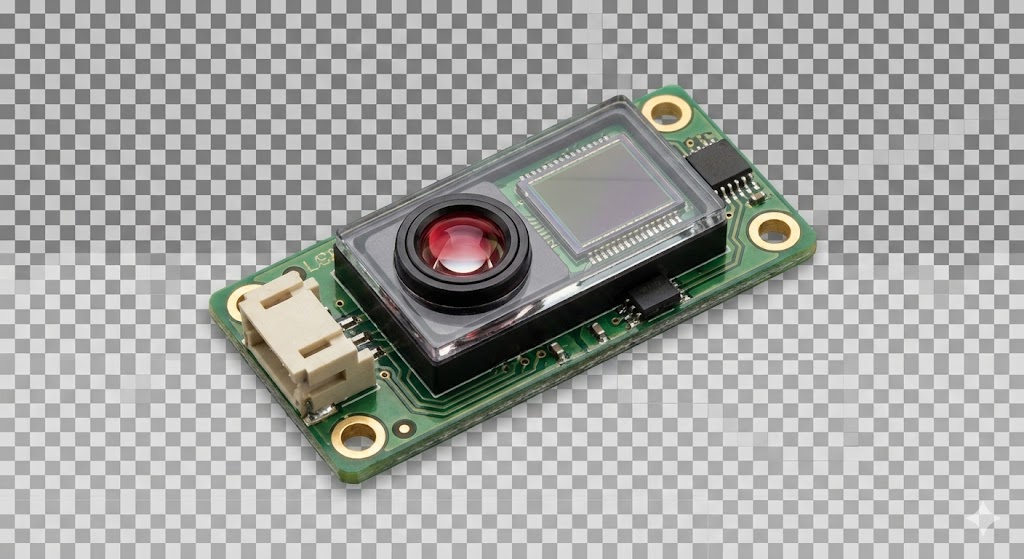
In the realm of industrial automation and precision measurement, laser photoelectric sensors stand as a cornerstone technology. These devices utilize laser light as a medium to detect the presence, absence, or position of an object with exceptional accuracy and reliability. Their operation is fundamentally based on the principles of photoelectric effect, where light energy is converted into an electrical signal. A laser diode emits a highly focused, coherent beam of light. When this beam strikes a target object, the light is either reflected, transmitted, or absorbed. A receiver, typically a phototransistor or photodiode, then detects the change in the light pattern or intensity. This change is processed by the sensor's internal circuitry, which generates a corresponding digital or analog output signal to indicate the detection event.
The core advantage of using a laser, as opposed to standard LED-based light, lies in its beam characteristics. Laser beams are highly collimated, meaning they travel with minimal divergence over long distances. This results in a very small, precise spot size even at significant ranges, enabling the detection of extremely small objects or precise edge positioning. Furthermore, the coherent nature of laser light provides excellent visibility and alignment capabilities, often with a visible red or green beam for easy setup.
There are several primary operating modes for laser photoelectric sensors, each suited for specific tasks. The through-beam type, also known as the opposed mode, consists of separate transmitter and receiver units placed opposite each other. Detection occurs when the object breaks the laser beam path between them. This mode offers the longest sensing distances and highest reliability, as it is largely immune to the object's color, surface finish, or angle. The retro-reflective mode uses a single housing containing both emitter and receiver, along with a specialized reflector. The sensor detects an object when it interrupts the beam bouncing back from the reflector. It provides a good balance of range and ease of installation. Finally, the diffuse reflective mode, or proximity mode, has the emitter and receiver in one unit. It detects an object based on the diffuse reflection of the laser light from the object's own surface. While sensing distance is shorter and more dependent on the target's properties, this mode allows for one-sided installation without a separate reflector.

The applications for laser photoelectric sensors are vast and critical across numerous industries. In manufacturing and packaging, they are indispensable for precise object counting, bottle cap inspection, label detection, and ensuring correct product positioning on conveyor belts. Their ability to detect tiny components makes them perfect for electronics assembly, verifying the presence of microchips or connectors. In material handling and logistics, they provide accurate height detection for palletizing robots and control gate operations in automated warehouses. The automotive industry relies on them for robotic guidance, weld seam tracking, and part verification during assembly. Furthermore, their high precision facilitates non-contact dimensional gauging, checking widths, diameters, or thicknesses in quality control processes.
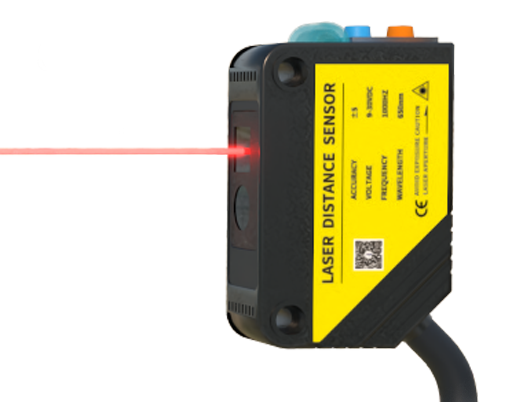
Selecting the right laser sensor involves considering key parameters. Sensing range is paramount, defining the maximum distance at which reliable detection can occur. The size of the laser spot determines the minimum detectable object and positional resolution. Response time, often in microseconds, dictates how fast the sensor can react in high-speed applications. Environmental factors like ambient light, dust, fog, or temperature extremes must be accounted for, with many sensors featuring robust housings (IP67/IP69K ratings) and background suppression technologies to ignore irrelevant reflections. Output types, such as NPN/PNP discrete, analog current/voltage, or digital IO-Link, determine how the sensor integrates with a PLC or control system.
Modern advancements continue to enhance laser photoelectric sensor capabilities. The integration of advanced optics and algorithms enables background suppression and foreground suppression, allowing sensors to ignore objects beyond or before a set distance. The development of Class 1 laser products ensures eye-safe operation without requiring special protective measures in industrial settings. Connectivity through Industrial Internet of Things (IIoT) protocols allows for predictive maintenance, remote monitoring, and data collection from the sensor itself.
In conclusion, laser photoelectric sensors are a vital, versatile class of devices that provide the eyes for automated systems. Their precision, speed, and reliability, derived from the unique properties of laser light, solve complex detection and measurement challenges. From ensuring the smooth flow of production lines to guaranteeing stringent quality standards, these sensors are an essential component in the drive toward smarter, more efficient, and highly automated industrial operations. Understanding their principles, types, and application considerations is key to leveraging their full potential in any technical or engineering field.