Introduction to Five-Wire Photoelectric Sensors
Five-wire photoelectric sensors represent a significant advancement in industrial automation, offering enhanced functionality compared to traditional three-wire or four-wire models. These sensors typically integrate two separate output circuits—often one NPN and one PNP—along with a dedicated wire for diagnostic or control signals, such as a teach-in function or stable operation indicator. This five-wire configuration provides greater flexibility in system design, allowing for simultaneous control of different load types or enabling advanced diagnostics without requiring additional devices. In complex machinery and automated production lines, this capability is invaluable for real-time monitoring and troubleshooting, thereby reducing downtime and improving overall operational efficiency. The design inherently supports more sophisticated interfaces with programmable logic controllers (PLCs) and other control systems, making them a preferred choice for applications demanding high reliability and detailed feedback.
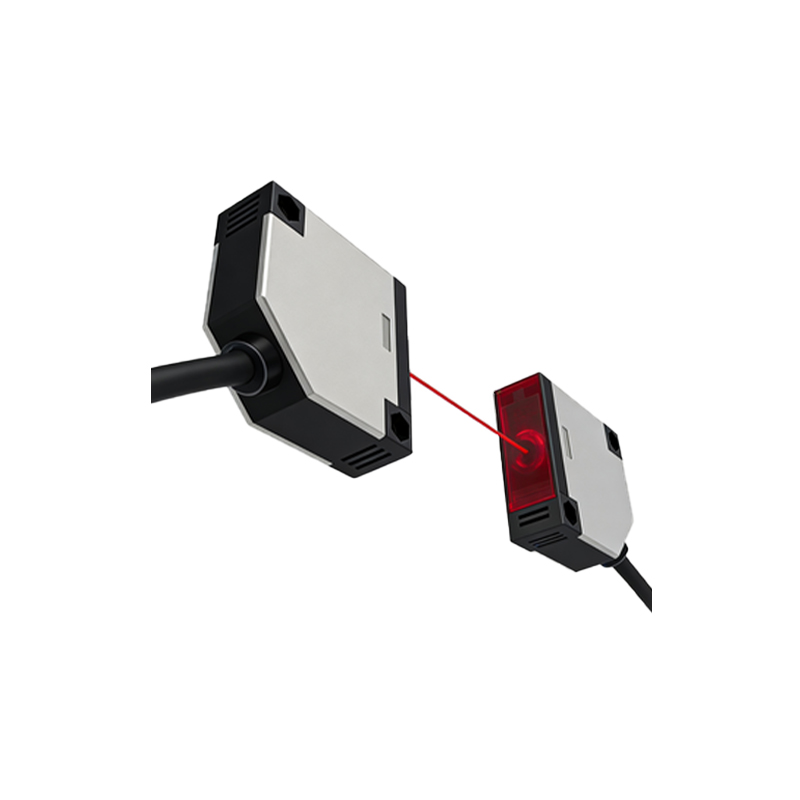
Key Technical Advantages and Applications
The primary technical advantage of a five-wire photoelectric sensor lies in its dual complementary outputs. This feature allows a single sensor to directly interface with both sinking (NPN) and sourcing (PNP) input modules of a PLC, simplifying cabinet wiring and reducing component count. Furthermore, the additional wire often provides a stable signal or a teach-in input, enabling remote configuration of sensing parameters like sensitivity or response time. Common applications include precise object detection in packaging machinery, positioning control in robotic assembly, and presence verification in automotive manufacturing. Their robust construction, often featuring IP67 or higher ingress protection, ensures reliable performance in harsh environments with dust, moisture, or vibration. The ability to offer a diagnostic output for conditions like lens contamination or misalignment preemptively alerts maintenance teams, aligning with predictive maintenance strategies.
Leading Domestic Brand: A Deep Dive into Brand A
Brand A has established itself as a frontrunner in the domestic market for industrial sensors, particularly with its FPS-500 series of five-wire photoelectric sensors. These units are renowned for their high switching frequency, often exceeding 1 kHz, and a sensing range that can be adjusted up to several meters. A standout feature is their advanced background suppression technology, which allows for reliable detection of objects regardless of color or surface reflectivity. The housing is typically constructed from nickel-plated brass or stainless steel, offering excellent resistance to corrosion and mechanical stress. Brand A emphasizes user-friendly design, incorporating a clear LED status indicator and a simple push-button teach function accessible without tools. Their sensors are widely adopted in logistics sorting systems and electronic component manufacturing, where speed and accuracy are paramount.
Innovative Solutions from Brand B
Brand B distinguishes itself through innovation in connectivity and smart features. Their flagship five-wire sensor series, the "SmartBeam" line, integrates IO-Link communication protocol as a standard or optional feature. This transforms the sensor from a simple switch into an intelligent device capable of transmitting detailed process data, such as signal strength, temperature, and operating hours, to a central control system. The fifth wire in many of their models is dedicated to this digital communication channel. This facilitates parameter setting, condition monitoring, and rapid replacement without manual recalibration. Brand B's sensors also excel in energy efficiency, consuming minimal current while maintaining high performance. They are particularly favored in smart factory setups and pharmaceutical production, where data transparency and process validation are critical requirements.
Reliability and Cost-Effectiveness of Brand C
Brand C has carved a niche by offering highly reliable and cost-effective five-wire photoelectric sensors without compromising on core performance. Their product range, such as the EcoSense family, provides excellent value for high-volume applications. These sensors feature a durable PBT plastic or anodized aluminum housing and are designed for easy integration. A key strength is their consistent performance across a wide operating voltage range (e.g., 10-30V DC), making them versatile for various power supplies. While they may lack some advanced communication features, they offer robust basic functionalities, including short-circuit and reverse polarity protection. The fifth wire typically provides a stable "power-on" or "output active" signal. Brand C's sensors are extensively used in material handling, conveyor systems, and basic assembly automation, where straightforward reliability and low total cost of ownership are the main drivers.
Selection Criteria and Market Trends
Selecting the appropriate five-wire photoelectric sensor requires careful consideration of several technical parameters. Key factors include the required sensing distance, response time, output configuration (e.g., light-on/dark-on, NO/NC), environmental protection rating, and housing material. The choice between brands often hinges on specific needs: Brand A for robust performance in challenging conditions, Brand B for smart, data-rich Industry 4.0 applications, and Brand C for reliable, budget-conscious projects. The current market trend shows a clear shift towards sensors with integrated intelligence and digital interfaces, such as IO-Link, which facilitate easier integration into Industrial Internet of Things (IIoT) ecosystems. Furthermore, there is growing demand for miniaturized designs that do not sacrifice sensing range or durability, allowing installation in space-constrained locations.
Conclusion and Future Outlook
Domestic manufacturers of five-wire photoelectric sensors have made remarkable progress, offering products that compete effectively in terms of technology, reliability, and innovation. Brands like A, B, and C exemplify the diverse strengths available in the local market, from rugged durability and advanced background suppression to smart connectivity and exceptional value. As industrial automation continues to evolve towards greater connectivity and intelligence, these brands are expected to invest further in developing sensors with enhanced diagnostic capabilities, lower power consumption, and seamless integration with cloud-based analytics platforms. The future will likely see a deeper convergence of sensing technology with data analytics, making the humble five-wire photoelectric sensor a critical node in the smart, data-driven factory of tomorrow.