Introduction to Proximity Sensor Reliability
In the demanding world of industrial automation and control, the reliability of a proximity sensor is not merely a feature—it is the cornerstone of system integrity. Reliability encompasses more than just longevity; it includes consistent performance under varying environmental conditions, immunity to electrical noise, mechanical robustness, and minimal false triggering. As an electrical engineer with years of field experience, I have observed that the quest for the "most reliable" sensor often leads to a nuanced discussion, as different technologies excel in specific applications. The primary contenders in the non-contact sensing arena are Inductive, Capacitive, Ultrasonic, and Photoelectric sensors. Each possesses inherent strengths and weaknesses that define its reliability profile.
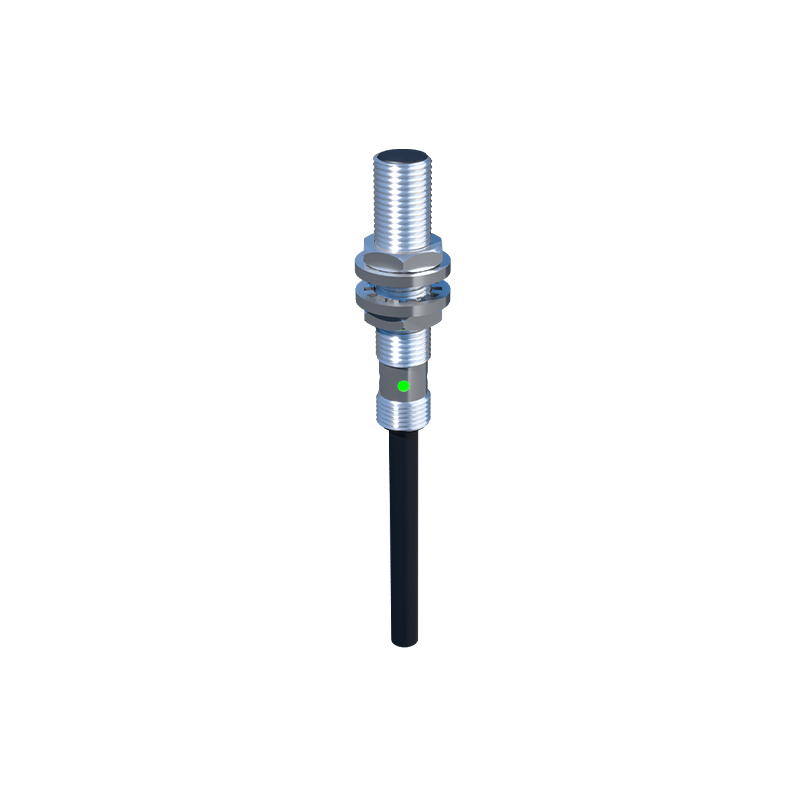
Inductive Proximity Sensors: The Industrial Workhorse
For detecting metallic objects, particularly ferrous metals like steel and iron, inductive proximity sensors are often considered the benchmark for reliability in harsh industrial environments. Their operating principle is simple and robust: an oscillator generates a high-frequency electromagnetic field from the sensing face. When a metal target enters this field, eddy currents are induced, causing a change in the oscillation amplitude, which is detected by a threshold circuit. This solid-state design has no moving parts, leading to exceptional mechanical durability and a virtually infinite lifespan in terms of switching cycles. They are highly resistant to dust, dirt, oil, and coolant splash, often boasting IP67 or higher ingress protection ratings. Their primary limitation is, of course, material specificity—they only detect metals. However, within their domain, their repeatability, high switching frequency, and resilience to environmental contaminants make them extraordinarily reliable.
Capacitive Proximity Sensors: Versatile but Sensitive
Capacitive sensors operate by generating an electrostatic field. They can detect a much wider range of materials, including metals, plastics, wood, liquids, and granular substances. This versatility is their greatest asset. In terms of reliability for specific tasks like liquid level detection or non-metallic object sensing, they are unparalleled. However, their reliability can be more context-dependent. The capacitive sensing field is susceptible to changes in humidity, temperature, and the presence of contaminants on the sensor face. Sticky materials or condensation can cause false triggers or degraded performance. While modern designs include environmental compensation circuits and shielding, they generally require more careful installation and tuning than their inductive counterparts. For controlled environments or specific material detection needs, they are highly reliable; for general-purpose use in dirty, wet conditions, their reliability may be compromised.
Ultrasonic Sensors: Long-Range and Material Independent
Ultrasonic sensors measure distance by emitting sound waves and calculating the time for the echo to return. Their key reliability advantages are long sensing ranges (up to several meters) and complete material independence—they can detect virtually any object regardless of color, transparency, or material composition. They perform well in environments with airborne dust or light fog. The core reliability challenge for ultrasonics lies in their sensitivity to environmental factors. Temperature fluctuations significantly affect the speed of sound, requiring temperature compensation for accurate measurements. Strong air currents, varying air pressure, and highly absorbent or angled targets can lead to inconsistent readings. The sensing face must also be kept clean, as accumulated dirt can dampen the acoustic signal. For applications like bulk material level sensing or pallet detection where other sensors fail, they are reliably indispensable, but they are not a universal solution.
Photoelectric Sensors: Precision with Environmental Demands
Photoelectric sensors, using modulated light beams (usually infrared, laser, or visible LED), offer high precision, very long ranges, and the ability to detect minute objects. Their reliability is exceptional in clean, controlled settings. For example, in semiconductor manufacturing or packaging lines, they provide faultless performance. Their Achilles' heel is their susceptibility to environmental interference. Dust, smoke, steam, and ambient light (especially sunlight) can scatter or overpower the light beam, causing false signals. The lens must remain impeccably clean. While designs with polarized filters, robust housing (IP69K), and strong background light suppression exist, maintaining operational reliability often requires more stringent environmental management than inductive or ultrasonic sensors.
Head-to-Head Reliability Comparison
When evaluating pure, unwavering reliability in the toughest general industrial settings—think a machine tool dripping with coolant and metal chips—the inductive proximity sensor is the undisputed champion. Its immunity to environmental gunk, solid-state construction, and material-specific focus eliminate many failure modes. For reliability in versatile material detection where conditions are stable, capacitive sensors lead. For reliability over long distances on variable objects, ultrasonics are key. For reliability in precision, clean-room applications, photoelectrics excel. There is no single "most reliable" sensor universally;