Operating Principle and Core Technology
Eddy current proximity sensors operate based on the principle of electromagnetic induction. A high-frequency alternating current is applied to a coil within the sensor, generating an oscillating magnetic field. When a conductive target enters this field, eddy currents are induced on the target's surface. These currents create their own opposing magnetic field, which interacts with the sensor's coil. The resulting change in the coil's impedance—specifically, its inductance and resistance—is precisely measured by the sensor's electronics. This impedance shift is directly correlated to the distance between the sensor and the target. The technology is fundamentally contactless and requires the target material to be electrically conductive, making it ideal for detecting metals such as steel, aluminum, copper, and brass. The sensor's oscillator, demodulator, and signal conditioning circuitry work in unison to convert this complex electromagnetic interaction into a stable, linear analog output signal or a crisp digital switch signal.
Exceptional Resolution and High-Speed Response
One of the most significant advantages of eddy current sensors is their exceptional resolution and ability to measure minute displacements. High-end models can resolve distances down to the sub-micron level (0.1 µm or less), making them indispensable for ultra-precise applications like semiconductor wafer positioning, precision spindle runout analysis, and vibration monitoring in turbomachinery. Furthermore, these sensors offer extremely high response frequencies, often exceeding 10 kHz. This allows them to accurately track very rapid movements and vibrations that capacitive or inductive sensors might miss. The non-contact nature eliminates mechanical wear and inertia, enabling reliable measurement of high-speed rotating components, fast-acting valves, and dynamic structural deflections without impacting the target's motion.
Robustness in Harsh Environments
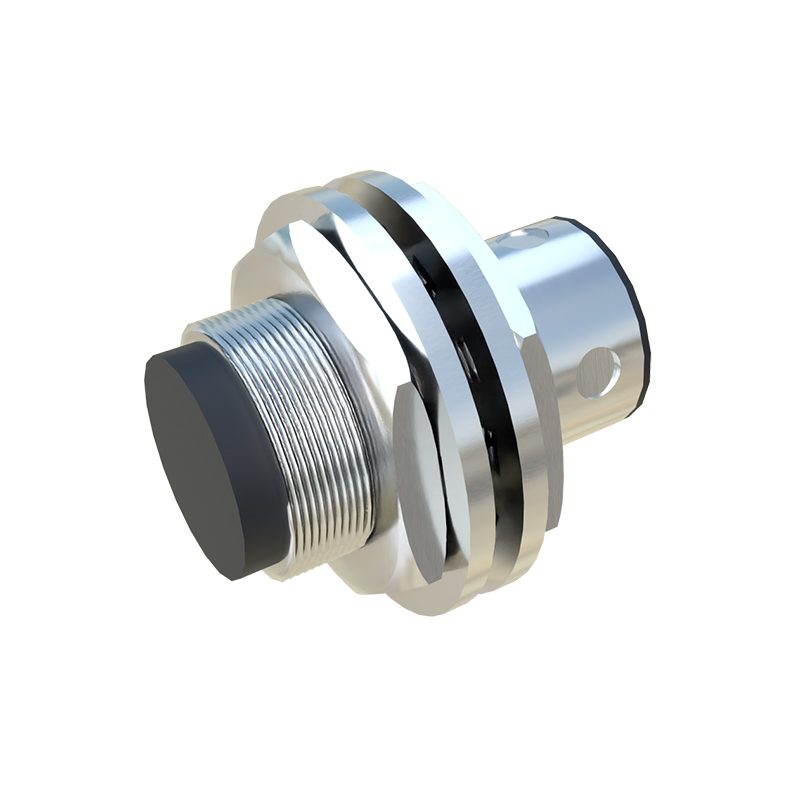
Eddy current proximity sensors are renowned for their robustness and reliability in challenging industrial conditions. Their sensing face is typically a robust ceramic or PPS polymer material, protecting the internal coil. This construction makes them inherently resistant to contaminants such as oil, coolant, dust, and moisture. Unlike optical sensors, their operation is completely unaffected by opaque fluids, steam, or airborne particles. They can operate effectively in wide temperature ranges, from cryogenic levels up to 200°C or more for specialized models, and can withstand high pressures. This resilience makes them the preferred choice for demanding environments like metal cutting and grinding machines, hydraulic systems, turbocharger monitoring, and applications within vacuum chambers.
Material Sensitivity and Target Considerations
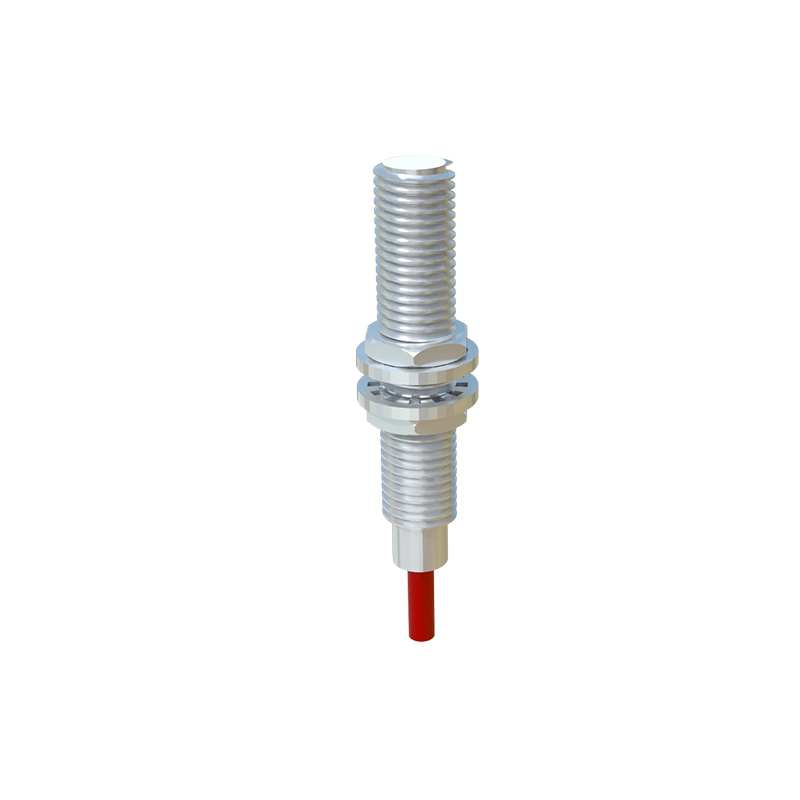
A key operational characteristic is the sensor's sensitivity to the electrical conductivity and magnetic permeability of the target material. Different metals affect the eddy current generation differently. For instance, ferromagnetic materials like steel cause a stronger effect than non-ferromagnetic metals like aluminum. Therefore, sensors are often calibrated for a specific material type (e.g., mild steel). When the target material changes, the sensor's output curve will shift, requiring recalibration or compensation. The target size and shape also influence performance; a target should generally be larger than the sensor's sensing face and be of sufficient thickness to support the full eddy current field. Understanding these dependencies is crucial for correct sensor selection and achieving specified accuracy.
Output Variants and System Integration
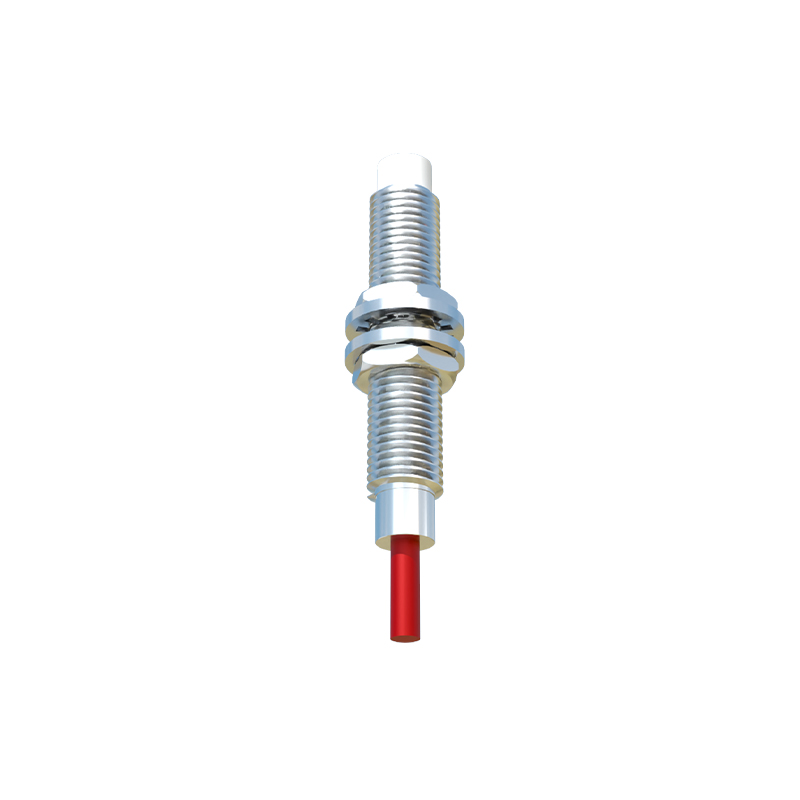
These sensors offer versatile output options to suit diverse control and measurement systems. Common analog outputs include 0-10V DC, 4-20mA, and ±5V or ±10V, providing a continuous signal proportional to distance. Digital outputs, such as NPN, PNP, or push-pull configurations, provide a simple switch signal when a target reaches a preset threshold. Advanced digital sensors feature integrated microprocessor-based electronics, enabling functions like programmable switching points, temperature compensation, and IO-Link communication for Industry 4.0 integration. This allows for parameter setting, diagnostics, and process data monitoring directly from the controller, simplifying installation, maintenance, and data acquisition in automated production lines.
Primary Industrial Applications
The unique combination of precision, speed, and robustness defines their application scope. They are extensively used for vibration monitoring and displacement measurement on rotating shafts, bearings, and turbines in power generation and aerospace. In metalworking, they provide precise tool wear monitoring, part positioning, and crack detection. Automation lines rely on them for high-speed counting, non-contact limit switching, and robotic arm position feedback. Additional critical uses include monitoring piston position in hydraulic and pneumatic cylinders, controlling roll gap and thickness in metal rolling mills, and performing runout and concentricity checks in precision assembly. Their ability to function where other technologies fail ensures their continued dominance in critical measurement and control tasks.