Introduction to Evolving Proximity Sensing
The landscape of industrial automation and smart systems is undergoing a profound transformation, driven significantly by advancements in sensor technology. Among these, proximity sensors stand as critical components, enabling non-contact detection of objects with high reliability. Traditionally reliant on electromagnetic, capacitive, or ultrasonic principles, these sensors have been the workhorses of manufacturing lines, automotive assembly, and safety systems. However, the future beckons with a wave of innovation. The next generation of proximity sensors is poised to transcend current limitations, integrating with broader technological trends such as the Industrial Internet of Things (IIoT), artificial intelligence, and advanced materials science. This evolution is not merely incremental; it represents a fundamental shift towards smarter, more adaptive, and more integrated sensing solutions that will redefine efficiency and capability across numerous sectors.
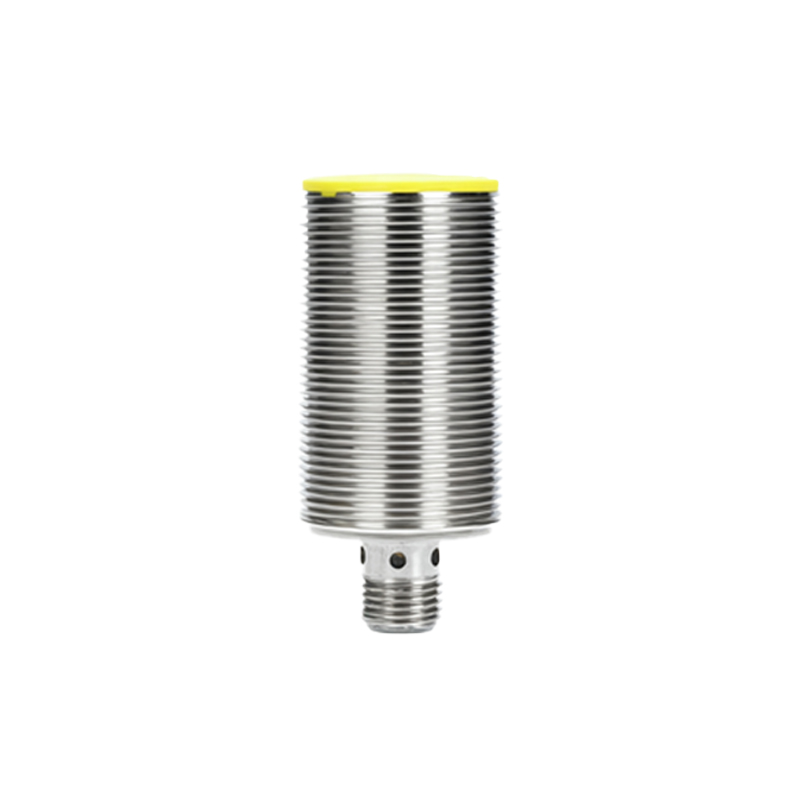
Integration with AI and Machine Learning
A paramount future direction is the deep integration of Artificial Intelligence (AI) and Machine Learning (ML) algorithms directly into proximity sensing systems. Current sensors provide binary or simple analog outputs indicating presence or distance. The future lies in "smart sensors" that can process data locally. By embedding tiny ML models, a proximity sensor can learn to distinguish between different materials, shapes, or even specific objects. For instance, on a conveyor belt, an AI-enhanced inductive sensor could differentiate between a metallic tool and a metallic can, triggering different actions without requiring a separate vision system. This edge intelligence reduces latency, conserves bandwidth by sending only processed insights rather than raw data, and enables predictive maintenance by analyzing operational patterns to forecast sensor or machine failure before it occurs.
Advancements in Sensing Materials and Miniaturization
Material science breakthroughs are paving the way for novel proximity sensing capabilities. The development of flexible and stretchable electronic materials, such as conductive polymers and graphene-based inks, allows for the creation of sensors that can conform to curved surfaces or be integrated into wearable devices and soft robotics. Furthermore, research into metamaterials—engineered materials with properties not found in nature—holds promise for sensors with unprecedented sensitivity or the ability to detect specific chemical compositions alongside proximity. Concurrently, relentless miniaturization, driven by Micro-Electro-Mechanical Systems (MEMS) technology, will produce sensors that are virtually invisible, enabling their embedding into products, textiles, and medical implants without compromising design or function, thus expanding applications into consumer electronics and healthcare.
Enhanced Communication and IIoT Connectivity
The modern industrial ecosystem demands seamless communication. Future proximity sensors will be natively designed as intelligent nodes within the IIoT framework. This goes beyond standard digital IO-Link communication. We will see widespread adoption of wireless protocols like 5G, Wi-Fi 6, and specialized low-power wide-area networks (LPWAN) for sensors. These sensors will possess unique IP addresses, enabling direct peer-to-peer communication with other machines, controllers, and cloud platforms. This facilitates decentralized control architectures and real-time, factory-wide data analytics. Enhanced cybersecurity features will be baked into the hardware to protect these critical data points from intrusion, making the sensor not just a data source but a secure and communicative citizen of the digital plant.
Multi-Modal and Multi-Parameter Sensing
The trend is moving away from single-function sensors towards compact, multi-modal units. A single sensor package in the future may combine proximity detection with temperature measurement, vibration monitoring, and ambient light sensing. For example, a capacitive proximity sensor on a motor housing could simultaneously detect the approach of a maintenance technician (for safety lockdown) and monitor the motor's surface temperature. This fusion of data streams provides a much richer contextual understanding of the machine's environment and health, enabling more sophisticated control logic and condition monitoring. It reduces installation complexity, cost, and physical footprint while dramatically increasing the informational value per sensor node.
Focus on Sustainability and Energy Harvesting
As global emphasis on sustainability intensifies, the design of proximity sensors will increasingly prioritize energy efficiency and eco-friendly materials. A key innovation area is energy harvesting. Future sensors may power themselves by scavenging energy from their environment—using small photovoltaic cells for light, piezoelectric elements for vibration, or thermoelectric generators for heat differentials. This could lead to truly battery-less and maintenance-free sensors, ideal for remote or hard-to-access installations. Additionally, manufacturers will focus on using recyclable materials and reducing hazardous substances in sensor construction, aligning with circular economy principles and reducing the environmental footprint of automation infrastructure.
Conclusion: A Smarter, More Connected Sensing Horizon
The trajectory for proximity sensors is clear: they are evolving from simple switches into intelligent, multi-functional, and interconnected perception units. Driven by AI, new materials, and the imperatives of IIoT and sustainability