Introduction to Eddy Current Sensing
Eddy current proximity sensors are non-contact devices widely used for precise liquid level detection in various industrial applications. Their operation is based on the principles of electromagnetic induction, offering high reliability, durability, and accuracy even in harsh environments. Unlike capacitive or ultrasonic sensors, eddy current sensors are particularly effective for conductive liquids and are insensitive to factors like pressure, temperature (within specified ranges), and the presence of non-conductive contaminants such as oil films or foam on the liquid surface. This makes them a preferred choice in industries like chemical processing, power generation, and semiconductor manufacturing.
Fundamental Electromagnetic Principles
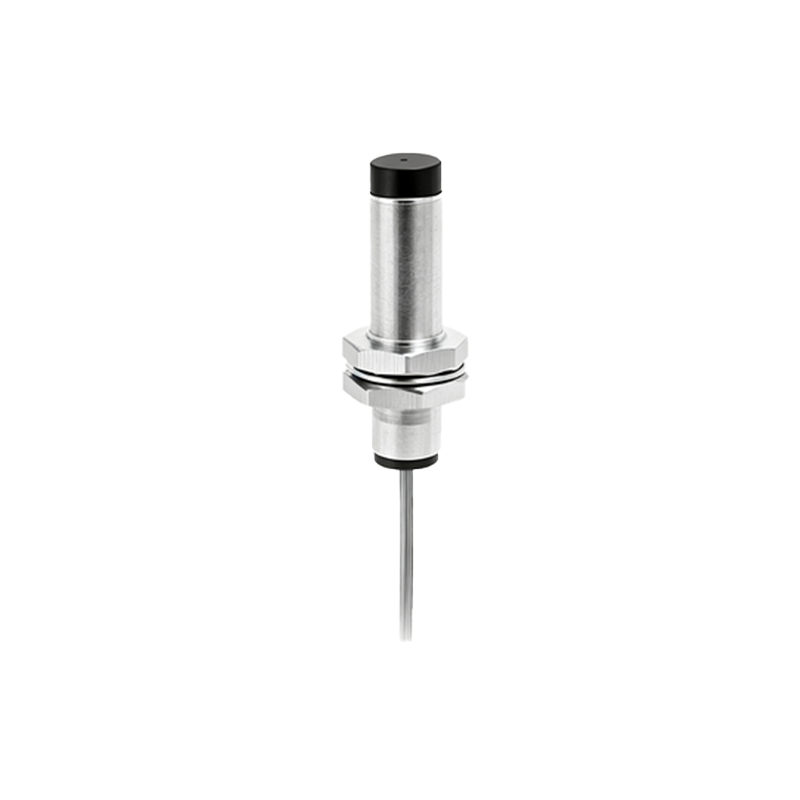
At the core of an eddy current sensor is an oscillating circuit that includes a coil wound around a ferrite core. When an alternating electrical current is applied to this coil, it generates a high-frequency alternating magnetic field that extends from the sensor's active face. This magnetic field is the primary medium for detection. According to Faraday's Law of Induction, when this changing magnetic field encounters a conductive material—such as the liquid whose level is being measured—it induces circular currents, known as eddy currents, within that material. These eddy currents flow in closed loops within the conductive liquid, opposing the change in the original magnetic field as described by Lenz's Law.
Interaction with the Target Liquid
The induced eddy currents themselves generate their own secondary magnetic field, which opposes the primary field from the sensor coil. This interaction alters the impedance of the sensor's coil. The key parameter is the distance between the sensor's active face and the surface of the conductive liquid. As the liquid level rises and the distance decreases, the coupling between the magnetic field and the liquid increases. This results in stronger eddy currents and a more pronounced change in the coil's impedance. Conversely, when the liquid level falls, the distance increases, the eddy current effect weakens, and the coil's impedance changes accordingly. The sensor does not require physical contact with the liquid, preventing issues like corrosion, wear, or contamination.
Signal Processing and Output
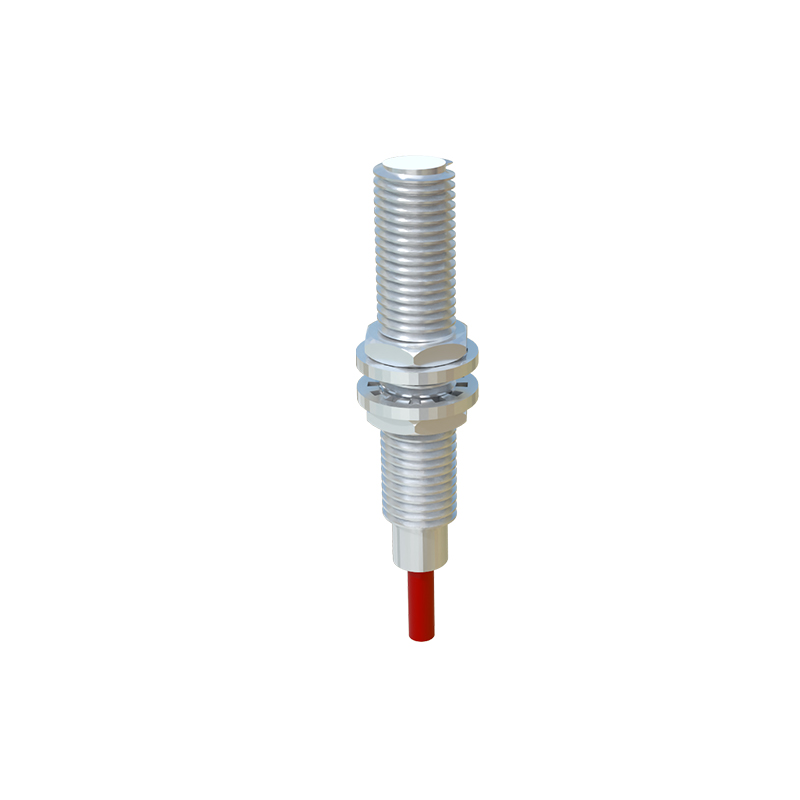
The change in the coil's impedance—comprising both its resistance and inductance—is meticulously measured by the sensor's integrated electronics. This electronic circuitry typically includes an oscillator to generate the high-frequency field and a demodulation circuit to convert the impedance change into a usable electrical signal. The processed signal is then conditioned to produce a stable, linear output. Common output types include analog signals (e.g., 4-20 mA or 0-10 V DC), which are proportional to the distance/level, or a digital switch signal that activates at a predefined setpoint. Advanced sensors incorporate temperature compensation and calibration routines to ensure consistent performance despite ambient variations.
Key Design and Application Considerations
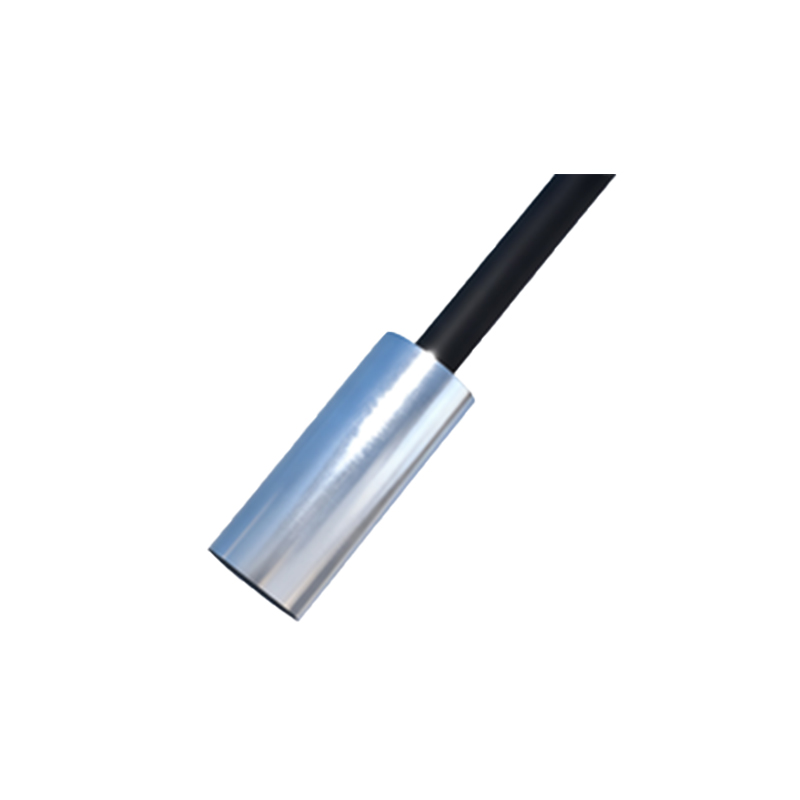
Several factors critically influence the performance and selection of a liquid level eddy current sensor. The electrical conductivity and magnetic permeability of the target liquid are paramount; higher conductivity generally yields a stronger signal. The sensor must be calibrated for the specific liquid. The installation environment is also crucial. The sensor should be mounted securely to avoid vibration-induced noise, and attention must be paid to the material of the tank wall if the sensor is mounted externally. For non-metallic tanks, flush-mounted sensors are common. Their robust construction often allows them to operate in extreme temperatures and pressures, making them suitable for monitoring levels in reactors, sumps, and storage tanks containing aggressive or high-purity fluids.
Advantages and Limitations
The primary advantages of eddy current sensors for liquid level measurement are their non-contact nature, high resolution and repeatability, fast response time, and minimal maintenance requirements due to the absence of moving parts. They are largely unaffected by the dielectric properties of the medium, making them ideal for conductive liquids. However, limitations exist. Their effectiveness diminishes with poorly conductive liquids. The sensing range is typically limited compared to some other technologies, often to a few tens of millimeters. Furthermore, the presence of nearby conductive objects or varying liquid compositions can affect accuracy, necessitating proper installation and periodic verification. Understanding these parameters is essential for optimal system integration.
Conclusion
In summary, liquid level proximity eddy current sensors provide a highly reliable and precise method for monitoring conductive fluid levels through sophisticated electromagnetic interaction. By generating a high-frequency magnetic field and measuring the impedance changes caused by induced eddy currents in the liquid, these sensors deliver accurate, non-contact measurement data. Their design robustness ensures long-term stability in demanding industrial settings. When selected and installed with consideration for the liquid's properties and the application environment, they form a critical component in process control and safety systems, ensuring efficient and reliable operation across a diverse range of industries.