Understanding the Fundamental Operating Principle
Retroreflective photoelectric sensors, often simply called photoelectric eyes, are a cornerstone of industrial automation for object detection and counting. Their operation is elegantly simple yet highly reliable. The sensor unit houses both an emitter, typically a focused LED (often infrared, red, or laser), and a receiver. The emitter projects a beam of light towards a specially designed retroreflective target or tape. This target is constructed with numerous tiny corner-cube reflectors that return the light beam directly back to its source along the same path, regardless of the angle of incidence. The receiver in the sensor is tuned to detect this returned light. When an object passes between the sensor head and the reflector, it interrupts this light beam. The receiver detects the loss of the light signal, which triggers a change in the sensor's output state—from ON to OFF or vice-versa, depending on the configuration. This discrete event, the breaking of the beam, is the fundamental "pulse" that forms the basis for counting.
The Counting Logic: From Pulse to Tally
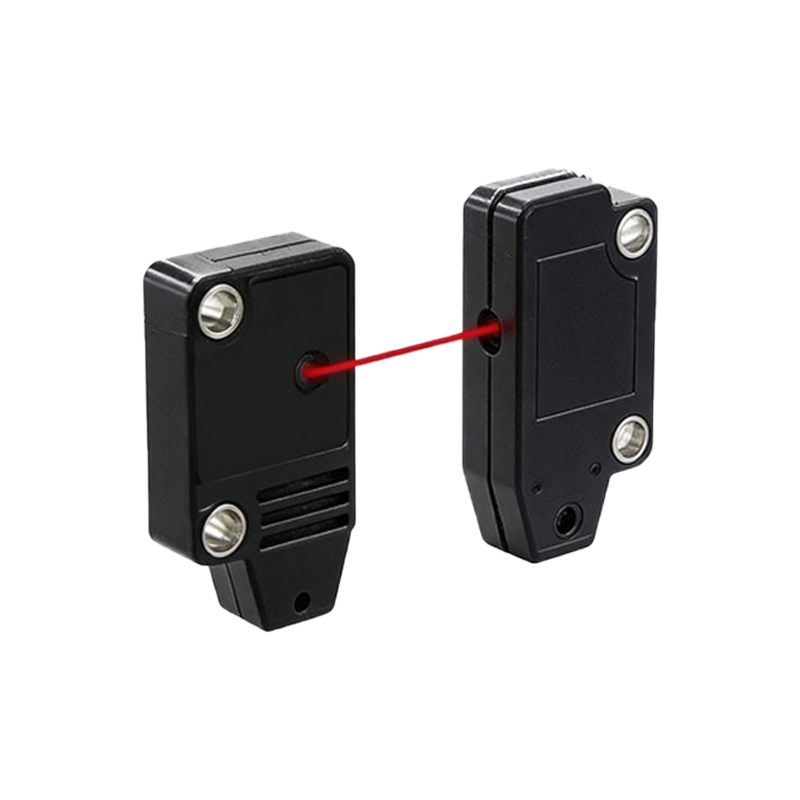
The sensor itself is a detection device; it does not inherently "count." The counting function is performed by an external controller, such as a Programmable Logic Controller (PLC), a dedicated counter module, or sometimes an integrated counter within a more advanced sensor model. The process is straightforward. Each beam interruption (or restoration) generates a clean, digital electrical signal—a pulse. This pulse is sent to the counter's input. The counter is programmed with a specific logic: it increments its internal register by one for every received pulse. For example, in a typical conveyor belt application, a single pulse is registered each time a product breaks the beam. The counter's logic can be set to count rising edges (when the signal turns ON), falling edges (when it turns OFF), or both, providing flexibility for different applications. Advanced systems may employ two sensors in a specific configuration to determine the direction of travel, allowing for bidirectional counting on a single line.
Critical Considerations for Accurate Counting
Achieving high counting accuracy in industrial environments requires careful attention to several factors. First is the object size and speed. The sensor must have a sufficiently fast response time to detect very small or rapidly moving objects. If an object passes through the beam faster than the sensor's response time, it may be missed. Secondly, the object must fully interrupt the beam. With a focused beam, small objects like bottle caps can be counted reliably. However, for irregularly shaped objects or those with gaps, a "blanking time" or minimum pulse width setting in the counter may be necessary to prevent double-counting a single object. Environmental factors are paramount. Dust, steam, fog, or heavy vibration can cause false triggers or missed counts. Choosing a sensor with a modulated LED beam (often called "AC" or modulated light) is essential. This technology allows the receiver to distinguish between its own pulsed light signal and ambient light, providing exceptional immunity to optical interference. Proper alignment and a clean reflector are also vital for maintaining a strong, stable signal.
Application-Specific Configurations and Setups
Different counting tasks demand tailored setups. For basic high-speed counting of discrete items on a conveyor—such as cans, boxes, or parts—a single retroreflective sensor positioned perpendicularly above the conveyor, with a reflector plate mounted opposite, is common. For counting objects on a transparent conveyor belt or detecting clear glass/plastic bottles, a polarized retroreflective sensor is used. It employs a polarizing filter that only accepts light returned in a specific polarization state from a corner-cube reflector, effectively ignoring specular reflections from shiny surfaces. In packaging lines, sensors often count the flaps of cardboard boxes to ensure a full case. For bulk material counting, like pills or small hardware, sensors are paired with vibratory feeders or rotating discs that singulate the items, ensuring only one item breaks the beam at a time. The counter is then often integrated with a batch control system to stop the feeder after a preset quantity is reached.
Integration with Control Systems and Data Output
The true power of photoelectric counting is realized through integration. The raw count data from the sensor's pulses is processed by the PLC or counter. This data can be used for simple local display on an HMI (Human-Machine Interface), or it can be fed into a broader Manufacturing Execution System (MES) or SCADA system for production tracking, Overall Equipment Effectiveness (OEE) calculations, and inventory management. Modern sensors with IO-Link or other industrial networking capabilities can transmit diagnostic data—such as signal strength, operating temperature, and contamination warnings—alongside the count status, enabling predictive maintenance. This prevents unexpected downtime due to a misaligned sensor or dirty lens. The output from the counting system can also directly control machinery, such as triggering a diverter arm to route a batch of 10 items to a specific pallet, or stopping a filling machine once a bottle count is complete.
Troubleshooting Common Counting Errors
Even with a robust setup, counting errors can occur. The most frequent issues are missed counts and false counts. Missed counts are often caused by objects moving too fast for the sensor's response time, insufficient beam interruption due to small object size, or a weak signal from misalignment, dirty optics, or a failing emitter. False counts typically stem from environmental interference (ambient light flicker, reflective surfaces), mechanical vibration causing momentary beam breakage, or electrical noise on the signal cable. Systematic troubleshooting involves checking the sensor's alignment indicator (often an LED), verifying the received light intensity value if available, inspecting the reflector for damage or dirt, and reviewing the counter's input filtering and timing settings. Ensuring proper shielding and grounding of cables is crucial to eliminate electrical noise. Regularly scheduled cleaning and verification of the counting system against a manual tally is a best practice for quality-critical processes.