Non-Contact Operation
The fundamental and most defining characteristic of proximity sensors is their ability to detect the presence or absence of an object without any physical contact. This non-contact sensing principle eliminates mechanical wear and tear on both the sensor and the target object, leading to significantly longer operational lifespans compared to mechanical limit switches. It enables the detection of fragile, delicate, or easily marred materials that could be damaged by touch. Furthermore, the absence of physical force allows for extremely high-speed operation, as there is no need to overcome inertia or deal with contact bounce. This makes them indispensable in fast-paced automation lines, packaging machinery, and robotic systems where reliability and speed are paramount.
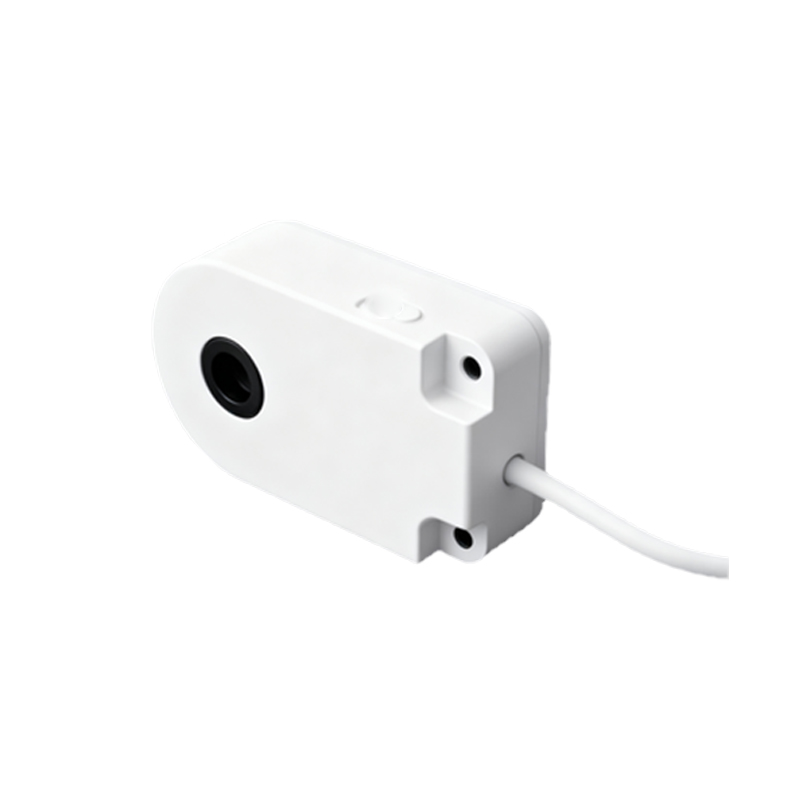
High Switching Frequency and Response Speed
Proximity sensors are engineered for rapid response. They feature high switching frequencies, often ranging from several hundred Hz to several kHz, depending on the technology and model. This characteristic refers to the maximum number of detection operations (ON/OFF cycles) the sensor can perform per second. Coupled with fast response times—typically in the microsecond to millisecond range—they can reliably detect objects moving at very high speeds. This capability is critical for applications like part counting on conveyor belts, monitoring rotational speed of shafts, or ensuring precise positioning in high-speed assembly processes, where even a millisecond of delay could cause a production error.
Environmental Robustness and Durability
Designed for harsh industrial environments, proximity sensors exhibit exceptional robustness. They are commonly housed in solid metal (stainless steel, brass) or high-grade plastic casings with high Ingress Protection (IP) ratings, such as IP67 or IP69K, making them resistant to dust, water jets, and temporary immersion. Many models are also resistant to oils, coolants, and chemical splashes. This durability ensures stable performance in challenging conditions found in machine tools, food and beverage processing, automotive manufacturing, and outdoor applications, minimizing downtime and maintenance requirements.
Temperature and Electrical Noise Immunity
A high-quality proximity sensor maintains stable operation across a wide temperature range, often from -25°C to +70°C or broader for specialized models. This thermal stability prevents false triggering or performance degradation in environments with significant temperature fluctuations. Equally important is immunity to electrical noise generated by nearby motors, frequency inverters, welding equipment, or other sensors. Advanced designs incorporate shielding and filtering circuits to reject electromagnetic interference (EMI) and ensure reliable signal integrity, which is crucial for the overall stability of the control system.
Variety of Sensing Technologies and Outputs
Proximity sensors are not a one-size-fits-all solution. They encompass several core technologies, each with distinct characteristics. Inductive sensors detect metallic objects (ferrous and non-ferrous) and are the most common in industrial settings. Capacitive sensors can detect both metallic and non-metallic materials (plastics, wood, liquids) by sensing changes in capacitance. Ultrasonic sensors use sound waves for longer-range detection, while photoelectric sensors utilize light beams. Furthermore, they offer various output configurations—including NPN, PNP, analog (4-20mA, 0-10V), and IO-Link digital communication—providing flexibility to interface seamlessly with different types of PLCs and control systems.
Precise and Repeatable Sensing Distance
The rated sensing distance (Sn) is a key specification, indicating the nominal range at which a standard target can be reliably detected. A critical related characteristic is the repeat accuracy, which defines how consistently the sensor can detect an object at the same point. High repeat accuracy, often within microns, is essential for precision machining, robotic tool changing, and critical positioning tasks. It's important to note that the effective sensing distance can be influenced by the target material, size, and shape, as well as environmental factors, which must be accounted for during installation and commissioning.
Compact Design and Easy Integration
Modern proximity sensors are designed to be compact and space-saving, allowing installation in tight locations on machinery. They come in standardized form factors (e.g., cylindrical M8, M12, M18, M30 barrels or rectangular blocks) with various mounting options (flush, non-flush, threaded). This standardization simplifies mechanical integration and replacement. Many feature built-in LED indicators for operational status (power, output state) which aids in quick diagnostics and troubleshooting, reducing machine setup time and simplifying maintenance procedures.