Introduction to Proximity Sensing Technology
Proximity sensors are vital components in modern industrial automation, providing non-contact detection of objects within a defined sensing range. These devices are engineered to detect the presence or absence of a target without physical contact, thereby eliminating mechanical wear and enabling high-speed, reliable operation in harsh environments. The fundamental principle involves converting information about the presence or motion of an object into an electrical signal. This capability is crucial for applications such as object counting, position verification, limit switching, and safety monitoring across diverse sectors including automotive, packaging, material handling, and machine tooling. The selection of the appropriate sensor type depends on factors like the target material, required sensing distance, environmental conditions, and output requirements.
Inductive Proximity Sensors
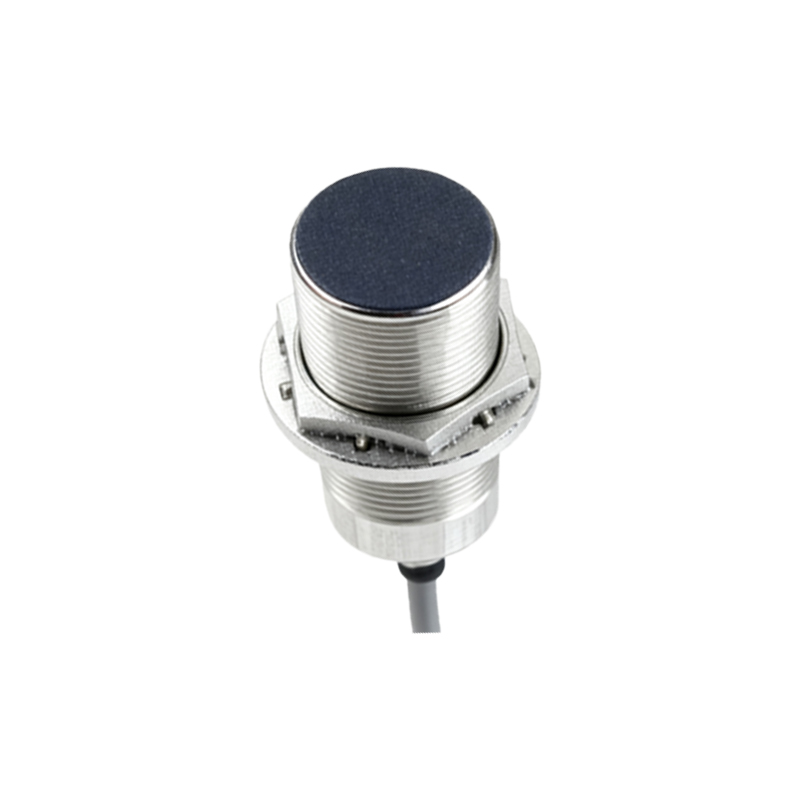
Inductive proximity sensors are specifically designed to detect metallic objects. Their operation is based on the principle of electromagnetic induction. The sensor generates an oscillating electromagnetic field from its active face. When a metallic target enters this field, eddy currents are induced on the surface of the metal, causing a change in the oscillation amplitude. This change is detected by the sensor's internal circuit, which subsequently triggers a switching output. These sensors are exceptionally robust, resistant to dust, dirt, and moisture, making them ideal for heavy industrial settings. They are commonly used for detecting ferrous metals like steel and iron, with specialized versions available for non-ferrous metals. Typical applications include detecting the position of metal parts on a conveyor, counting metal objects, and serving as non-contact limit switches in machine tools.
Capacitive Proximity Sensors
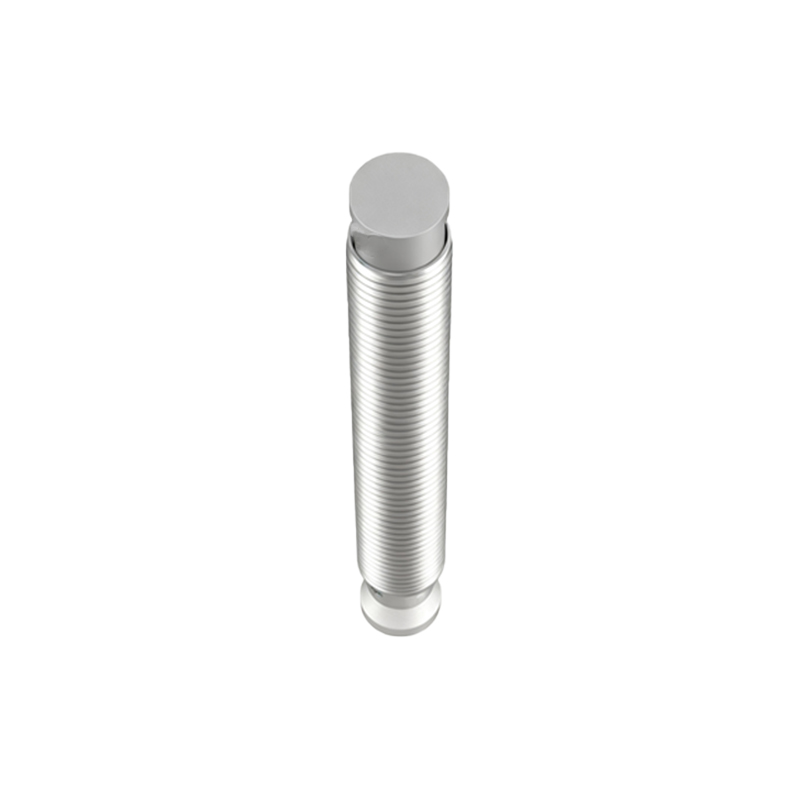
Capacitive proximity sensors can detect both metallic and non-metallic objects, including liquids, powders, plastics, and wood. They function by generating an electrostatic field. The sensor and the target act as two plates of a capacitor. When a target enters the sensing field, it alters the capacitance of the system. This capacitance change is measured, and when it reaches a preset threshold, the sensor activates its output. A key advantage is their ability to sense through certain non-metallic barriers, such as a glass or plastic container wall. This makes them perfect for applications like liquid level detection in tanks, material presence sensing in hoppers, and detecting non-metallic objects on production lines. They often feature sensitivity adjustment potentiometers to fine-tune the sensing range for different materials and to ignore background interference.
Ultrasonic Proximity Sensors
Ultrasonic sensors operate by emitting high-frequency sound waves (typically beyond human hearing) and evaluating the reflected echo. They measure the time interval between sending the signal and receiving the echo to calculate the distance to the target. This principle, known as time-of-flight, allows them to detect objects regardless of color, transparency, or material composition, as long as the surface can reflect sound. They are excellent for long-range detection, precise distance measurement, and detecting irregularly shaped or transparent objects that may confuse optical sensors. Common industrial uses include pallet stacking height control, loop control in web processing, and presence detection of clear bottles or glass sheets. They can be affected by temperature variations and air turbulence, but many models include temperature compensation for improved accuracy.
Photoelectric Proximity Sensors
Photoelectric sensors use light beams to detect objects. They consist of a light emitter (usually an LED) and a receiver. When the emitted light beam is interrupted or reflected by a target, the change in light intensity at the receiver triggers the output. There are three main operating modes: through-beam, retro-reflective, and diffuse reflective. Through-beam models have separate emitter and receiver units; an object is detected when it breaks the beam. Retro-reflective types use a single unit and a reflector, detecting an object when it blocks the beam to the reflector. Diffuse reflective sensors detect light reflected directly off the target itself. Photoelectric sensors offer very long sensing ranges and can detect virtually any material. They are widely used for object counting, label detection, and bottle cap alignment. However, their performance can be influenced by ambient light, color, and surface reflectivity of the target.
Magnetic Proximity Sensors
Magnetic proximity sensors, often called reed switches or Hall-effect sensors, detect the presence of a magnetic field, typically from a permanent magnet attached to the moving target. Reed switches contain two ferromagnetic reeds sealed in a glass tube; when a magnetic field is applied, the reeds attract each other and make contact, closing the circuit. Hall-effect sensors are solid-state devices that produce a voltage output proportional to the magnetic field strength. These sensors are extremely reliable for detecting the position of cylinders (using piston magnets), doors, and safety guards. They are immune to environmental factors like dust, humidity