In the world of computer peripherals, the mouse laser sensor stands as a pivotal innovation that has redefined precision and reliability for users across various fields. Unlike traditional optical sensors that rely on LED light and imaging of surface textures, laser sensors employ a coherent laser beam to track movement. This fundamental difference grants laser sensors significant advantages, particularly on challenging surfaces where optical mice might struggle.
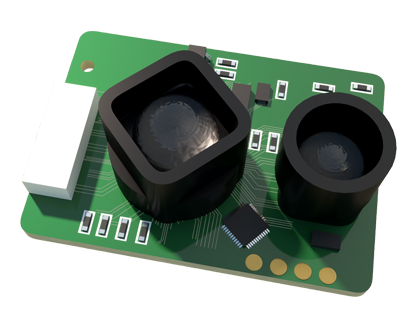
The core mechanism involves a vertical-cavity surface-emitting laser (VCSEL) that projects an invisible infrared laser onto the surface. A special lens, known as an aspherical lens, then captures the highly detailed reflection of microscopic surface irregularities. This reflected pattern is processed by a complementary metal-oxide-semiconductor (CMOS) sensor at an extremely high speed. The onboard digital signal processor (DSP) compares these sequential images, calculating the direction and distance of movement with remarkable accuracy. This process occurs thousands of times per second, resulting in the smooth cursor response users experience.
One of the most celebrated benefits of laser sensor technology is its superior surface compatibility. It can function effectively on a wide array of materials, including glossy desks, wooden tables, fabric mousepads, and even slightly reflective surfaces. This versatility liberates users from the constraint of needing a dedicated mouse pad, making laser mice a favorite for mobile professionals and gamers who compete in varied environments. Furthermore, laser sensors typically offer higher dots per inch (DPI) and counts per inch (CPI) ranges. This allows for incredibly sensitive tracking, where minute physical hand movements translate to large cursor travels on high-resolution monitors—a critical feature for graphic designers and competitive gamers who require swift, large-scale cross-screen maneuvers.
However, the technology is not without its nuances. Some users, particularly in the competitive gaming community, have noted that the extreme sensitivity of laser sensors can sometimes lead to a phenomenon known as "acceleration." This refers to a non-linear response where the cursor distance traveled varies slightly with the speed of the physical mouse movement. While modern sensors and firmware have drastically minimized this effect, it remains a point of consideration for players who demand absolute, predictable one-to-one tracking. For these users, high-end optical sensors with flawless tracking have become a strong alternative.

When selecting a mouse, understanding the sensor is crucial. Key specifications to evaluate include the maximum DPI/CPI, the maximum tracking speed (measured in inches per second or meters per second), and the maximum acceleration (measured in g-forces). A high tracking speed ensures the sensor won't malfunction during very fast swipes, while high acceleration tolerance guarantees accuracy during quick, abrupt movements. Reputable manufacturers provide detailed specifications for their sensor implementations.
The evolution of mouse laser sensors continues. Innovations are increasingly focused on improving power efficiency for wireless models, enhancing the precision of surface calibration, and further reducing any unwanted smoothing or filtering of the raw tracking data. The goal is to deliver a transparent, lag-free experience that feels like a natural extension of the user's hand.
Ultimately, the choice between a laser sensor and a modern high-performance optical sensor depends heavily on individual use cases and personal preference. For users who value ultimate surface independence and very high DPI capabilities, a laser sensor remains an excellent and highly capable choice. It represents a sophisticated marriage of physics and micro-engineering, delivering the reliable, precise tracking that modern computing demands.