Understanding Photoelectric Sensor Fundamentals
Photoelectric sensors are indispensable components in modern industrial automation, operating on the principle of light transmission and reception to detect the presence, absence, or distance of objects. These sensors typically consist of an emitter, which projects a light beam (often infrared, visible red, or laser), and a receiver that captures the light. When an object interrupts or reflects this beam, the sensor's output state changes, triggering a control action. The core advantage lies in their non-contact detection capability, allowing for wear-free operation and high-speed response across diverse applications, from packaging lines to robotic assembly cells. Unlike mechanical limit switches, photoelectric sensors offer superior longevity and precision, making them a cornerstone of Industry 4.0 and smart factory initiatives.
Selecting the Optimal Sensing Mode for Your Application
Choosing the correct sensing mode is critical for reliable performance. The three primary modes are through-beam, retro-reflective, and diffuse reflective. Through-beam sensors, with separate emitter and receiver units, provide the longest sensing ranges and highest reliability, ideal for detecting small objects or in environments with airborne contaminants. Retro-reflective models use a single housing with both emitter and receiver, along with a reflector; they offer easier alignment than through-beam but may be fooled by shiny objects. Diffuse reflective sensors detect light reflected directly from the target, simplifying installation as only one unit is needed, though sensing distance is shorter and color/material reflectivity affects performance. For challenging conditions, background suppression or foreground suppression variants can precisely discriminate between target and background surfaces.
Implementing Advanced Features for Enhanced Performance
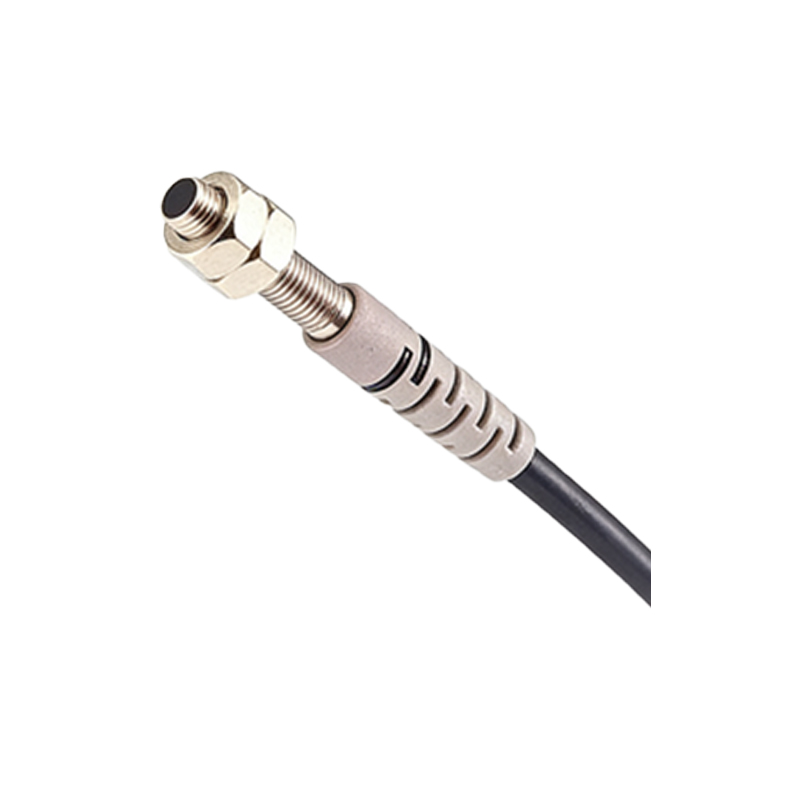
Modern photoelectric sensors incorporate sophisticated features to tackle complex industrial tasks. Time-of-flight (ToF) sensors measure the phase shift or flight time of light pulses to calculate distance, enabling precise positioning and object profiling. Fiber optic versions, using flexible light guides, are perfect for tight spaces, high-temperature zones, or areas with strong electromagnetic interference. Analog output sensors provide continuous distance data rather than a simple on/off signal, useful for monitoring fill levels or tracking dimensions. Additionally, many sensors now include IO-Link communication, allowing for parameter adjustment, diagnostics, and integration into Industrial IoT networks without physical access. Leveraging these features can optimize processes, reduce downtime, and facilitate predictive maintenance strategies.
Addressing Common Installation and Environmental Challenges
Proper installation and environmental consideration are paramount for sensor longevity and accuracy. Ensure stable mounting to minimize vibration-induced misalignment. Avoid optical interference by positioning sensors away from direct sunlight, welding arcs, or other intense light sources that share the sensor's wavelength. For dusty or foggy atmospheres, select sensors with higher excess gain (light intensity reserve) and consider periodic lens cleaning schedules. In applications involving transparent materials (like glass or plastic films), use polarized retro-reflective sensors or through-beam modes to prevent false triggers. Always verify the sensor's IP rating matches the environmental conditions—such as moisture, washdown, or chemical exposure—to prevent premature failure. Calibration and testing with actual target objects under operational conditions are essential final steps.
Integrating Sensors into Control Systems for Automated Solutions
Seamless integration transforms sensor signals into actionable automation. Photoelectric sensors typically provide discrete (PNP/NPN) or analog (4-20mA, 0-10V) outputs connected to PLCs (Programmable Logic Controllers), PACs (Programmable Automation Controllers), or robotic controllers. Utilize teach-in functions or remote configuration via software to set sensitivity, timing functions (like on-delay or one-shot), and output logic. For coordinated systems, synchronize multiple sensors using programmable logic to manage conveyor sorting, part sequencing, or quality inspection. Implementing sensor diagnostics through network interfaces can alert operators to lens contamination, misalignment, or output failures, enabling rapid troubleshooting. This integration is the final link in creating resilient, efficient, and fully automated production environments.